
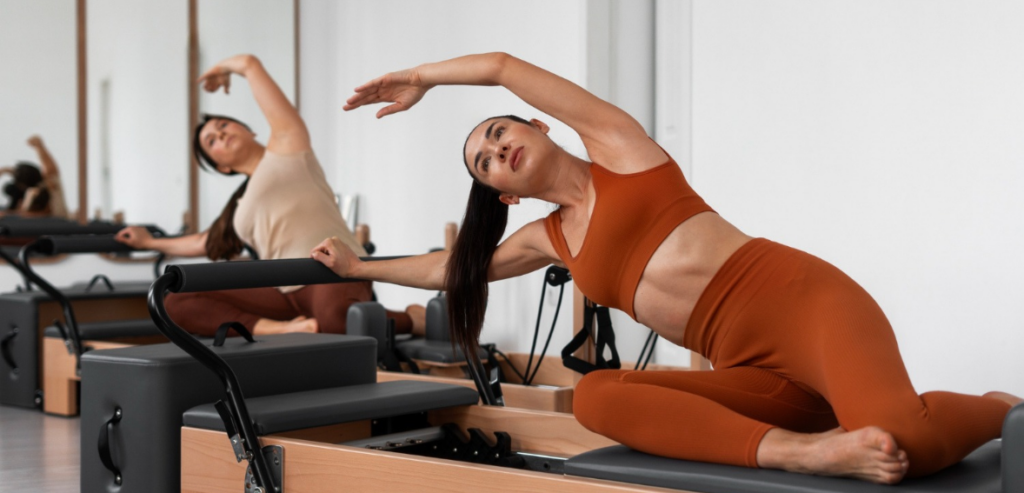
Opening a Pilates studio involves a harder equipment decision than almost any other fitness format. A functional training gym can open with racks, dumbbells, and a floor. A yoga studio needs mats and props. Pilates requires apparatus that costs thousands of dollars per station, takes up a defined footprint whether occupied or not, and determines what classes you can teach before a single client walks in. Building a pilates studio equipment list therefore shapes your business model rather than following it, and the order in which you buy determines how long it takes to become profitable.
What Equipment Does a Pilates Studio Actually Need?
Less than the traditional full apparatus list, more than mats alone, and the answer depends entirely on what you intend to teach. Classical Pilates studios work from a defined set of apparatus developed by Joseph Pilates, centred on the reformer and including the Cadillac or trapeze table, the Wunda chair, the ladder barrel, and the spine corrector, along with smaller props. Contemporary studios often build around reformers with towers attached, adding chairs and barrels as space and budget allow.
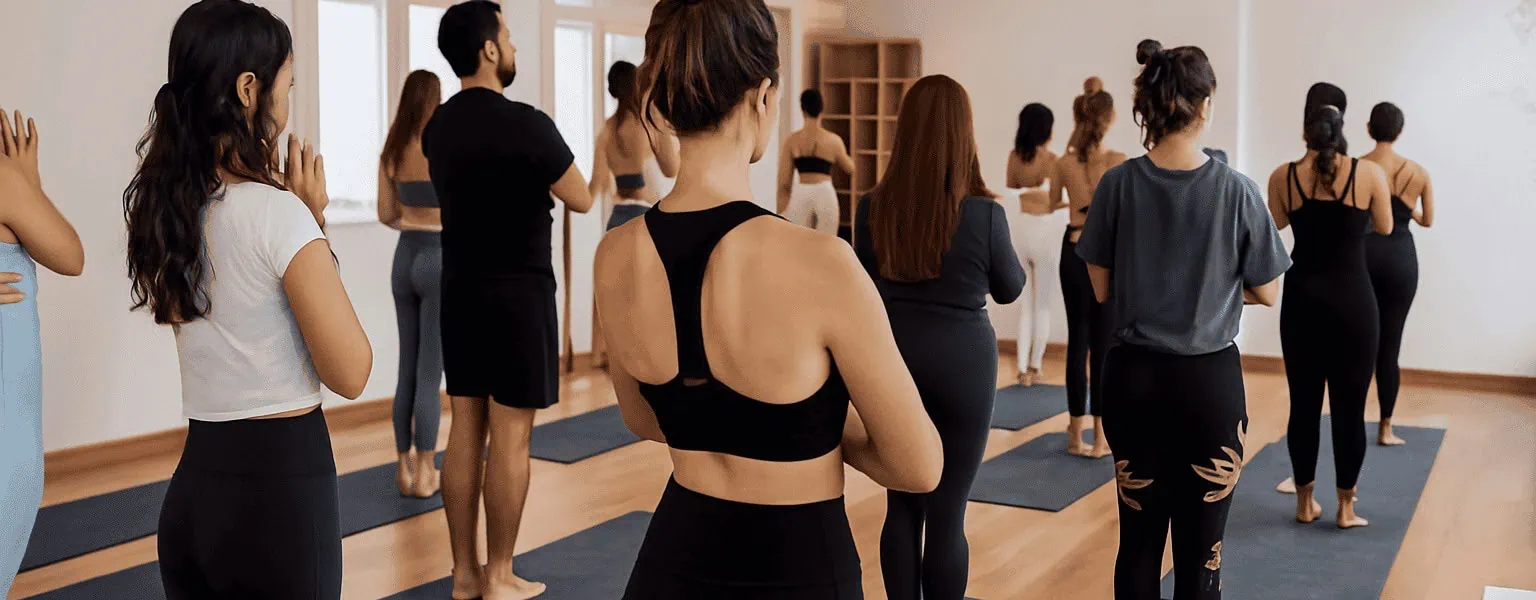
Reformer-only group studios, which dominate the current boutique market, run classes entirely on reformers with optional jumpboards and small props, and nothing else. Mat-based studios need only mats, magic circles, small balls, resistance bands, and foam rollers, which makes them dramatically cheaper to open and considerably harder to differentiate. Decide which of these you are before pricing anything, since a classical studio and a reformer group studio have almost nothing in common on the equipment side.
Before placing the first equipment order, it also helps to think about the actual client experience. A studio can technically have everything it needs and still feel awkward because there is not enough room to move, store props, or change between exercises. Think about:
- The type of classes you want to run during your first six months.
- Whether your main income will come from group classes, private sessions, or both.
- How many instructors may be working at the same time.
- Whether beginners and experienced clients will share the same sessions.
- How much storage space is available for props and cleaning supplies.
That basic planning can prevent an expensive mistake later. Equipment should support the way the studio will actually operate, not simply make the room look fully equipped.
What Does Each Piece of Apparatus Do?
Knowing the function of each item prevents both overbuying and the more common error of buying in the wrong order. The table below sets out the main pieces and their role.
| Apparatus | What It Does | Priority for a New Studio |
| Reformer | Carriage and spring resistance, the core of most teaching | Essential |
| Tower or half trapeze | Adds spring work from above, mounts to a reformer | High value, modest cost |
| Cadillac or trapeze table | Full-range spring work, supported and inverted positions | Valuable for private work |
| Wunda chair | Compact, strength and balance, standing and seated work | Strong second purchase |
| Ladder barrel | Spinal extension and flexibility work | Useful, lower priority |
| Spine corrector or arc barrel | Small barrel for spinal work | Inexpensive, worth having early |
| Jumpboard | Attachment for cardio and plyometric work on the reformer | Cheap, popular in group classes |
| Mats and small props | Magic circles, balls, bands, rollers, weights | Essential and inexpensive |
The tower deserves particular attention as a purchase, since a reformer with a tower attachment delivers a substantial share of what a Cadillac offers at a fraction of the cost and footprint, which is why so many contemporary studios use that combination rather than buying both.
How Many Reformers Should a Group Studio Have?
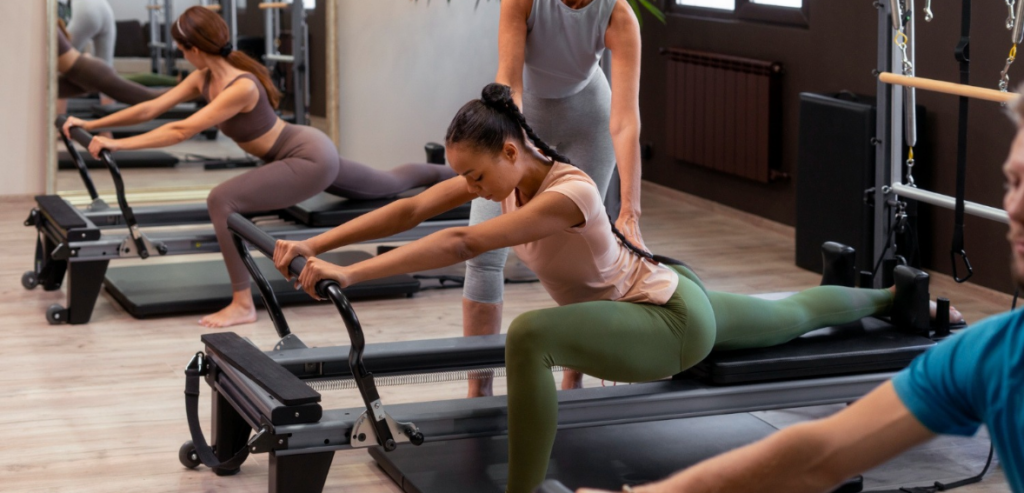
Between six and twelve for most boutique studios, with the specific number driven by your floor area and your pricing model rather than by ambition. Each reformer needs its own footprint plus clearance around it for the instructor to move and for the client to get on and off safely, and that clearance is where new studios most often miscalculate. A reformer occupies roughly seven to eight feet by two and a half feet, but the working space required per station is considerably larger once you allow for spring adjustment at one end, standing work beside it, and a safe gap between neighbours.
Work backwards from your revenue requirement instead of forwards from your space. A studio charging a given rate per class, running a realistic number of classes per day at a realistic average fill rate, needs a certain number of stations to cover its costs, and that calculation tells you the minimum. Then check whether your room can accommodate it with proper clearance, because squeezing in two extra reformers to make the numbers work produces a cramped room that clients notice immediately.
It is also worth leaving some breathing room in the layout rather than planning around the absolute maximum number of machines. A few extra feet can make a difference when an instructor needs to demonstrate an exercise, adjust a spring, or help a new client.
A useful planning check is:
- Measure the room before looking at equipment models.
- Mark each proposed reformer footprint on the floor.
- Include instructor walking paths and access to every station.
- Leave room for doors, storage, reception movement and cleaning.
- Test the layout with the reformers occupied, not just empty.
A digital floor plan can help, but even simple measurements marked out with tape can reveal problems surprisingly quickly.
What Should You Buy First If the Budget Is Tight?
Reformers, in the best quality you can afford, and fewer of them rather than more of something cheaper. This is the one place where economising reliably costs more over time, since commercial Pilates apparatus in a studio running thirty classes a week endures a volume of use that domestic or budget equipment is not built for, and a reformer with a failing carriage or inconsistent springs is unusable rather than merely worn.
After reformers, the sequence that serves most studios best is towers attached to a portion of the reformers, which expands your programming for a modest outlay, then mats and small props which cost very little and broaden what you can offer immediately, then a Wunda chair or two which adds a genuinely different class format in a small footprint, then barrels, then a Cadillac if your business includes significant private work. Jumpboards are inexpensive and popular enough to justify early. Resist buying a full classical apparatus set before you know which formats actually sell in your market.
When comparing reformers, do not look at the price tag alone. Consider how often the equipment will be used, whether replacement parts are easy to source, how simple routine maintenance is, and whether instructors can adjust the machines quickly during a busy class. Those things may not show up in the initial quote, but they become part of the running cost.
How Much Does Pilates Equipment Cost?
Enough that the equipment is usually the largest single line in a studio opening budget after the fit-out. Commercial-grade reformers from established manufacturers typically run into the low thousands of dollars each, with premium wood-frame models costing considerably more than aluminium or steel-framed ones, and tower attachments adding a further amount per unit. A Cadillac is generally the most expensive single item, chairs and barrels cost less, and small props are inexpensive by comparison.
Multiply a reformer price by eight or ten and the figure becomes substantial quickly, which is why financing, leasing, and buying used are all worth examining. Prices shift with materials, shipping, and manufacturer, so get current quotes rather than relying on any published figure including this one. Factor in delivery and assembly, which can be significant for heavy apparatus and sometimes requires specialist handling, and factor in the possibility that a large reformer will not fit through a particular door or into a particular lift, which is a problem to discover before ordering rather than on delivery day.
The purchase price is only one part of the calculation. A more realistic opening budget can also account for:
- Delivery and installation.
- Replacement springs, ropes and other consumable parts.
- Cleaning and maintenance supplies.
- Flooring and minor room modifications.
- Storage for mats, props and accessories.
- Insurance and safety-related costs.
Getting these numbers together before signing an equipment order gives you a much clearer picture of how much capital the studio actually needs.
Should You Buy New or Used?
Both have a place and the right answer often involves a mix. Used apparatus from reputable manufacturers holds value well and can represent genuine savings, particularly when a studio closes or upgrades and sells a matched set. The risks are specific rather than general. Inspect the frame for damage and the carriage for smooth, quiet travel along the full length of the rails. Check the condition of springs, since these wear and should be replaced on a schedule regardless of appearance. Examine upholstery, footbar mechanisms, ropes, straps, and all adjustment points.
Confirm the model is current enough that replacement parts remain available from the manufacturer, which is the single most important question and the one buyers forget. Ask how heavily it was used, since a studio reformer and a home reformer of the same age have lived different lives. For a group studio, matching units matter more than they do for a private practice, because clients and instructors in a class need every station to behave identically and a mixed set makes teaching harder.
If buying used, do not let a very low price become the deciding factor. A machine that needs several replacement parts immediately may not be much cheaper once it is ready for clients.
What Does the Room Itself Need?
More consideration than equipment buyers typically give it, and some of the requirements are expensive to retrofit. Floor loading is generally not an issue for reformers, which distribute weight reasonably, but a Cadillac is heavy and upper floors deserve a check. Ceiling height matters for towers and Cadillacs, where clients work in extended and inverted positions with arms overhead, and a low ceiling will limit the exercises available. Where apparatus mounts to a wall, as some towers and wall units do, the wall needs to be structurally adequate rather than stud partition, and that should be confirmed before purchase.
Flooring should be hard enough for apparatus to sit stable and level, since an unlevel floor makes a reformer carriage behave inconsistently, and sprung or cushioned flooring suits mat work. HVAC capacity matters because a room of ten people working hard generates real heat and humidity. Mirrors help instruction but create acoustic problems, and sound systems in Pilates rooms need to deliver clear instructor voice at modest volume rather than volume for its own sake.
Storage deserves attention here too. Props have a habit of spreading across a studio if there is nowhere sensible to put them. Wall-mounted storage, low cabinets or dedicated shelving can keep the main training area clear without taking away useful floor space.
What Maintenance Does Pilates Apparatus Require?
Regular attention to a small number of wear points, and a maintenance routine is not optional in a commercial setting. Springs are the primary consumable and lose tension over time, which changes the resistance clients experience and eventually makes the apparatus unsafe, so manufacturers specify replacement intervals based on use and these should be followed rather than deferred until a spring looks worn. Ropes and straps stretch and fray and need inspection and periodic replacement.
Carriage wheels and rails need cleaning and lubrication, since dirt accumulation produces the rough, noisy carriage travel that clients notice immediately. Upholstery needs cleaning with products the manufacturer approves, since some disinfectants degrade vinyl. Footbars, headrests, and all adjustment mechanisms need checking for secure operation. Build a documented schedule with daily visual checks by instructors, weekly cleaning, monthly inspection of springs and straps, and an annual service, and keep records, since that documentation matters for insurance and for any incident involving equipment.
It helps to assign responsibility rather than assuming someone will notice a problem.
- Instructors can handle quick checks before and after classes.
- A weekly routine can cover cleaning and visible wear.
- More detailed monthly checks can focus on springs, straps and adjustment points.
- Professional servicing can be scheduled according to the manufacturer’s recommendations and the studio’s usage.
A small issue caught early is generally much easier to deal with than a broken part discovered when a class is about to begin.
What Insurance and Safety Considerations Apply?
Apparatus-based Pilates carries different risk from mat classes, and your insurance should reflect that explicitly. Discuss with your broker what you teach, on what equipment, and at what class size, since a general fitness policy may not contemplate spring-loaded apparatus. Keep equipment maintenance records, because an incident investigation will ask for them and their absence is damaging. Train instructors properly on the specific apparatus you own rather than assuming a Pilates certification covers every manufacturer’s equipment, since adjustment mechanisms and safety features differ. Require instructors to check springs, straps, and locks at the start of each class as a matter of routine.
Set clear class size limits based on how many stations an instructor can genuinely supervise, which for apparatus work is lower than for mat work. Have clients complete a health screening before their first apparatus class, since contraindications matter more on spring-loaded equipment, and keep those records. Post clear instructions on safe use and make sure new clients receive an orientation rather than joining a group class cold.
The same practical approach should extend to the studio’s first few weeks. New clients may not know how the springs, footbar or carriage work, and even experienced Pilates clients may be unfamiliar with a particular manufacturer’s design. A short introduction can make the first session smoother for everyone.
How Should a New Studio Phase Its Purchases?
By opening with the minimum that lets you teach your core format well and expanding from revenue rather than from borrowing. A practical phasing for a reformer-led group studio opens with the full set of reformers the room requires, since you cannot run a class on half a room, plus mats and small props, plus jumpboards. Phase two, once classes are consistently filling, adds towers to some or all reformers, which expands programming without adding footprint. Phase three adds a chair or two and a spine corrector, enabling different class formats and better private work.
Phase four, if private and rehabilitation work develops, adds a Cadillac and a ladder barrel. Buying this way keeps the opening budget contained and means later purchases are justified by demonstrated demand rather than by a business plan assumption. Where a landlord contribution or equipment financing is available, use it for the reformers rather than for apparatus you might not need, since the pilates studio equipment list that actually earns revenue in year one is shorter than the one that looks complete in a brochure.
Before every purchase phase, look at what clients are actually booking. If reformer classes are consistently full, adding capacity may make more sense than buying an apparatus designed for a class you have not yet tested. If private sessions are growing, the calculation changes again. The equipment plan does not have to be fixed forever.
A simple way to think about the buying order is:
- Opening stage: Reformers, mats, basic props and jumpboards.
- Growth stage: Towers and additional accessories.
- Expansion stage: Wunda chairs and spine correctors.
- Specialised stage: Cadillac, ladder barrel and other classical apparatus based on demand.
There is no prize for having the biggest equipment list on opening day. A smaller studio with reliable equipment, enough space to move, and classes that people actually want to attend has a very different cost structure from a studio that spends heavily simply to look complete.
Final Thoughts
The right pilates studio equipment list starts with the classes you plan to sell, not with a catalogue of every apparatus available. Invest first in reliable reformers, leave enough room around them, add versatile equipment such as towers and small props, and let actual demand guide the later purchases. Good equipment matters, but so does having a room where instructors can teach comfortably and clients can move safely. A phased approach usually gives a new studio more flexibility while keeping unnecessary spending under control.