

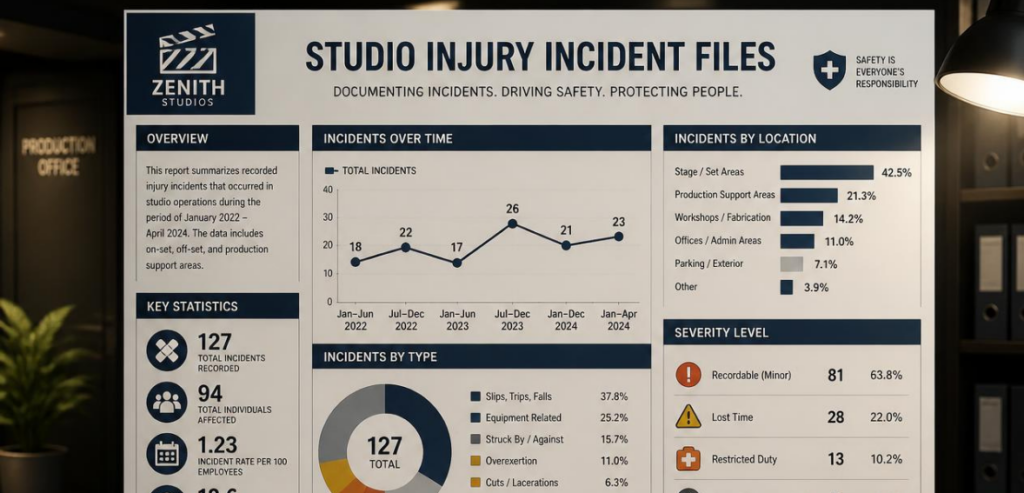
A member finishes a busy group class. She twists an ankle on the way back to the mat. She waves it off. “I’m fine,” she says, and heads home. No form gets filled out. Nobody writes anything down.
A letter from a lawyer shows up three months later. Now the studio must determine what happened, although, at this point, there is nothing to say. There are no notes. No eyewitnesses. Only distant memories and a deepening sense of anxiety.
This is the exact moment a well-prepared fitness studio incident report becomes essential. Studio injury incident report files are not made to be busywork. They are the record to protect your studio in case a simple slip becomes an even more complicated claim. When an incident report is prepared properly, it facilitates an insurance claim. If done poorly or not done at all, the report exposes your studio.
We are going to go through the process to create incident report files that will be valid and reliable.
Why Studio Injury Incident Files Matter for Insurance Follow-Up
Claims rarely explode because of one dramatic failure. They grow because no one documented what happened. Procedures got skipped. Everyone assumed it would never happen here.
Memories are unreliable. The member who felt fine today may have a very different version of the story after a meeting with an attorney. Your employees will forget details in a matter of days. Video footage will be recorded over. Without a record, you will be leaning on your guesswork to defend your studio.
Insurance companies want evidence of proper care. When a complaint is filed, your insurance company wants to see evidence that you conducted yourself in a proper manner. A timely filed fitness studio incident report does just that. It records the details of the event while the memories are still fresh. It provides your insurance company and your attorney the opportunity to see something tangible.
Proper documentation provides a time and place for the event to help answer the three questions that every complaint is built around. Good records help settle claims quicker and defend against unreasonable claims. Properly documented claims will help settle claims that are clearly valid more quickly. Good records help defend against unreasonable claims that should be documented properly.
What Belongs in a Fitness Studio Incident Report
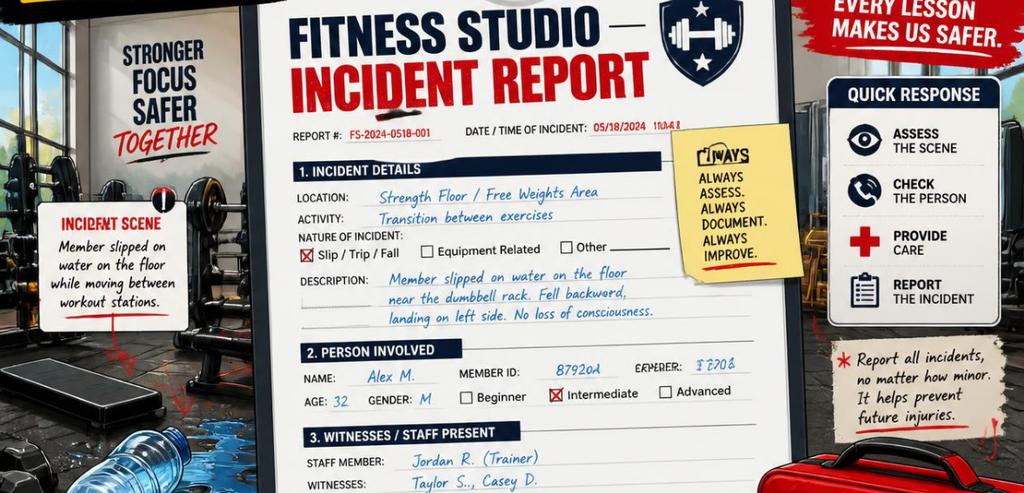
A useful report captures far more than “member hurt knee.” It tells a complete, plain story that anyone can follow later.
The Core Facts
Make sure to get the basics, and then some. Get the injured person’s name. Get their contact information. Get the date, time, and location inside the studio. Get the circumstances leading up to the injury. Get the description of the activity, including the equipment, the type of class or the session underway and any pertinent details. Finally, get the details of the injury, including the circumstances. “Client stepped off the reformer and rolled her right ankle” beats “client got hurt” every time.
Finish this section with the injury itself. Name the body part affected and how it was affected. A strained lower back and a bruised elbow are very different things to an insurer. Specifics protect you.
Witness Accounts and Staff Observations
Accounts from witnesses who are not involved give more credibility to a case. If there were other people and/or instructors who witnessed the event, obtain their contact information. It is most important that the witnesses describe in their own words what they saw as soon as you are able to contact them. The longer the delay is in taking their statements, the less credible those statements will be.
Staff members should report what they observed and did. Focus on the facts that are most important and what you observed and heard. Do not speculate in the report on what you believe to be the cause or who you believe to be responsible. This is the job of the professionals who will review the report later.
Medical Response and Follow-Up
Record any first aid or emergency care given on site. Note whether the person accepted, declined, or refused treatment. If paramedics were called or the member went to a doctor, write that down too. This section shows you responded with care.
Well-trained staff makes this part stronger. Retaining a provider like the American Red Cross to keep instructors up to date on First Aid and CPR really shows commitment to member safety. This also provides better safety outcomes on the floor and a better position for your insurance coverage.
How to Complete a Fitness Studio Incident Report the Right Way
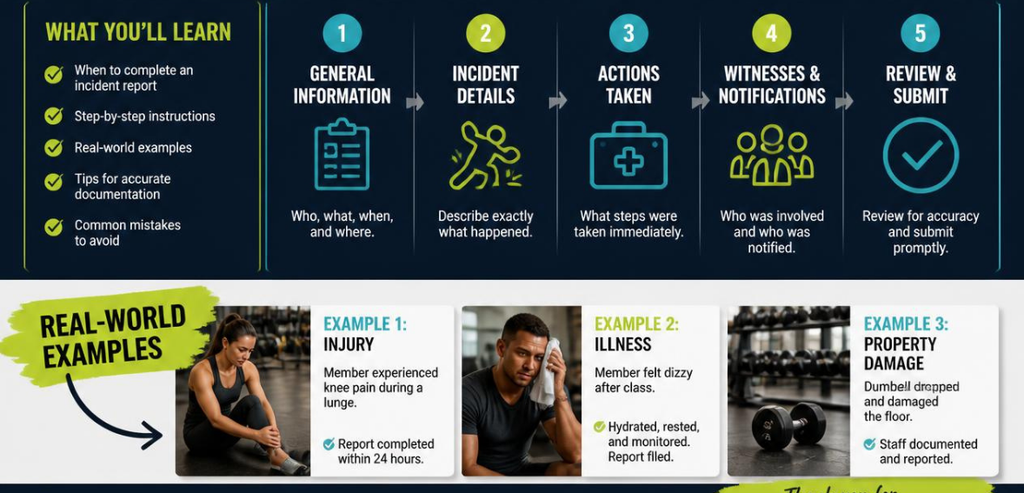
The form matters. So does the habit around it.
Speed comes first. Complete the report as soon as the situation is stable, while the details are still sharp. A report written within the hour beats one reconstructed from memory next week.
Use a consistent fitness studio incident report template instead of a messaging app. If a claim is made, formal documentation will stand up to more scrutiny than any isolated emails or messages. A consistent format means that all staff report the same incident and nothing important is lost.
Use neutral facts, and do not report your opinion about the event. Do not report fault, and do not give probable causes to the injuries. Just the facts, and let the professionals figure out the rest.
People report to you that filing an incident report will not start a claim. Reporting the incident is part of normal business. A calm and consistent approach helps your staff retain their composure and protects your business while the incident is being resolved.
Turning Incident Files Into Insurance Follow-Up
An incident file only helps if you use it. Once the report is complete, the follow-up steps decide how smoothly things go.
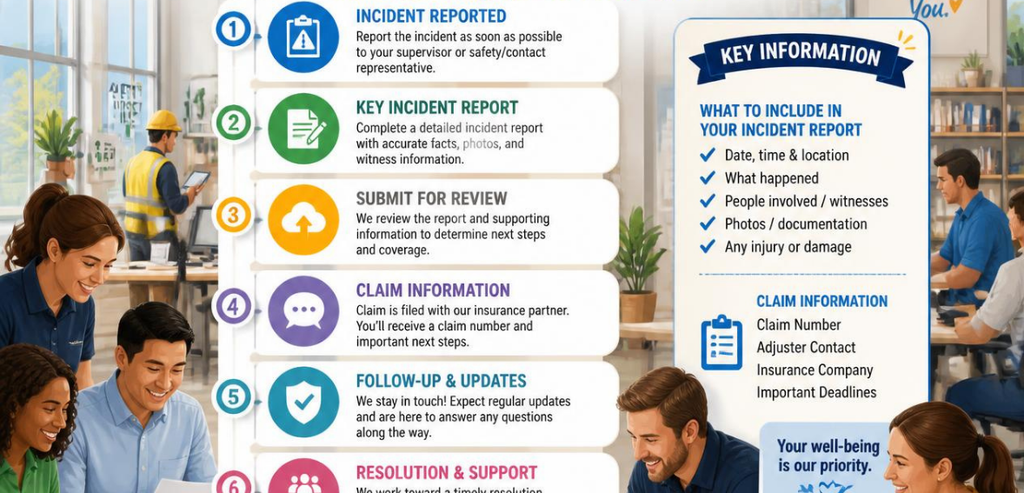
Promptly inform your insurance carrier. Most policies require you to give prompt notice when you know a potential claim. Delays can cause you to lose insurance coverage. You can trust that your carrier will inform you what the next steps are and can assign you an attorney to assist you.
Gather and secure evidence related to this incident. Find and preserve any videos that captured the incident. Do not edit the recordings in any way. Secure the signed liability waiver of the member and preserve it with this incident’s documentation. Preserve any records of maintenance for the equipment involved. These documents serve as background information in support of the incident report.
Be quiet with the other side to protect your position. Do not speak with the claimant or an attorney. This is the job of your attorney or the legal team provided by the insurance carrier. Comments, no matter how sympathetic, can and will be used against you.
Then, fully cooperate with your insurance carrier when they conduct their own review. Provide them with the studio injury incident documentation, the witness statements, and anything else they ask for. This review will go faster and be easier for you if you have good documentation.
Specialized Coverage for Fitness Professionals
Strong records work best alongside the right insurance. General liability covers common injuries, accidents, and property damage. Professional liability protects your instruction and training decisions. Together they form a practical safety net for a busy studio.
Insure Fitness Group
Insure Fitness Group provides liability insurance tailored to fitness professionals, including personal trainers, Pilates, and group fitness instructors. The company offers actionable resources on incident management. One such resource describes why and how to document an incident to provide insurance support if a claim is filed. Along with insurance coverage, a documented reporting process provides real incident management support.
Building a Repeatable Records System
One good report is a start. A reliable system is the goal.
Store your studio injury incident files somewhere secure and organized. Keep them with related paperwork like waivers, membership agreements, and equipment maintenance records. When everything lives in one place, you can find it fast when it matters most.
Retention is also important for records. OSHA mandates that most employers maintain records of employee injuries and illnesses for a minimum of five years. Even though a member may be feeling fine today, they may choose to come forward with a complaint regarding the incident at a later date. Keeping records protects you during the five-year timeframe.
You should also periodically review your procedures. At a minimum, you should review your incident report form, waivers and your procedures for handling reports annually. Minor changes today may strengthen your defense for the future. Consider your records as an ongoing and active part of your commitment to a safe studio, rather than a collection of records that no one ever looks at, or a dusty binder.
Final Thoughts
Injuries happen even in the safest studios. What separates a manageable event from a costly dispute is often the paperwork. A clear, timely fitness studio incident report captures the truth while it is fresh. Complete studio injury incident files give your insurer the facts they need to act quickly. And a steady records habit keeps you ready long after the moment has passed.
You cannot prevent every twisted ankle. But you can control how well you document it. That single habit may be the most valuable risk-management tool your studio owns.
Frequently Asked Questions
What is a fitness studio incident report?
It is a standardized form that records the details of an injury or unusual event at your studio. It captures who was involved, what happened, when and where it occurred, who witnessed it, and how you responded medically. A good report creates a factual record that supports insurance follow-up if the incident ever turns into a claim.
When should I fill out a studio injury incident report?
As soon as the situation is stable and details are still fresh, ideally the same day. Prompt reporting improves accuracy and shows your insurer you acted responsibly. Waiting days or relying on memory weakens the record and can hurt your position later.
Does filing an incident report mean the studio is admitting fault?
No. Documenting an incident is normal professional practice, not an admission of wrongdoing. In fact, a strong report sticks to observable facts and avoids assigning blame. Liability is decided later by your insurer and legal counsel, never by the form itself.
How long should a fitness studio keep injury incident files?
Keep them for at least five years, in line with common federal recordkeeping guidance. Some claims surface months or even years after the event, so longer retention offers extra protection. Store the files securely alongside waivers and maintenance records so they stay easy to find.