
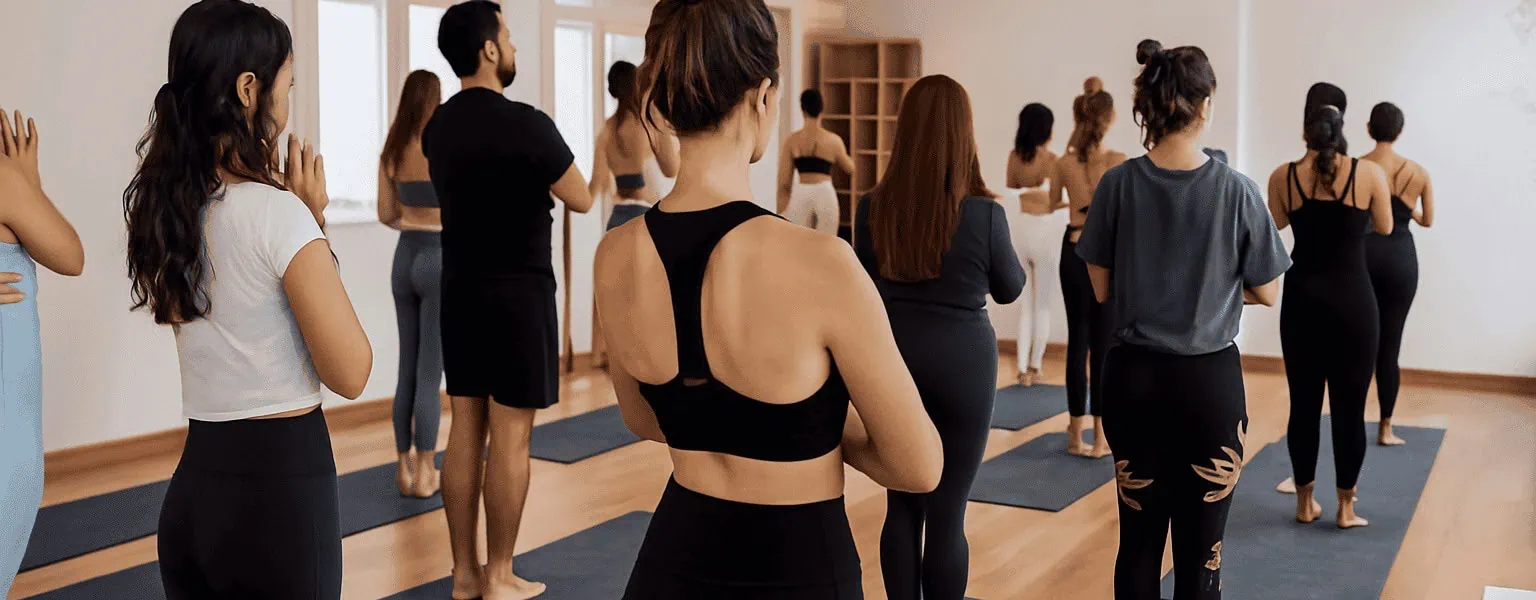
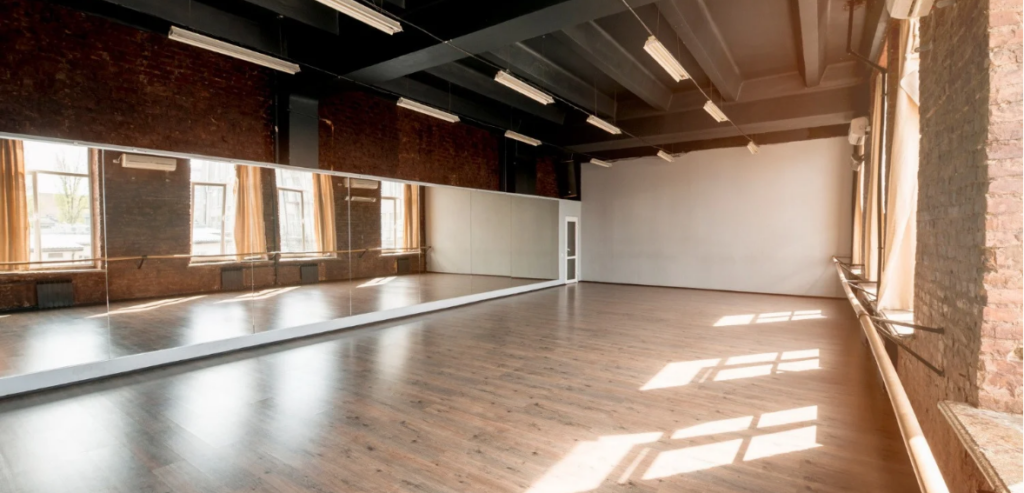
A studio owner budgets for flooring the way they budget for mirrors, as a surface that needs to look right. Then a ballet teacher explains that the vinyl laid directly on concrete is a joint injury waiting to happen, a tap teacher says the sprung floor swallows the sound, and the hip hop class finds the marley too slippery for sneakers. Flooring is the one capital item in a studio that affects injury risk, and the right dance studio flooring options depend entirely on which disciplines you teach, in what footwear, and on what subfloor you are starting from.
Why Flooring Is a Safety Decision Rather Than a Finish
Dance generates repeated impact loading, and the floor either absorbs that energy or returns it into the dancer’s body. Hard, unforgiving surfaces have long been associated in dance medicine literature with overuse injuries in the lower limb, including stress fractures, shin splints, and knee and ankle problems, particularly in disciplines involving repeated jumping.
The two properties that matter are force reduction, meaning how much impact energy the floor absorbs, and energy return, meaning how much it gives back to assist the next movement. A floor that absorbs everything feels dead and makes jumping exhausting. One that absorbs nothing transmits impact into joints. The target is a controlled middle, which is what a properly engineered sprung floor delivers and what vinyl over concrete does not.
The second property is surface friction, which governs slip and grip. Too slick and dancers fall. Too grippy and they catch, which causes ankle and knee injury in turning movements. Different footwear changes the answer entirely, which is why one surface rarely suits every class on a mixed timetable.
What Is a Sprung Floor and What Sits Underneath?
A sprung floor is a subfloor system designed to flex under load, built beneath the visible surface rather than being the surface itself. This distinction is the single most common point of confusion when studios buy flooring, since the vinyl on top is not the sprung element.
The common constructions are:
- Basketweave, where layers of timber battens are woven in alternating directions to create flex, the traditional approach and still widely used
- Foam block, where closed-cell foam blocks support a plywood deck, offering consistent performance and a lower build height
- Modular panel, where prefabricated panels with integrated resilient supports interlock, which installs faster and can be lifted
- Neoprene or rubber pad, where resilient pads support a sheet deck, common in retrofits where height is limited
Build height is the practical constraint most studios hit. A traditional basketweave may need several inches, which affects door clearances, thresholds, and sightlines in a converted space. Low-profile modular systems exist for exactly this reason and are frequently the right answer in a leased unit where structural changes are not possible.
What Is Marley and When Should You Use It?
Marley is the generic name for roll-out vinyl dance flooring, after the original manufacturer, and it is a surface rather than a cushioning system. It is laid over a sprung subfloor in a properly built studio, or over a hard floor in a studio that has compromised.
Marley comes in different surface characteristics, and the choice matters. A matte, slightly grippy finish suits ballet, contemporary, and bare or soft-shoe work. A smoother finish suits ballroom and movements requiring slide. Thickness ranges typically from around 1.2mm to 2mm or more, with heavier gauges standing up better to point work and furniture.
Marley is supplied in rolls, taped at the seams for permanent installation or laid loose and taped for touring. It can be cleaned and maintained easily, which is part of its appeal, and it can be lifted and replaced without touching the subfloor beneath. What it cannot do is provide shock absorption, so marley laid on concrete gives dancers a consistent, predictable surface and no protection from impact at all.
How Do the Main Options Compare?
Each surface suits particular disciplines and footwear, and the comparison below reflects what studios typically install for each.
| Surface | Shock Absorption | Best For | Avoid For |
| Marley over sprung subfloor | High, from the subfloor | Ballet, contemporary, jazz, lyrical | Nothing, the premium standard |
| Marley over hard floor | Minimal | Low-budget retrofit, light use | Jumping-heavy classes, long timetables |
| Hardwood over sprung subfloor | High | Tap, ballroom, musical theater, percussive work | Point work without an overlay |
| Rubber roll or tile | Moderate | Fitness, HIIT, strength, hip hop in sneakers | Ballet, point, bare-foot sliding work |
| Vinyl sports floor | Moderate | Multi-use rooms, school halls | Dedicated ballet studios |
| Foam interlocking tiles | High but unstable | Martial arts, gymnastics tumbling, toddler classes | Any turning or jumping on the ball of the foot |
| Carpet or low-pile | Low | Nothing in dance | All dance disciplines |
Foam interlocking tiles deserve a specific warning. They absorb impact well but offer poor lateral stability, which creates ankle injury risk in turning and jumping movements, and they are not a substitute for a sprung floor in a dance context despite being sold as one.
What Does Each Discipline Actually Need?
Different enough that a mixed-discipline studio has to make a deliberate compromise rather than finding a universal surface.
Ballet needs a sprung subfloor with marley over it, with a matte finish for grip in soft shoes and sufficient thickness to survive point work. Contemporary and lyrical want the same construction, often with a slightly grippier surface since much of the work is barefoot and involves floor contact.
Tap needs a hard surface for sound, which means hardwood or a specialist tap surface over a sprung subfloor, since marley deadens the sound that is the entire point of the discipline. Ballroom and Latin need a smoother, lower-friction surface permitting slide, traditionally hardwood.
Hip hop and commercial styles are danced in sneakers and need a surface with enough grip for rubber soles, where marley intended for soft shoes can feel slippery. Jazz sits between, usually working well on standard marley.
Fitness formats, strength work, and anything involving dropped weights need rubber rather than vinyl, since marley will tear and will not take point loading from equipment.
Can One Studio Serve Multiple Disciplines?
Partly, and the honest answer is that compromise is unavoidable in a single-room studio. The approaches that work are worth knowing before you spend.
A sprung subfloor with marley over it serves the widest range, since it suits ballet, contemporary, jazz, and most commercial work. Tap is the problem, and the usual solution is portable tap boards or a designated tap area rather than changing the whole floor.
Reversible marley exists with different surfaces on each side, which allows a studio to flip the roll seasonally or for specific use, though flipping a taped installation is not a weekly operation.
Where budget and space allow, separate rooms with dedicated surfaces is always better than one compromised room. Where it does not, prioritize the sprung subfloor over the surface, because the subfloor is the element protecting dancers and the surface can be changed later at a fraction of the cost.
What Does Studio Flooring Cost?
Quoted per square foot and varying widely by construction, which is why a figure for your own room has to come from a quote rather than from an article.
The cost structure breaks down into the subfloor system, the surface material, installation labor, and preparation of the existing floor. Subfloor systems are generally the larger component, with modular panel systems costing more per square foot in material but less in labor than a site-built basketweave. Marley is priced per square foot of roll, with heavier gauges and specialist finishes costing more. Hardwood over sprung subfloor sits at the higher end.
Several costs catch studios out. Subfloor preparation where the existing concrete is uneven, since a sprung floor laid over an unlevel base will not perform as designed. Moisture testing and vapor barriers in below-grade or slab-on-grade spaces, which is a genuine requirement rather than an upsell. Threshold and door adjustments where build height changes. And disposal of the existing floor covering.
Get quotes from installers who have done dance studios specifically, since a general flooring contractor will quote a sports floor or a commercial vinyl without understanding the difference.
What Does the Landlord Need to Approve?
More than most tenants expect, and this conversation should happen before you commission anything. A sprung floor is usually a tenant improvement rather than a fixture you can remove cleanly, and it changes the floor level.
Check the lease for alterations clauses requiring landlord consent, for any obligation to restore the premises at the end of the term, and for restrictions on floor loading. Raise build height explicitly, since changing the floor level affects door swings, accessibility compliance at thresholds, and sometimes fire egress. Ask about moisture, because a landlord may have information about the slab that you do not.
Accessibility matters here too. Where a floor build creates a change in level at an entrance, ADA requirements around accessible routes and thresholds may apply, and the fix is considerably cheaper designed in than retrofitted. Raise it with your installer and, where the building is subject to permitting, with the local authority.
How Should the Floor Be Maintained?
According to the manufacturer’s specification, because the wrong cleaning product will damage a marley floor and void the warranty. This is the most common way studios shorten the life of an expensive surface.
Marley needs sweeping or dry mopping daily to remove grit, which is the main cause of surface wear, and damp mopping with a manufacturer-approved cleaner at intervals suited to use. Avoid harsh detergents, bleach, and anything leaving residue, since a slippery film on a dance surface is a fall risk. Never use rosin, wax, or polish unless the manufacturer specifically permits it.
Protect the floor from what rolls over it. Equipment, staging, pianos, and furniture should sit on protective pads, and street shoes should be kept off entirely, which is both a maintenance and a safety rule. Inspect seams and tape periodically, since a lifted seam is a trip hazard. Keep the installation documentation, the warranty, and the maintenance specification together, because the right dance studio flooring options installed properly should last many years, and the studios that replace early are almost always the ones that cleaned it with whatever was in the cupboard.