
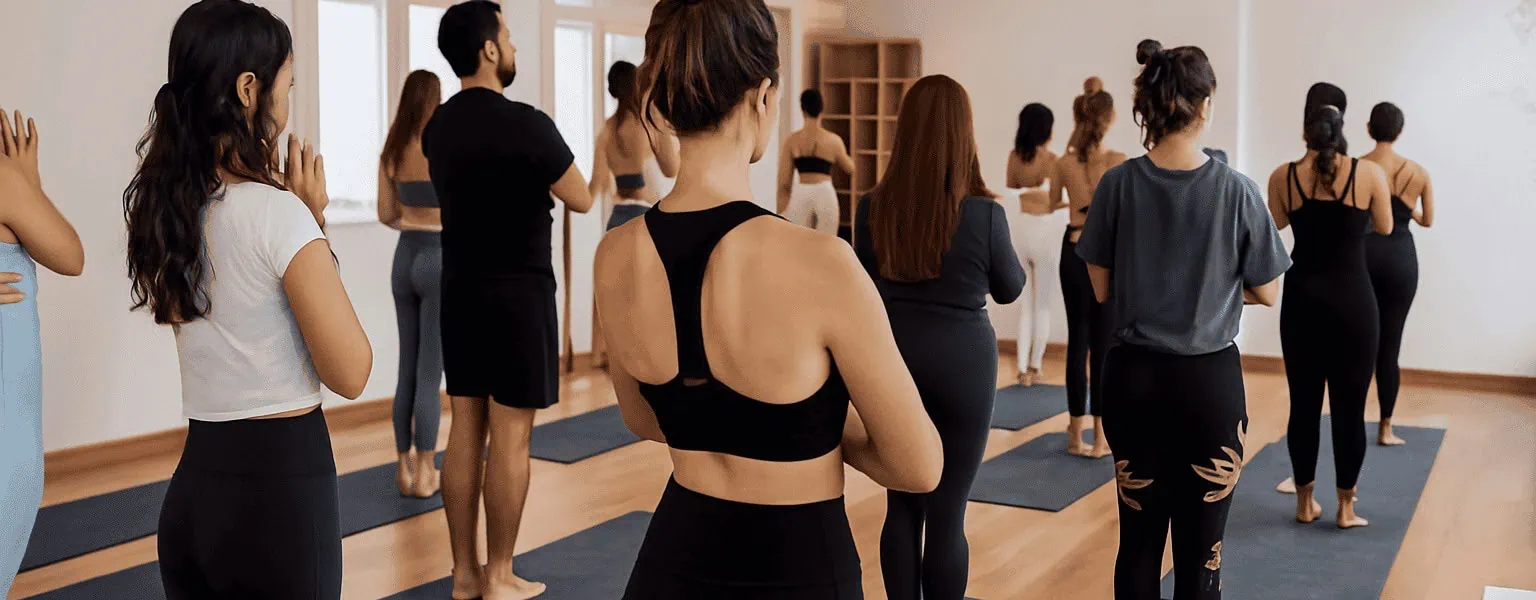

A studio owner plays a carefully built playlist from their personal streaming subscription through the class speakers every morning. The subscription is paid, the account is theirs, and the arrangement is almost certainly not permitted. Consumer streaming services license music for personal use, and a fitness class is a public performance in a commercial setting. Choosing licensed music for fitness classes is therefore a compliance decision rather than a preference one, and the gap between what studios assume and what their subscription actually allows is where the exposure sits.
Why a Personal Subscription Does Not Cover a Class
Playing recorded music to a class is a public performance under copyright law, and public performance requires permission from the rights holders. That permission is separate from the right to listen, which is what a consumer subscription grants.
Consumer streaming services state this explicitly in their terms, restricting use to personal, non-commercial purposes. Using one for a paid class is a breach of those terms regardless of whether anyone notices, and it leaves the studio without the public performance license the law requires.
There are two distinct sets of rights involved, which is the detail that causes most of the confusion. The composition, meaning the song as written, is administered in the United States by performing rights organizations including ASCAP, BMI, SESAC, and GMR. The sound recording, meaning the specific recorded version, carries its own rights, and digital transmission of sound recordings is administered separately.
A studio therefore needs permission covering both, which a consumer subscription provides for neither in a commercial context.
How Does Direct PRO Licensing Work?
You obtain a license from each performing rights organization whose catalog you use, which in practice means several, since no single organization represents all songwriters.
Fitness facility rates are typically based on factors such as the number of classes or sessions per week, the facility’s square footage or membership size, and whether music is used in classes or only as background. The organizations publish rate schedules for fitness businesses and will quote based on your specifics.
The practical considerations are that you need a license from each relevant organization rather than one, since a playlist of popular music will inevitably include works from multiple catalogs. The licenses renew annually and the rates change. And the composition license does not automatically resolve the sound recording question or the terms of whatever service you use to play the music from.
For a studio with a heavy class timetable and strong views about its music, this route gives the widest choice. For most others, the administration outweighs the benefit.
What Do Commercial Music Services Provide?
A catalog plus the licensing, delivered as a business subscription, which converts a compliance problem into a monthly cost.
Several providers offer business music streaming with commercial licensing included, covering the public performance rights for the catalog they supply. The subscription is typically priced per location and sometimes per zone within a location.
What to confirm before subscribing:
- Which rights are covered, specifically whether both composition and sound recording performance are included
- Whether fitness use is explicitly permitted, since some business music licensing is scoped to background music in retail and hospitality rather than exercise classes
- The territory, if you operate in more than one country
- Whether the catalog includes mainstream commercial music or only production music
- How many locations and zones the subscription covers
- What happens if you cancel, meaning whether playlists built in the service remain accessible
That second point is the one that catches fitness businesses out. A service licensed for background music in a cafe may not cover a high-energy class, so ask the provider directly and get the answer in writing.
What Do Fitness-Specific Music Services Add?
Music built for class use rather than listening, which saves instructors considerable preparation time and solves problems a general catalog does not.
The features that distinguish them are tempo-sorted catalogs in beats per minute, so an instructor building a cycling profile can find tracks at the cadence they need. Pre-built mixes matched to class formats and durations, including warm-up, work, and recovery phases. Seamless transitions and continuous mixes rather than tracks with gaps. Clean versions where language matters. And in some cases remixes or covers of recognizable songs licensed specifically for fitness use.
That last category is worth understanding. Some fitness music providers supply re-recorded versions of popular songs rather than the original master recordings, which changes the sound recording rights position and is why they can offer familiar music at fitness-friendly rates.
These services typically cost more than general business music and less than direct PRO licensing plus a separate delivery method, and for a studio running twenty or more classes a week the preparation time saved is a genuine part of the value.
Where Does Licensed Class Programming Fit?
Programs such as the major branded group fitness formats generally supply music as part of the program license, which covers the music used within that specific class.
What that license does not cover is everything else. The playlist in reception, the music on the gym floor, the warm-up track an instructor adds, and any class not run under the program all sit outside it.
Studios running branded formats alongside their own classes therefore usually need both, meaning the program license for those classes and a separate arrangement for everything else. Ask the program provider precisely what their license covers in your country, since the arrangement varies by territory and by program.
Instructors sometimes substitute their own music into a branded class, which breaches the program license and may breach the music licensing too. Address it in your instructor agreement rather than assuming nobody does it.

What About Music the Instructor Brings?
It is the studio’s problem regardless of whose phone it came from, which is the point most studios have not communicated to their teaching staff.
Liability for unlicensed public performance generally attaches to the business operating the premises rather than to the individual pressing play. An instructor using their personal subscription in your studio creates exposure for you.
The fix is procedural. State in your instructor agreement that only the studio’s licensed music source may be used, provide that source and make it easy to access, and explain why rather than simply prohibiting. Instructors who understand the licensing position generally comply, while those told only that personal accounts are banned frequently work around it.
Guest instructors and workshop presenters need the same briefing, and it belongs in the booking agreement rather than in a conversation on the day.
Outdoor and off-site classes carry the same requirement, and public park sessions may additionally need a sound permit from the parks department depending on the location.
What Happens If a Studio Is Unlicensed?
Copyright infringement exposure, and the enforcement in this area is more active than many small businesses expect.
Performing rights organizations monitor commercial venues and contact businesses they believe are using music without a license, and they do pursue claims. United States copyright law provides for statutory damages per work infringed, with a range that rises substantially where infringement is found to be willful, and a playlist contains many works.
Beyond the legal position there is a contractual one. Breaching a consumer streaming service’s terms can result in account termination, and a studio that built its playlists in a personal account loses them.
The practical risk calculus is straightforward. Licensed music for a small studio costs a modest monthly amount relative to the exposure, and the cost of compliance is considerably lower than the cost of a claim.
How Should a Studio Decide?
By matching the route to the timetable and the preparation burden rather than to the headline price.
A studio running a handful of classes weekly with instructors who want specific commercial tracks may find direct PRO licensing plus a compliant playback method workable, accepting the administration.
A studio with a busy group fitness timetable is almost always better served by a fitness-specific service, since the tempo sorting and pre-built mixes save instructor hours that are worth more than the price difference.
A gym where music is mainly background on the floor with a light class schedule can often use general business music streaming, provided the provider confirms fitness use is covered.
Whichever route you choose, get the scope in writing, confirm it covers both composition and sound recording performance, check it extends to every space and every class you run, and brief your instructors on using only the studio’s source. Sorting out licensed music for fitness classes takes an afternoon and a monthly line item, which is a considerably better position than discovering the gap through a letter.