
Phones have become part of everyday gym life. Members record their lifts, trainers demonstrate exercises, fitness creators make social media content, and studios capture photos or videos for marketing. What once required a camera crew can now happen with a smartphone in seconds. For gym owners, however, this creates a difficult question: how can people be allowed to film without making other members uncomfortable or exposing the business to unnecessary privacy complaints? A person who is happy to exercise in a shared gym is not automatically comfortable appearing in someone else’s TikTok, Instagram Reel, YouTube video, or promotional campaign.
A strong filming member policy needs to deal with more than whether cameras are allowed. It should explain where filming can happen, when consent is required, how staff should respond to complaints, and what happens when somebody repeatedly ignores the rules. Signage also matters, but a sign at the entrance should not be treated as a substitute for meaningful permission. The exact legal requirements can vary by jurisdiction, particularly when footage is used commercially, so studios should make sure their policies reflect applicable privacy, publicity, and recording laws. The goal is to create rules that members can understand and staff can apply consistently.
Why Every Gym Needs a Clear Filming Policy
Filming in fitness facilities has become common because members have many legitimate reasons for doing it. Someone may want to check their lifting technique, document personal progress, share a workout with friends, or create content for an online audience. Trainers may also record demonstrations, testimonials, classes, or promotional material. A blanket ban can therefore feel unnecessarily restrictive, particularly in studios where social media is already an important part of the community and marketing strategy.
The problem is that a gym is a shared environment. A member recording a squat rack may unintentionally capture several people walking behind them. A camera aimed at a mirror can record far more of the room than the person filming realizes. Other members might be stretching, changing layers of clothing, discussing something privately, or simply exercising without wanting to be recorded. This is why a good policy should balance the interests of the person filming with the reasonable privacy expectations of everyone around them. It should focus on predictable boundaries rather than forcing staff to make up rules whenever a camera appears.
A good filming policy should answer simple questions like:
- Where is personal filming allowed?
- Which areas are completely camera-free?
- When does consent become necessary?
- How should members raise privacy concerns?
- What happens if someone ignores the rules?
Having these answers in writing helps avoid confusion for both members and employees.
Understanding Member Consent Before Recording
Consent should be one of the central parts of a studio’s filming rules. A useful starting principle is simple: being present in a gym should not automatically mean agreeing to become the identifiable subject of another person’s recording. When another member is clearly featured, particularly when the recording will be published or used commercially, the person filming should obtain appropriate permission before recording or sharing the footage. Studios should also distinguish between incidental background appearances and situations where another member is deliberately framed, followed, interviewed, or made a recognizable part of the content.
The issue of filming members in gym consent becomes particularly important when the studio itself creates promotional material. A business recording a member testimonial, transformation story, class feature, or advertising campaign should not rely only on a general membership agreement unless that approach has been properly reviewed for the intended use and applicable law. Clear, specific permission can reduce misunderstandings about where footage may appear and how it may be used. Written releases are often appropriate for planned marketing shoots, especially where a member’s image, voice, name, testimonial, or personal story becomes part of branded content.
It’s also worth explaining consent in everyday language to members. Many people assume that if they’re standing in a public workout area, anyone can film them. That’s not always the expectation inside a shared fitness facility. Even when filming is allowed, respecting someone’s request not to appear in content helps build trust within the gym community.
Why Signage Alone Is Not Enough
Signs are useful because they communicate expectations before a problem occurs. A notice at reception might tell members that personal filming is permitted only in designated areas, that permission is required before deliberately recording other people, and that filming is prohibited in private spaces. Additional notices can be placed near areas where filming commonly happens. Clear signs make enforcement easier because staff can point to a rule that has already been communicated rather than appearing to invent a restriction during a disagreement.
However, signage should not be treated as universal consent. A notice saying that photography or filming may occur does not necessarily mean every person who enters has agreed to become the subject of promotional content or another member’s social media video. The legal effect of signage also depends on the circumstances and jurisdiction. Studios should therefore use signs primarily to communicate rules and alert members to filming activity. Where individual permission is appropriate, especially for planned promotional or commercial use, the business should have a separate process for obtaining it.
Useful places to display filming signage include:
- Reception and entrance areas.
- Group fitness studios.
- Weightlifting zones where filming is common.
- Locker room entrances with clear “No Filming” notices.
- Dedicated filming-friendly spaces, if available.
Consistent signage reminds members of the policy before issues arise.
Separate Personal Filming From Commercial Filming
Not every recording creates the same level of concern. A member placing a phone near a bench to record one set for technique review is different from an influencer arriving with lighting, microphones, multiple tripods, and an assistant. Studios should recognize this difference instead of placing every type of recording under one vague rule. Personal filming may be allowed when it remains unobtrusive, does not interfere with equipment access, and does not deliberately capture other members without permission.
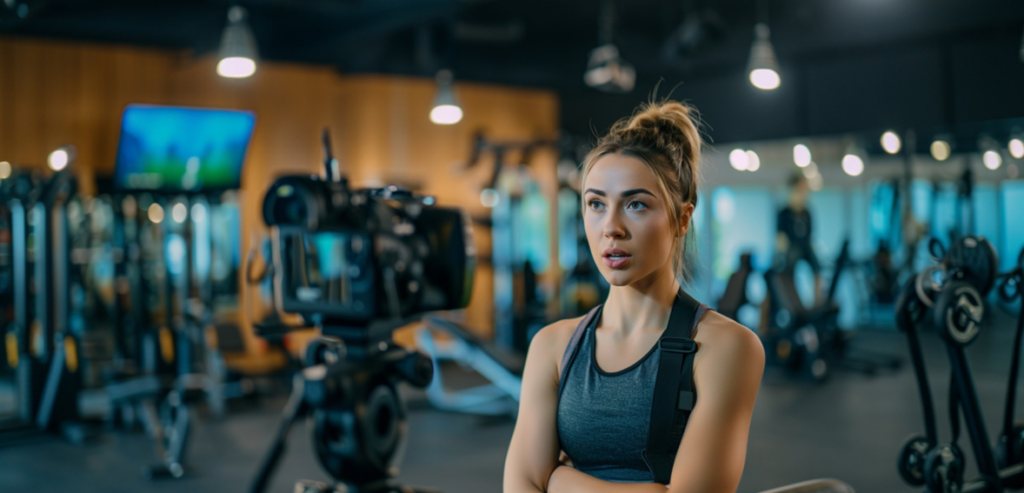
Commercial filming deserves additional controls because it can affect more people and occupy more space. The studio may require advance approval for professional cameras, tripods, lighting equipment, sponsored content, brand shoots, interviews, or recordings involving multiple participants. Approval allows management to choose a quieter time or controlled area and determine whether releases are needed. It also prevents an ordinary workout area from unexpectedly turning into a production set. A clear distinction between casual personal recording and organized commercial production gives both members and staff much more predictable expectations.
Studios may also want to define what counts as commercial filming. If content is sponsored, created for a brand partnership, or intended to promote a business or paid service, it may fall into a different category than a personal workout video shared with friends.
Create Areas Where Filming Is Never Allowed
Some parts of a fitness facility should have much stronger privacy protections than the general workout floor. Locker rooms, changing areas, bathrooms, showers, treatment rooms, and similar spaces should normally be treated as no-filming zones. Even if somebody says they intend to record only themselves, another person can easily enter the frame unexpectedly. A strict rule is easier to understand and enforce than asking staff to determine whether a particular camera angle was sufficiently private.
Studios may also decide that certain workout areas should be camera-free because of their layout or purpose. A crowded stretching area, for example, may make it almost impossible to film without capturing other members. Facilities can instead establish filming-friendly zones where cameras can be positioned without dominating shared spaces. This does not require redesigning the entire gym. Sometimes a clearly identified corner, wall, platform, or set of quieter hours is enough to accommodate members who want to record while preserving more private spaces for those who do not.
Creating dedicated spaces can actually reduce complaints because members know where filming is expected and where privacy is prioritized.
Make the Filming Policy Easy for Members to Understand
A filming policy is more useful when an ordinary member can understand it quickly. Complicated legal language may protect certain contractual interests, but it is not a good substitute for practical instructions. Members should be able to determine whether filming is permitted, which areas are off limits, whether tripods are allowed, what they should do if another person appears in the frame, and whom they can speak to if they are uncomfortable. These expectations should be available before a dispute happens.
The studio can include the full policy in membership terms or facility rules while also providing a shorter version through signs, onboarding information, the website, or member communications. Consistency matters across every version. If the membership agreement says one thing while a sign on the gym floor suggests something different, both members and employees can become confused. Management should periodically compare these materials and update them together whenever the filming rules change.
A short “member version” of the policy is often more effective than expecting everyone to read a long legal document during sign-up.
Address Background Recording Clearly
One of the hardest issues is incidental recording. In a busy gym, it may be unrealistic to guarantee that nobody will ever appear in the background of a personal workout video. At the same time, members should not be expected to tolerate a camera repeatedly pointing directly at them simply because the person filming claims that they are “in the background.” A sensible policy should explain the difference between incidental appearances and deliberate or persistent recording of another person.
The filming members in gym consent standard used by a studio can address this by requiring members to position cameras carefully, use tight framing where possible, and stop or adjust recording when another member raises a reasonable concern. If someone is clearly recognizable and becomes a meaningful part of the content, obtaining permission before posting may also be appropriate depending on the circumstances and applicable rules. Studios should avoid promising members that they will never appear incidentally in any recording if filming is generally permitted. Instead, they can set reasonable behavioral expectations and provide a straightforward complaint process.
Simple recording habits can make a big difference. Encouraging members to face a wall, use tighter camera angles, or record during quieter hours can reduce accidental background footage without banning filming altogether.
Give Members a Simple Way to Raise Concerns
Members should not have to confront another person directly if they are uncomfortable being filmed. Approaching a stranger who is recording can lead to unnecessary tension, particularly when that person believes the camera is pointed only at themselves. The policy should therefore tell members that they can speak privately to a staff member. Employees can assess the situation, remind the person filming of the rules, and ask them to reposition or stop recording when necessary.
Staff should take these concerns seriously without automatically assuming intentional misconduct. Sometimes the issue can be resolved by changing the camera angle by a few feet. In other cases, a member may have repeatedly ignored requests or deliberately recorded another person. The response should match the circumstances. What matters is that members know there is a reliable process and that employees know what authority they have. A policy loses credibility quickly when front desk employees understand the rules differently from trainers or managers.
The easier it is to report a concern, the more likely members will use the official process instead of arguing with each other on the gym floor.
Train Employees to Enforce the Same Standard
Even a carefully drafted policy can fail when staff enforcement is inconsistent. One employee may allow tripods during peak hours while another prohibits them completely. A trainer might encourage clients to record in an area where the front desk has been telling people cameras are restricted. These inconsistencies make members feel that enforcement is arbitrary and make complaints harder to resolve.
Staff training should therefore include realistic examples. Employees should know what to do when somebody records another member after being asked to stop, when an influencer blocks equipment with a tripod, when a member complains about appearing in the background, or when filming takes place in a prohibited area. They should also understand when an issue needs to be escalated to management. The aim is not to turn every employee into a privacy-law specialist. It is to give staff a simple decision-making framework that produces consistent responses.
Role-playing a few common situations during staff training can make policy enforcement much more consistent.
Build Consent Into Studio Marketing
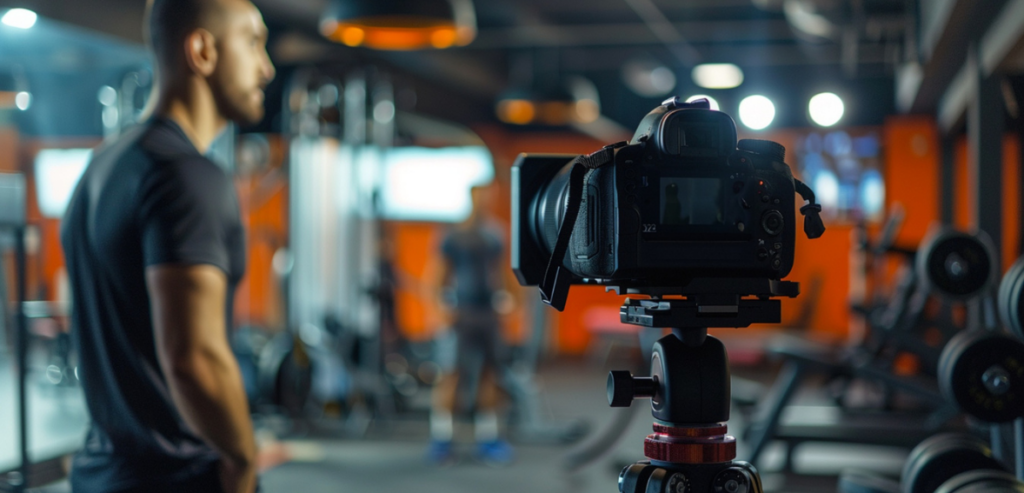
Studios themselves need to follow the standards they expect from members. Marketing teams frequently want authentic footage of busy classes, enthusiastic members, transformations, events, and trainer interactions. Those images can be valuable, but a crowded class should not automatically become a marketing set without considering the people taking part. Studios can plan filming sessions in advance and tell participants clearly what will happen.
For more focused marketing, written consent is often the cleaner approach. A release can identify the type of material being captured and explain the intended uses, subject to applicable law. This is especially useful for testimonials, interviews, before-and-after material, or content centered on a particular person. When dealing with filming members in gym consent, studios should also think about future use. Footage created for one social post may later be considered for paid advertising, a website banner, or another campaign. Permission practices should reflect the uses the business genuinely anticipates rather than relying on assumptions.
Handle Group Classes With Extra Care
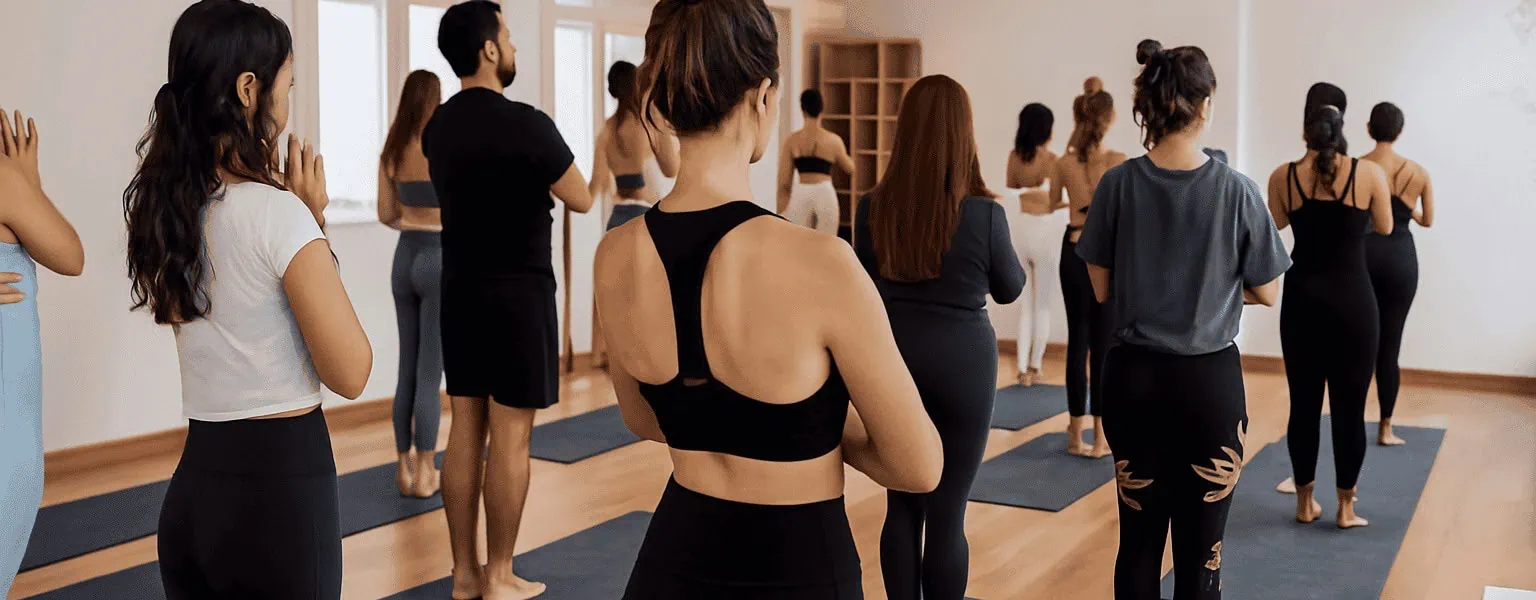
Group classes create a particular challenge because many people share a relatively small space. One participant recording themselves may capture most of the class, while a studio camera positioned at the front can make nearly everyone identifiable. A class environment also makes it difficult for somebody who objects to filming to avoid the camera without disrupting their workout. For these reasons, class-specific rules can be helpful.
Studios might restrict personal recording during certain classes or allow it only from designated positions. When the business plans to film a class for marketing, participants should receive appropriate notice before recording begins, and the studio should have a process for people who do not want to participate in the shoot. Depending on the intended use and local requirements, individual consent may also be appropriate. The important point is to avoid surprising people after the class has already started or assuming that participation in a fitness session automatically equals agreement to promotional recording.
Some studios schedule dedicated content days for group classes, giving members the choice to join a filmed session or attend a regular class instead.
Think Carefully About Children and Young People
Facilities that allow minors need additional caution around photography and video. Rules relating to children can involve parental or guardian permission as well as heightened privacy and safeguarding concerns. A casual approach that may be tolerated in an adult workout area may be inappropriate for a youth class, swimming program, sports session, or family fitness event. Studios should have specific procedures for these situations rather than leaving decisions to whichever employee happens to be working.
Where the facility regularly serves minors, management should review its filming rules alongside its broader safeguarding and privacy procedures. Employees should know whether personal filming is allowed during youth activities, who can authorize studio photography, and how consent must be documented. Studios should obtain jurisdiction-specific legal guidance when necessary because rules concerning minors can be particularly sensitive. The safest operational approach is to make expectations clear before the activity begins rather than trying to solve a consent problem after footage has already been captured or posted.
Set Rules for Tripods, Lighting, and Other Equipment
Privacy is not the only concern created by filming. Equipment can also create physical and operational problems. A tripod placed in a walkway can become a trip hazard. A ring light may occupy valuable floor space. A camera bag beside a machine can block access, while repeated retakes can keep equipment unavailable to other members. A comprehensive policy should therefore address how filming equipment can be used, not just what the camera records.
Studios can require recording devices and accessories to remain out of walkways, emergency routes, and equipment access areas. Larger setups may require prior permission, particularly during busy periods. Staff should also have the authority to ask someone to move equipment if it interferes with another member’s workout or creates a safety concern. These practical rules make the filming policy easier to defend because they show that the goal is not to discourage content creation but to keep a shared facility usable and comfortable for everyone.
Decide What Happens When Someone Breaks the Rules
A policy needs consequences if it is going to hold up in day-to-day operations. Not every violation should result in immediate membership termination. Someone who accidentally positions a phone poorly may simply need a reminder. A member who continues filming after a staff instruction may warrant a formal warning. More serious conduct, such as deliberately recording in a prohibited private area, harassing another member with a camera, or repeatedly ignoring established restrictions, may require stronger action in accordance with the membership agreement and applicable law.
A graduated enforcement process can help staff respond proportionately.
For example, studios might follow a process like:
- Friendly reminder about the filming policy.
- Formal verbal or written warning.
- Temporary restriction on filming privileges.
- Membership review or stronger disciplinary action for repeated or serious violations.
The studio should document significant incidents, particularly when another member has complained or an employee has issued a warning. Records can include the date, people involved, rule that was explained, action taken, and any follow-up. Documentation is useful when the same behavior happens again because management can see whether the issue is an isolated misunderstanding or a continuing pattern. It also supports consistent treatment instead of relying on employee memory.
Do Not Forget Audio Recording
Video gets most of the attention, but smartphones and cameras usually capture sound as well. A member may think they are recording only their own workout while conversations between other people are audible in the background. Audio recording laws can differ significantly between jurisdictions, including rules governing consent to record conversations. Studios should therefore avoid assuming that the rules for images and sound are identical.
A practical policy can tell members not to intentionally record private conversations and to be considerate when using microphones or other audio equipment. Commercial shoots involving interviews should be handled more formally, with appropriate permissions for both image and voice. Because legal requirements vary, businesses should seek local advice when drafting detailed audio-recording provisions. Recognizing audio as part of the filming issue prevents a policy from focusing so narrowly on camera angles that it overlooks another important privacy concern.
Review Membership Agreements and Privacy Documents
A filming policy should not exist in isolation from the rest of the studio’s documentation. Membership agreements, privacy notices, class terms, event forms, website policies, and marketing releases may all contain language related to photography or media use. Management should review these documents together so that members are not receiving contradictory messages. If one document says photography is prohibited while another broadly authorizes it, staff may struggle to determine which standard to apply.
This is also where filming members in gym consent should be considered as part of a wider privacy framework rather than a single sign on the wall. The business should know why it records people, how permissions are obtained where necessary, who has access to studio-created footage, how the material is used, and how long it is retained where applicable. Legal counsel can help adapt the documentation to local privacy, recording, publicity, employment, consumer, and contract requirements. A policy is strongest when its practical rules and formal documents support each other.
Review the Policy as Technology Changes
Filming habits change quickly. Small wireless microphones, wearable cameras, smart glasses, livestreaming tools, and increasingly compact recording devices can make it less obvious when recording is taking place. A policy written only around smartphones and tripods may become outdated even if its underlying privacy principles remain useful. Studios should therefore review filming rules periodically rather than treating them as permanent once published.
The review does not have to involve rewriting everything every few months. Management can look at complaints received, recurring staff questions, changes in technology, and situations the current policy does not address clearly. If members repeatedly argue about livestreaming, for example, the policy may need to state whether live broadcasts are treated differently from recordings saved privately. Updating the rules based on actual experience makes the policy more practical and prevents it from becoming a document that exists only in the membership agreement.
An annual review is often enough for many studios unless new technology or recurring complaints highlight gaps that need immediate updates.
Create a Culture Where Cameras and Privacy Can Coexist
The purpose of a filming policy should not be to create hostility toward cameras. Recording workouts can be useful, enjoyable, and important to how many people engage with fitness today. Studios can support that behavior while still recognizing that other members may want to exercise without becoming content. These two expectations do not have to be incompatible when boundaries are communicated clearly.
The strongest approach combines clear rules, visible signage, sensible consent procedures, staff training, designated restrictions, and proportionate enforcement. Members who want to film should know how to do so responsibly, while those who prefer privacy should know where they can raise a concern. Studios should also hold their own marketing activity to an appropriate standard rather than imposing rules only on members. When everyone understands the expectations, filming becomes much easier to manage without unnecessary confrontation.
A respectful culture often works better than constant policing. When members understand why the rules exist, they’re more likely to follow them voluntarily.
Conclusion
A clear filming policy helps gyms support personal recording without compromising member privacy. By separating personal and commercial filming, identifying no-camera areas, explaining consent expectations, and training staff to respond consistently, studios can reduce confusion and complaints. Signage is useful, but it works best alongside clear communication, fair enforcement, and updated privacy practices that keep pace with changing technology.