

Most studio owners believe liability waivers protect their business from lawsuits. Every new client signs one. Staff treat it as a routine step. The document feels like a legal shield that stands between the business and financial risk. That confidence disappears when an injury turns into a claim, and the waiver fails in court.
Across the United States, courts regularly invalidate liability waivers. The issue is not that waivers never work. One of the main problems is that many waivers are drafted, presented, or managed incorrectly. The power of a liability waiver to protect a studio depends on legal clarity, fairness, and compliance with the law of the state where the business operates. When any of these elements are missing, the waiver becomes an illusion of protection instead of a reliable legal defense.
This article explains the reasons for the high rate of waivers being declared invalid, the criteria judges use to determine waiver validity, and the steps business owners can take to strengthen their legal position before a dispute occurs.
How Courts Evaluate Liability Waiver Enforceability
The Requirement of Clear and Explicit Language
Judges look for language that makes the release a participant consents to clearly. The waiver must expressly mention the dangers the participant confronts and the studio’s limited liability for ordinary negligence.
When language is suggested, ambiguous, or indirect rather than explicit and straightforward, liability waiver enforceability decreases.
The Standard of Reasonable Understanding
Judges evaluate waivers from the participant’s perspective. They ask whether an average person can understand the document without legal training. Dense legal language works against enforcement.
Enforceability improves when studios use plain language and short, direct sentences.
Transparency and Fairness
Courts assess whether a waiver presents its terms honestly. A waiver that appears misleading or overly aggressive raises concerns. Liability waiver enforceability depends on transparency rather than pressure.
Fairness strengthens credibility in court.
State Law Differences and Their Legal Impact
Why Geography Controls Waiver Validity
The United States has different waiver laws. While some states prohibit or enforce stringent standards, others permit more expansive liability releases. The state in which the studio operates determines whether the liability waiver is enforceable.
A waiver that works in one state may fail in another.
Increased Scrutiny for Physical Activity Services
Courts closely examine waivers for physical activities. Movement-based services involve predictable injury risks. Liability waiver enforceability requires studios to explain those risks clearly and honestly.
Generic language rarely meets this standard.
Structural Weaknesses that Cause Waivers to Fail
Waivers Buried Inside Other Agreements
Certain studios conceal waivers in their terms of service or membership agreements. Courts frequently find that participants were unaware that they were forfeiting their legal rights.
When studios present waivers as distinct, clearly labeled documents, the enforceability of liability waivers improves.
Inadequate Formatting and Visual Overload
Large text blocks make it harder to read. Courts consider presentation when evaluating consent.
Liability waiver enforceability benefits from a clean layout and logical structure.
Overreach and Why Courts Reject it
Attempts To Eliminate All Responsibility
Some waivers attempt to release studios from every possible outcome. Courts view this approach as unreasonable. Liability waiver enforceability declines when waivers try to excuse reckless or intentional behavior.
Reasonable limits matter.
Ignoring Instructor Responsibility
Waivers do not replace professional standards. Courts recognize that instructors still owe a duty of care. Liability waiver enforceability depends on acknowledging realistic limits.
Studios must pair waivers with proper training and supervision.
Digital Waivers and Modern Legal Expectations
Electronic Signatures and Legal Acceptance
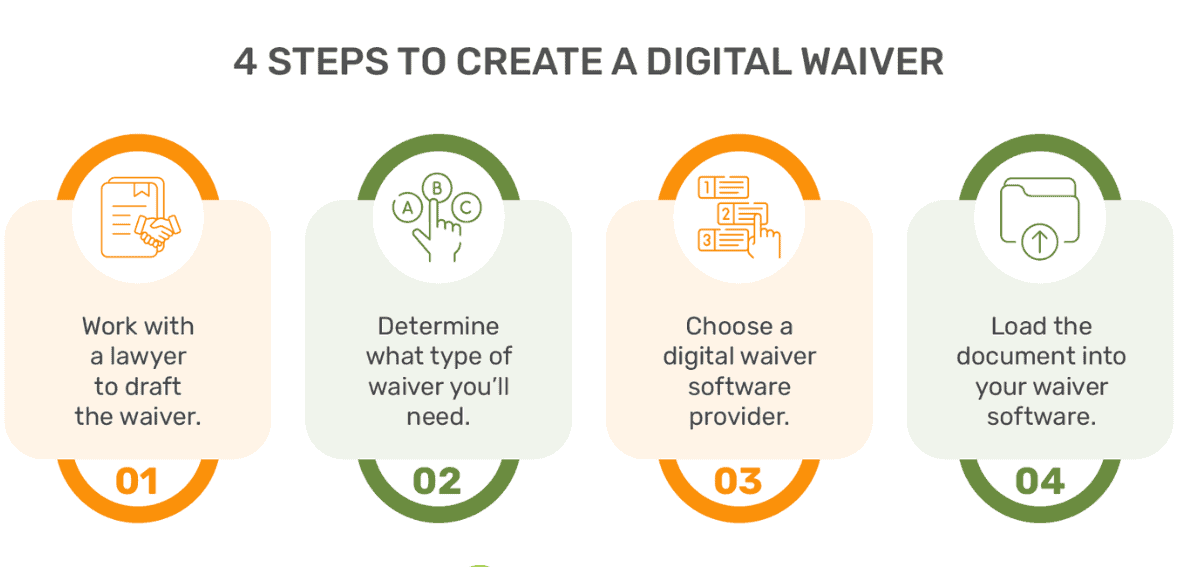
Most states recognize electronic signatures. Courts focus on whether participants clearly agreed to the terms. Liability waiver enforceability depends on the signing process, not the technology.
Clear digital acknowledgment supports enforcement.
Timing and Access to Information
If participants sign waivers moments before class, courts may question informed consent. Liability waiver enforceability improves when studios provide access in advance.
Time to review matters.
Why Fitness and Wellness Studios Face Higher Legal Exposure
Physical Movement and Predictable Injury Risk
Studios involve stretching, lifting, balance, and endurance. Even with proper instruction, injuries happen. Liability waiver enforceability becomes essential when risk cannot be eliminated.
Waivers help define accepted risk.
Client Expectations and Liability Claims
Clients expect guidance and safety. When injuries occur, they may believe the studio failed. Liability waiver enforceability helps clarify responsibility boundaries.
Clear expectations reduce disputes.
Language Choices that Strengthened Enforceability
Using Direct and Simple Sentences
Clarity is preferred by courts. Short sentences are easier for participants to comprehend than complex clauses. Clear communication strengthens the enforceability of liability waivers.
Informed consent is supported by straightforward language.
Steer Clear of Legal Jargon and Ambiguity
Enforcement is weakened by ambiguous words. Ambiguity is resolved by courts against the company. The enforceability of liability waivers rises when they steer clear of superfluous legalese.
Clarity protects the studio.
Customization and Legal Precision
Aligning Waivers with Actual Services
Each studio offers different services. Risks vary between yoga, Pilates, cycling, and strength training. Liability waiver enforceability improves when waivers reflect actual activities.
This approach is critical for fitness studio waivers involving equipment and instruction.
Addressing Equipment and Instruction Risks
Studios that provide equipment must address related hazards. Liability waiver enforceability depends on explaining how clients interact with tools and instructors.
Specific language strengthens legal defense.
The Role of Systems in Waiver Management
Centralized Storage and Consistency
Modern studio systems help manage waivers efficiently. Missing or outdated documents weaken liability waiver enforceability.
Centralization improves reliability.
Audit Trails and Proof of Consent
Digital records show when and how a waiver was signed. Courts value this evidence. Liability waiver enforceability improves when studios demonstrate a consistent process.
Documentation matters.
Also Read: The 72-Hour Window: How to Reduce Gym Member Cancellations After No Shows
Common Misconceptions that Increase Risk
Believing a Signed Waiver Guarantees Protection
A signature alone does not ensure enforceability. Liability waiver enforceability depends on compliance with legal standards.
Understanding limits prevents false confidence.
Assuming One Waiver Works for all Locations
Studios with multiple locations face different state laws. Liability waiver enforceability requires location-specific documents.
Uniform waivers create uneven risk.
Thinking Paper Waivers Are Safer
Courts evaluate substance, not format. Liability waiver enforceability depends on clarity and informed consent.
Digital systems can strengthen protection.
Why Liability Waiver Enforceability is Widely Misunderstood

Industry Habits Replace Legal Understanding
In the fitness and wellness industry, waivers are common. New studios copy established templates. Over time, this creates the belief that standard practice equals legal protection. Courts do not follow industry habits. They follow legal standards.
Liability waiver enforceability requires more than common practice. A waiver must meet strict legal criteria.
Confidence-Based on Assumption Instead of Law
Many owners feel protected simply because clients sign a document. That confidence often lacks legal support. Liability waiver enforceability depends on how clearly a waiver explains risk and rights, not on the number of signatures.
Assumptions increase legal exposure.
Controlled Legal Risk Management Strategy
Legal Review and Updating on a Scheduled Basis
Laws evolve through court decisions. Studios must update waivers regularly. Liability waiver enforceability improves when documents reflect current standards.
Annual review reduces risk.
Staff Training and Process Consistency
Staff behavior affects consent quality. Rushed explanations weaken enforceability. Liability waiver enforceability improves when teams follow consistent onboarding procedures.
Training supports legal defense.
Transparent Communication with Clients
Clients who understand risks are less likely to dispute responsibility. Liability waiver enforceability benefits from openness and education.
Transparency builds trust.
The Business Impact of Strong Waiver Practices

Reduced Legal Costs and Disputes
Clear waivers reduce misunderstandings. Liability waiver enforceability helps resolve claims early.
Prevention saves resources.
Stronger Professional Reputation
Studios that manage legal responsibilities professionally build credibility. Liability waiver enforceability supports long-term stability.
Trust supports growth.
Conclusion
For studio owners, liability releases can provide them with a false sense of security. Protection is not determined solely by a written instrument. Clear language, equitable presentation, appropriate structure, and adherence to state law are all necessary for the enforceability of liability waivers. Because studios often utilize common templates, overlook changes in the law, or interpret waivers as regular paperwork rather than formal commitments, courts frequently reject many waivers. Courts consider whether participants were aware of the hazards and the rights they consented to give up.
Over time, studios that handle waivers as a legal procedure rather than a form gain greater protection. Effective waiver procedures strengthen professional standards, minimize needless legal risk, and lessen disagreements. This method increases customer comprehension and confidence. Strong waiver foundations promote long-term stability and confidence for both studios and participants in an industry based on mobility, instruction, and individual accountability.
FAQ
Do all US states allow for the enforcement of liability waivers?
The enforceability of liability waivers is determined by state law. Each state implements different rules and regulations.
Can studios be shielded from instructor errors by waivers?
Waivers may restrict claims about common negligence. They do not guard against careless or deliberate behavior.
Do courts accept digital waivers?
Yes. Courts accept digital waivers when consent is clear and documented. Proper systems improve enforceability.
How often should studios review waivers?
Studios should review waivers at least once a year to maintain enforceability.
Are fitness studio waivers legally different from other waivers?
Yes. Fitness studio waivers must address physical risk and instructional factors. Well-structured waivers offer stronger legal support.