

How Smart Operators Are Turning Dead Hours into Consistent Income
Walk into any indoor golf facility on a Tuesday afternoon, and you might find half the bays sitting empty. Yet those same bays are fully booked by 6 PM. That gap — the dead zone between peak and off-peak hours — is where most indoor golf businesses quietly bleed revenue. Maximizing revenue per bay hour isn’t just about filling every slot. It’s about rethinking how each bay performs across every hour of the day, every day of the week. The operators who crack this formula don’t just survive — they scale.
Understanding Revenue Per Bay Hour: The Core Metric That Matters
Before optimizing anything, you need to understand what you’re actually measuring. Revenue per bay hour (RPBH) is the single most important performance metric for any indoor golf facility. It captures how much money each bay generates on average for every hour it’s available.
Calculating revenue per bay hour (RPBH) is simple. Start with how much money you made with all your bays open. Then divide that number by the total number of hours all the bays were open. Take a facility with 4 bays, all open for 14 hours. Each day, your facility has 56 bay hours. If the facility has a revenue of $1,120 for the day, then the RPBH for that facility is $20. With that one number, you can evaluate the efficiency of pricing, demand, and facility utilization.
There is a target RPBH for successful indoor golf facilities. That target is between $35 and $65, depending on the area the facility is located in, the amenities, and the types of simulators. If your facility is consistently below that target, the likely cause is one of three issues. The issues may stem from underpriced off-peak slots, low membership penetration, or poorly optimized revenue from services beyond the business’s primary product.
Dynamic Pricing: Stop Charging Flat Rates for Unequal Demand
One of the fastest ways to increase indoor golf bay revenue is to stop charging the same rate at 11 AM that you charge at 7 PM. Dynamic pricing — adjusting hourly rates based on demand — is standard practice in hotels, airlines, and parking garages. Indoor golf is catching up.
During peak evening and weekend hours, your bays are in short supply. Golfers will pay a premium because demand outpaces supply. During midday weekday hours, the inverse is true. Lowering prices slightly during slow periods doesn’t dilute your brand — it activates a segment of your customer base that simply won’t pay peak rates but will absolutely show up at a reasonable discount.
A tiered pricing model typically divides the day into three windows: off-peak (morning and early afternoon on weekdays), standard (late afternoon and weekend mornings), and peak (evenings and weekend afternoons). Some facilities add a fourth “prime time” tier for Friday and Saturday evenings. Building this structure into your online booking system enables automatic price changes without requiring staff intervention.
Membership and Subscription Models: Predictable Revenue That Compounds
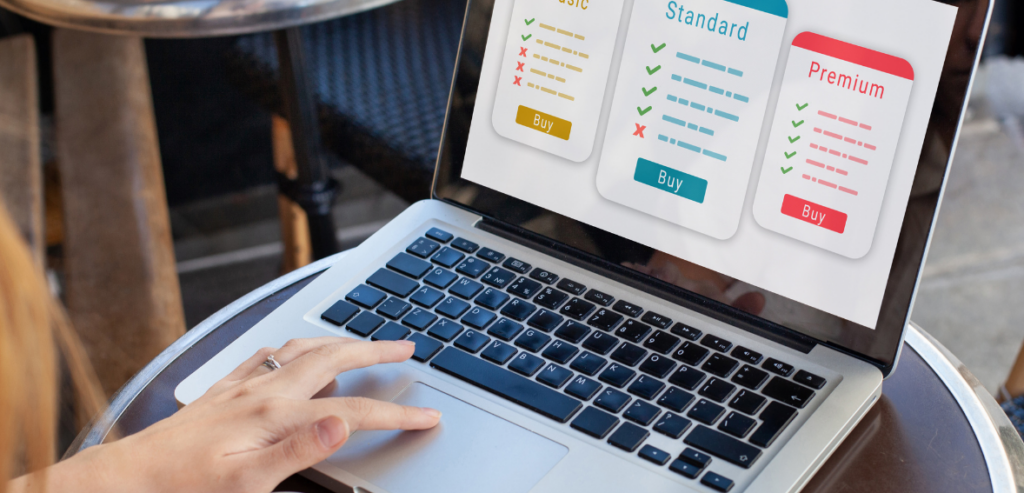
Hourly walk-in customers are valuable, but they generate unpredictable revenue. Indoor golf membership programs flip that equation. A golfer paying $199 per month for eight guaranteed bay hours is more valuable than a walk-in paying $30 once in a while — not just financially, but operationally. You can forecast your baseline revenue weeks in advance and staff accordingly.
Well-designed memberships will naturally fill off-peak times. Paid members value their investment and appreciate the flexibility that off-peak times offer. You can fill unexpected off-peak times by offering reduced fees for members’ guests and giving members priority over non-members.
Improving off-peak times requires you to consider pricing options as verticals rather than horizontals. Membership at a single price point prevents you from maximizing pricing at other price points. For an off-peak time initiative to be effective, you will require entry-level, mid, and premium pricing plans to target a range of consumers, from your casual weekend players to your competitive weekly players and your multiple times a week corporate players/clients. Each tier will require you to target pricing and times that justify the ticket differential.
Corporate and Event Bookings: The High-Value Segment Most Operators Underuse
Corporate clients are one of the most underutilized revenue sources in the indoor golf industry. A company booking two bays for a client event on a Thursday evening might spend $600 to $1,200 in a single visit — bay rental, food and beverage, equipment, and potentially branded experiences. That’s a meaningfully higher spend per booking than most individual customers generate.
Selling a golf experience to corporations is different from selling to a casual golfer. Your customers here are team builders, client entertainers, or organizers of corporate group dinners. Here, selling convenience, exclusivity, and technology gives you the edge.
Trackman and Full Swing Golf are examples of indoor golf simulators that create a branded experience, offer on-screen scoreboards, and display competitive formats that group events enjoy the most. Facilities that formalize this sustained approach by creating a corporate-focused program with tailored offerings, including branded displays and corporate event hosts, tend to enjoy the highest average revenue per bay hour within the segment.
Simulator Technology and Bay Experience: Why Upgrade Investment Pays Off
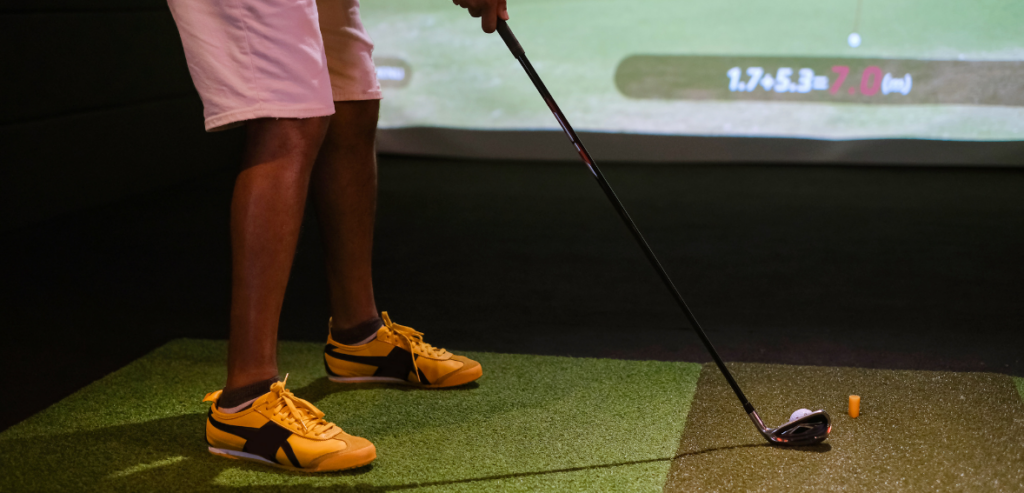
The technology in your bays directly affects what you can charge and how often those bays get booked. Golfers comparing two nearby indoor facilities will almost always choose the one with the more immersive, accurate, and feature-rich experience — even if it costs a bit more.
Trackman
Trackman is considered the gold standard in ball tracking across the industry. Its first product, geared toward professional training, the indoor launch monitor, reports data with extreme accuracy on launch angle, spin, carry distance, and shot shape. Facilities that install Trackman in their bays can cater to serious golfers and touring professionals, thereby supporting their premium pricing and attracting golfers with high disposable income.
Full Swing Golf
Full Swing Golf has built its reputation partly through high-profile endorsements, including Tiger Woods. Their simulators offer a wide course library, strong multiplayer functionality, and polished graphics that appeal to both serious players and casual entertainment-focused customers. The dual-use appeal — serious training and casual gaming — makes Full Swing bays particularly well-suited for facilities trying to attract a broad demographic.
Foresight Sports
Foresight Sports produces photometric-based launch monitors that are popular in both commercial simulator bays and professional club fitting environments. Their GCQuad and GC3 systems are trusted for accuracy and are often chosen by facilities that also offer club-fitting services, creating a natural revenue add-on to simulator bay rentals.
Investing in next-generation simulator technology is a pricing strategy, not simply a cost line. A training center with outdated projection systems and a limited number of courses is unlikely to charge more than $25-$30 per hour. A bay equipped with technology from each of the companies listed above will charge $45 to $75 per hour and directly increase the RPBH.
Ancillary Revenue Streams: Making Every Visit Worth More
Bay rental alone is rarely enough to maximize revenue per hour. The most profitable indoor golf facilities treat simulator time as the anchor of the customer experience, then layer additional revenue streams around it.
Food and beverage options are the biggest ancillary revenue drivers, as customers who sign up for two-hour bays are likely to order snacks, meals, and drinks if available. Facilities that offer in-bay ordering, along with menus and good service, see food and beverage prices grow to 30-50% of the bays’ rental income.
Offering club fitting and lessons is also a valuable service. A certified instructor or club fitter who sets up the simulator to help golfers assess their swings is providing a service that can be charged between $80 and $200. Offering this service attracts golfers who wouldn’t typically visit the facility, as they seek ways to improve their game. These services are augmented by the addition of a retail pro shop, branded products, and locker or golf equipment rentals, all of which can be implemented with minimal operational changes.
Booking System Optimization: Removing Friction from the Customer Journey
A surprising amount of revenue is lost not because demand doesn’t exist, but because the booking experience is clunky. Golfers who can’t easily find available slots, compare pricing, or complete a booking in under two minutes will simply go elsewhere.
Investing in a modern online tee-time booking system built specifically for indoor golf — with integration with platforms like GolfNow — can materially improve conversion rates. Automatic confirmation emails, reminder notifications, and waitlist functionality reduce no-shows and fill cancellations without requiring staff to manually manage the calendar. When booking is frictionless, customers book more often and further in advance, which improves your ability to forecast and optimize staffing.
Conclusion
Indoor golf bay utilization is ultimately a revenue engineering challenge. The facilities that outperform their market don’t just open their doors and hope customers show up. They build dynamic pricing structures, cultivate membership bases, pursue corporate clients, invest in technology that justifies premium rates, and create frictionless booking experiences. Every decision — from the simulator brand to the membership tier structure to the F&B menu design — feeds directly into revenue per bay hour. That one metric, tracked consistently and improved deliberately, is the clearest path from a half-empty facility on a Tuesday afternoon to a consistently profitable operation across the full week.
Frequently Asked Questions
What is a good revenue per bay hour for an indoor golf facility?
Most well-run indoor golf facilities target revenue per bay hour of $35 to $65, depending on market size, local competition, and the level of amenities offered. Facilities in major metro areas with premium simulator technology often exceed this range, particularly during peak evening and weekend hours.
How many bays does an indoor golf facility typically need to be profitable?
There’s no universal answer, but most experts suggest a minimum of three to four bays to achieve operational efficiency. Fewer bays create scheduling constraints that limit total revenue potential, while more bays allow for diverse configurations — some dedicated to lessons, others to casual play or corporate events — which improves overall utilization.
What simulator brand is best for a commercial indoor golf facility?
It depends on your target market and budget. Trackman is the benchmark for data accuracy and appeals strongly to serious golfers. Full Swing Golf offers broader entertainment appeal and an impressive course library. Foresight Sports is an excellent choice for facilities that combine bay rentals with club-fitting services. All three support premium pricing.
How can indoor golf facilities reduce no-shows and last-minute cancellations?
Requiring a credit card at booking and enforcing a clear cancellation policy — typically 24 to 48 hours notice — significantly reduces no-shows. Automated reminder notifications sent 24 hours and 2 hours before a booking also help. Waitlist features in modern booking platforms allow canceled slots to be quickly filled, minimizing lost revenue from late cancellations.