


Multi-location reporting involves collecting and combining data from various locations before analysis. Since each studio maintains its own dataset—including booked appointments, revenue, and customer interactions—failing to consolidate this information leaves it fragmented and disconnected.
A central reporting system allows the same analysis method to be applied to each studio and ensures that metrics are measured consistently, enabling accurate comparisons across all studios. This consistency is key to determining who is performing well and who requires support to improve.
Data normalization is a key factor for multi-location reporting. Normalizing your data means standardizing things like format, naming conventions, and units of measure. This process ensures that when data is brought in from multiple sources, it can be combined in a manner that you can trust.
Data latency is also a key component of reporting. Real-time reporting will provide you with instant insight, whereas batch processing may take time to deliver it. Depending on your business needs and system capabilities, you must determine whether to use real-time or batch processing for your reporting.
By understanding these basics, you will build a strong foundation for creating consolidated dashboards. Subsequently, this will ensure your reporting systems have a high degree of accuracy, scalability, and alignment with your company’s objectives.
Understanding Multi-Location Reporting Fundamentals

Multi-location businesses face unique challenges when managing performance across studio sites. Fragmented data often prevents organizations from obtaining an integrated operational picture. While centralized insights enable strategic decision-making, organizations without them must react to situations as they arise. Effective multi-location reporting is essential for proper functionality.
Studio owners and operators consolidate data from all sites into a single, organized database. This approach enables better tracking of revenue streams, customer attendance, employee efficiency, and purchasing habits. By building unified dashboards, businesses can discover patterns and examine performance across different locations to enhance their processes.
Building dashboards requires more than just merging data sources. The process requires organizations to develop common performance indicators while connecting various systems and guaranteeing data integrity. Deficient execution results in incorrect information, which causes businesses to experience operational problems.
The article provides comprehensive information on multi-location reporting, including its implementation through the development of a unified studio site dashboard. The document explains data architecture, integration methods, and best practices for visualization work and processes for continuous improvement. The goal is to help businesses create reliable reporting systems that support scalable growth and informed decision-making.
Defining Key Metrics Across Studio Sites
Successful multi-location reporting requires specific measurement standards. Standardizing performance indicators across studio locations prevents measurement inaccuracies. Begin by establishing the essential business performance indicators required for operations.
Typical requirements include revenue generation, class attendance, client retention, and membership expansion. Each metric needs a clear definition to prevent misinterpretation. Organizations must establish and maintain measurement standards across their operations to track revenue consistently.
Inconsistent calculation methods lead to incorrect conclusions. Organizations should include operational indicators that measure staff usage, classroom limits, and booking success to observe efficiency. Categorizing indicators into financial, operational, and customer groups further improves clarity.
This structure improves dashboard organization and usability. Developing documentation for all performance indicators ensures that all parties understand the data consistently. Without precise definitions, unreliable reports will hinder multi-location assessments and operational decisions.
Designing a Centralized Data Architecture

A strong data architecture is critical for reporting across multiple locations, as it defines how data is sourced, saved, and retrieved across studios.
A common architecture is a single central place to store data. Each studio sends all its information to a single place, which is usually a data warehouse. This makes it much easier to run reports and conduct analysis.
Data pipelines are also vital to this data architecture. Data pipelines allow us to extract, transform, and load (ETL) data from various sources into a central repository. The design of these data pipelines is key to ensuring the data in the central repository is accurate and consistent.
The data architecture must also be scalable so that, as the number of studios/locations grows, the central repository can handle the increased volume of data without impacting performance.
Security is also an important aspect of this data architecture. Customer and financial data must be stored securely through encryption and/or access controls. Additionally, all studios must comply with applicable data protection regulations and standards.
When used correctly, a well-designed data architecture will facilitate efficient multi-location reporting and enable easy data integration, ensuring the delivered consolidated dashboards always work as intended.
Integrating Data from Multiple Systems
Different systems handle scheduling, payments, and customer management at studio sites. System integration is essential for reporting across multiple locations.
Most organizations use application programming interfaces (APIs) as their primary integration method. These interfaces exchange data through predefined structures, providing the dependable connectivity needed for real-time synchronization.
Middleware can also connect disparate platforms. These tools act as data intermediaries, converting and moving information to simplify complicated system integrations.
The process of system integration requires organizations to maintain their data integrity. When duplicate records exist, and field values do not match, reporting becomes less accurate. Data validation procedures work to protect data integrity.
Organizations should track integration performance closely. Data transfer issues reduce the accuracy of dashboard displays, so automated alerts are necessary to detect and resolve problems quickly.
Complete data integration empowers users to conduct thorough analytical work and supports the development of unified dashboards that connect all studio locations.
Standardizing Data for Accurate Reporting
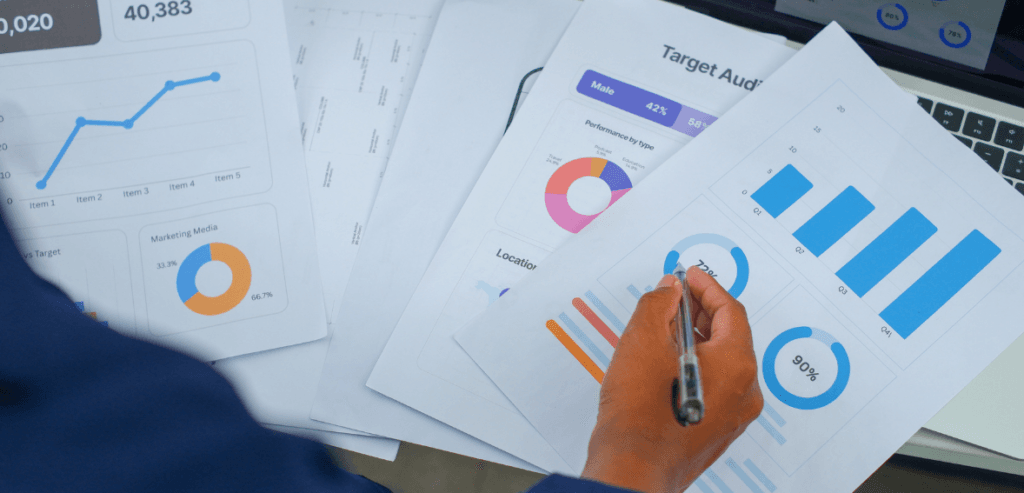
The process of multi-location reporting requires standardization because it is essential to its success. The various studio sites need standardization to enable their data to be compared accurately.
First, organizations must establish common data formats. Standardized rules ensure all dates, currencies, and measurement units use identical methods. This foundation allows the aggregation process to follow consistent operational procedures for data handling.
All naming conventions require standardization to establish uniformity. All locations must use the same labels for class types and membership categories. Inconsistent naming can lead to confusion and errors.
Data validation rules should be developed to ensure data quality control. The system will only accept data that meets performance standards for accuracy and completeness. The automated validation process reduces the amount of manual work.
Managing data shortages requires strategies to address missing or incomplete information. Organizations should establish precise guidelines for data imputation and exclusion to maintain consistency.
The analysis process requires standardized data to yield accurate results and useful insights. The process serves as the initial phase to create integrated dashboards that enhance operations for businesses with multiple locations.
Building Consolidated Dashboards for Insights
The primary aim of multi-location or studio reporting and analytics is to create consolidated dashboards that provide a full picture of performance across all studios.
Dashboards should be designed for clarity and usability. The most important metrics should be visible in an easy-to-read manner with supporting information available upon request. Having too much information on a dashboard will lessen its usefulness.
Data visualizations are incredibly useful for interpreting data. The type of visualization chosen (i.e., chart, graph, or table) will depend on the type of data being presented. If the data are presented clearly, the user will be able to understand the information.
Consolidated dashboards are designed to enable comparative analysis, so users can easily see how performance across studios differs. This will help identify trends and anomalies.
Dashboards should also allow users to apply filters and customize their views. The user may want to see data for specific studios, time periods, or metrics. Adapting data to suit the user enhances the usability of a dashboard.
An effective dashboard converts raw data into actionable insights that enable the user to make informed decisions. This leads to improved overall business performance.
Ensuring Real-Time vs Batch Reporting Balance
The decision between real-time and batch reporting methods is a crucial factor in handling reports from multiple locations. Both methods deliver distinct benefits and drawbacks.
Real-time reporting delivers immediate operational data, tracking ongoing activities such as class attendance and bookings. Note that this method requires additional hardware resources to function properly.
Batch reporting processes updates at specified intervals. While this method handles extensive datasets more efficiently, it takes longer to deliver insights. This approach works best for examining historical data and generating trend reports.
The selection process requires assessment of enterprise requirements. Some metrics need immediate updates, while other metrics can wait for their next scheduled refresh. The solution that achieves the best results uses a combination of multiple methods.
Optimization ensures maximum performance. Dashboards become less responsive when real-time processing fails, necessitating proper allocation of all available resources.
Combining real-time and batch methods achieves dashboard accuracy. This hybrid approach enables full multi-location reporting while maintaining optimal performance.
Implementing Role-Based Access and Security
Security is vital for multi-location reporting. Organizations must safeguard sensitive information while providing necessary access. Role-based access control (RBAC) serves as the primary mechanism, assigning specific roles to define user rights and restricting data access to only what is necessary for the task.
All data should be encrypted for both storage and transmission. The system safeguards information against unauthorized access. Organizations must adhere to established industry standards to maintain compliance.
Audit logs allow monitoring of all system activities. By recording data access and changes, logs assist in detecting security threats and establishing accountability.
Organizations should create policies to govern their data management processes. The policies establish rules for how organizations will handle their data throughout its entire lifecycle. The implementation of specific guidelines helps to decrease potential threats.
Robust security measures maintain operational integrity and meet compliance requirements. These protections safeguard all organizational and customer information.
Optimizing Dashboard Performance and Scalability
Multi-location reporting systems must scale as the business expands. Optimizing performance to maintain fast and effective dashboard performance is key.
To begin, data queries should be optimized. Optimized data queries have lower processing time, leading to better performance. Data indexing and/or caching techniques will also help improve performance.
Improving the performance, data aggregation should also be reviewed. Pre-aggregated data may reduce computation requirements during dashboard rendering. This enhances the user experience.
To achieve scalability, an organization requires a flexible infrastructure. Therefore, many organizations choose to use cloud-based solutions to handle the increased volume of data. These solutions provide elastic scalability and dependable availability.
Performance monitoring must occur continuously. The organization must track performance metrics, such as response time and system load, to identify bottlenecks and areas for improvement.
Optimizing the performance will ensure that consolidated dashboards perform well as the studio locations continue to grow. This ultimately supports long-term scalability and reliability.
Training Teams to Use Consolidated Dashboards
The most advanced dashboards will not function properly until users adopt them. Multi-location reporting requires organizations to implement training programs for their teams.
The first step requires organizations to deliver structured training programs. Users should understand how to navigate dashboards, interpret metrics, and apply insights. Learning through practical activities improves memory retention.
Documentation should be made available for reference. Users need guides and tutorials because these resources enable them to solve their problems without help. This reduces reliance on support teams.
Agencies should foster a culture that promotes data-driven decision-making. When teams regularly use dashboards to guide their actions, the resulting benefits enhance all aspects of operational performance.
Organizations should create feedback loops to capture user insights on usability and functionality. Ongoing feedback collection drives continuous system improvements.
Training programs ensure consolidated dashboards deliver their intended value, empowering teams to leverage multi-location reporting for better decision-making.
Monitoring and Improving Reporting Accuracy
For reliable reporting from multiple locations, maintaining accuracy is vital. Inaccurate data can lead to operational inefficiencies and poor decision-making. Therefore, it is important that you conduct regular audits of your data to identify inconsistencies, duplicates, and errors. Issues identified should be resolved as soon as possible to maintain the integrity of the data.
There are also automated validation processes that can improve accuracy. These processes involve validating data against a set of predefined rules. Automating data validation procedures will reduce the likelihood of human error while ensuring timely validation.
Another important factor to consider is the source of the data. Changes to the source systems can negatively impact your reporting. Therefore, continuous monitoring of the data sources will provide early detection of potential issues.
User feedback can provide insight into the accuracy of the data. If a user identifies a data discrepancy, you should take immediate action to investigate and correct it.
Ongoing improvements to the data reporting process will ensure that your reporting systems remain reliable. Accurate data is the basis for effective multi-location reporting and for the success of the business.
Conclusion
Businesses require multi-location reporting because they operate multiple studio locations. The system enables organizations to assess their performance through a single centralized platform, helping them make informed decisions and improve operational processes. The absence of consolidated reporting leads to data fragmentation, which makes it challenging to perform data analysis.
The construction of consolidated dashboards requires detailed design and precise implementation steps. The process starts with metric definition and continues through data architecture design until completion. The system needs to establish integration requirements that require standardization to maintain security for all its components.
Organizations require two reporting methods: real-time data access and scheduled report generation. Organizations develop their reporting systems according to their current business demands. The business system maintains its operational capacity through ongoing enhancements that enable expansion to meet growing demands.
An organization’s success depends on its ability to gain user acceptance. The organization maximizes dashboard benefits through its training initiatives, which equip teams with data-driven decision-making skills. Organizations achieve accurate results through ongoing monitoring, which drives system enhancements to maintain relevant performance standards.
The process of multi-location reporting converts data into practical business solutions. The system enables organizations to enhance performance, leading to the discovery of new business opportunities and successful expansion efforts. The correct procedure enables organizations to create consolidated dashboards that serve as essential tools for managing their operations across multiple locations.
FAQs
What is multi-location reporting in studio businesses?
Businesses conduct multi-location reporting by combining data from different studio locations into a centralized system. This system enables businesses to measure operational success across multiple locations while gaining comprehensive operational insights.
Why are consolidated dashboards important for studio sites?
Consolidated dashboards provide a single view of key metrics across all locations. The system allows users to track patterns and assess their results while boosting operational productivity.
What tools are used for multi-location reporting?
Data warehouses and business intelligence platforms, along with integration tools, are the main reporting tools used for multi-location reporting. The different systems combine to gather data and process it through the system to create visual data displays.
How can data accuracy be ensured in multi-location reporting?
Organizations maintain accuracy by implementing data validation, standardization, and regular audits. Automated procedures and continuous monitoring further reduce errors.
Is real-time reporting necessary for all studio sites?
Real-time reporting becomes essential only in specific situations. Real-time reporting serves its purpose during live operations, whereas batch reporting handles analysis of past data. The hybrid approach stands out as the most efficient solution.