
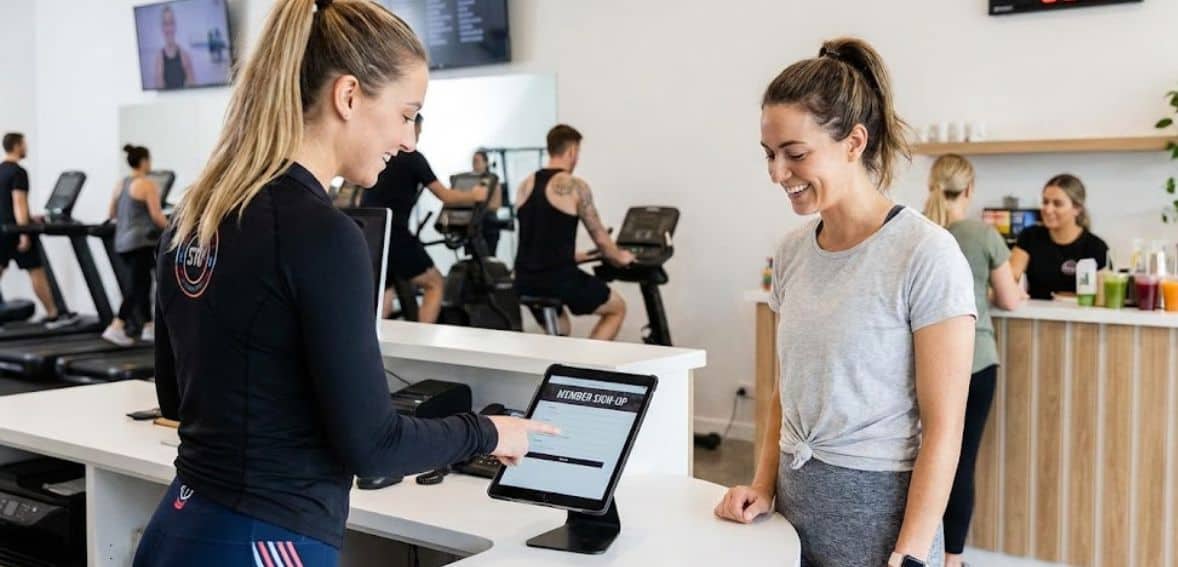
The First 7 Minutes: Converting Fitness Studio Walk-Ins Into Members Before They Leave
Most fitness studios put in a lot of effort to attract new clients, but the real test comes when a person enters the studio. What follows then is the decision to either become a long-term member or to leave the studio forever. Those first moments shape trust, comfort, and interest — long before an instructor explains a class or a team member talks about pricing. If a person comes through your studio doors, they will assess the place, the staff, and the vibe quicker than you expect. Their decision can be influenced only for a brief moment, and what you do during those first minutes will determine the whole experience.
In the US fitness market, competition is intense. People have endless options. Some compare gym memberships. Some bounce between trial classes. Others stop by out of curiosity. The only way to win them is to deliver a warm, confident, simple, and engaging experience. That experience must begin the moment they walk through the door. This is why the first seven minutes matter. They can either guide a new lead toward a membership or push them toward another studio down the street.
This guide breaks down exactly how to use those first seven minutes to turn fitness studio walk-ins into committed members. Each passing minute earns the guest’s trust, elevates their willingness to sign up, and reveals to them why your studio is the best fit for them. This method applies to small studios, large gyms, boutique concepts, and hybrid spaces. Utilize it to create a standard, consistent, and seamless conversion experience.
Why Timing Is Key for Fitness Studio Walk-Ins
When people come in, they have already put themselves in a mindset of making a decision. They made time to visit. They passed other gyms on the way. They chose you. That means the interest is already high. But interest fades quickly if the environment fails to guide them and show how your studio helps them save time and revenue through a smoother, more supportive experience.
People leave when:
- No one greets them
- They feel invisible
- Staff seems busy
- The check-in process feels confusing
- There is no direction
- The studio energy feels cold or unorganized
On the other hand, people join when:
- Someone welcomes them right away
- They feel seen and valued
- The space feels inviting
- There is a clear path to follow
- They feel relaxed, not pushed
- They see proofs, not promises
Fitness studio walk-ins respond best to clarity and confidence. They need a smooth path that tells them, “You are in the right place.” That path begins with the first seven minutes.
The First 7 Minutes Breakdown
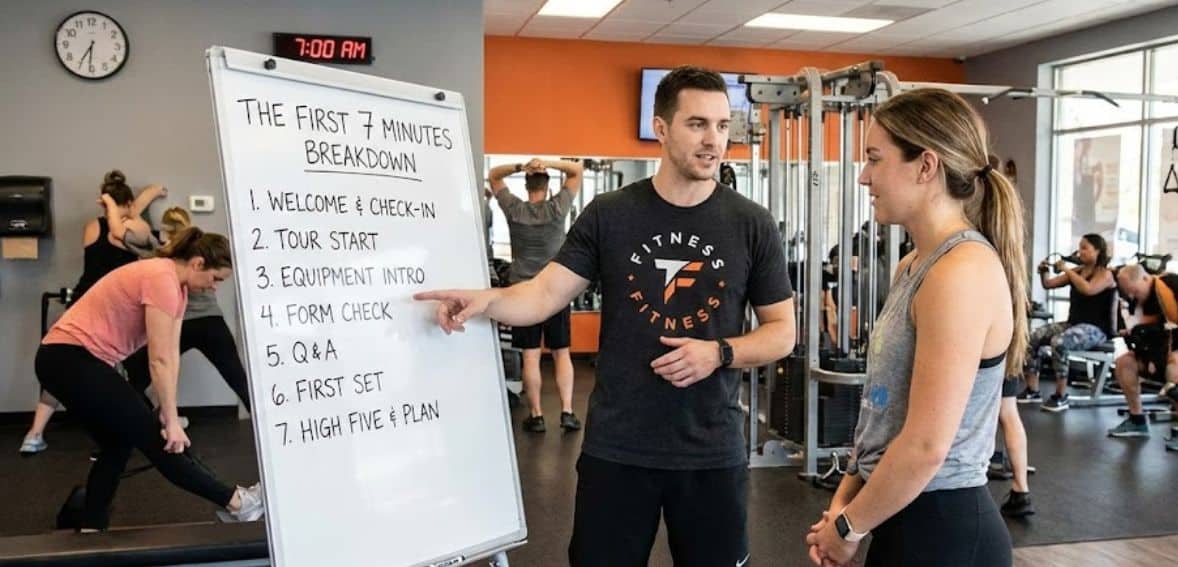
Welcome and Warm First Impression
The moment a walk-in enters, they should feel like your team expected them. The greeting must be warm, calm, and natural.
What to do:
- Make eye contact
- Smile genuinely
- Greet them by saying, “Hi there! Welcome in. Is this your first time visiting us?”
- Step out from behind the counter to reduce the distance
This is not a sales moment. It is a connection moment. People trust people, not policies. With the right greeting, the guest feels comfortable staying longer. When a studio ignores a walk-in for even ten seconds, the person may mentally check out.
Learn Their Goal
The moment you say “hello,” your next action should be to get to know their purpose for coming. Very often, individuals do not come in just for no reason at all. The needs of the customers could be—if we take it for granted—shedding pounds, increasing power, toning up, rehabilitation, or experimenting with a different program.
Questions to ask:
- What made you stop by today?
- Are you exploring class options or a full membership?
- What is your preferred workout type?
These simple questions help you learn their motivation. Knowing their goal allows you to tailor the experience. When a walk-in sees that you understand them, they start to trust the process.
Give a Quick Studio Tour
A short tour helps the guest visualize themselves working out in your studio. Keep the tour simple and focused on benefits, not features.
Focus the tour on:
- Clean equipment
- Organized layout
- Friendly environment
- Active class space
- Member success stories
People make decisions emotionally first. A tour triggers emotional confidence. It shows them what it feels like to be part of the space. Make sure the tour stays under two minutes. Anything longer becomes overwhelming.
Introduce the Experience
At this stage, your goal is to explain how your studio works without pushing. Walk-ins dislike long speeches. They want clarity, not complexity.
Explain:
- Class structure
- Instructor support
- Membership options (high level only)
- How new members get started
Keep your tone natural. Information must feel simple and easy to follow. The goal in this minute is to show them that joining your studio is a smooth process.
Offer a Quick Trial or Demo
People trust experiences more than words. If the timing allows, introduce a trial class, mini workout, or simple demonstration. This gives the walk-in something tangible to remember.
Options you can offer:
- Join the next class
- Try one piece of equipment
- Meet the trainer
- Watch a live session
This moment builds real confidence. When a walk-in sees others enjoying your space, they feel pulled toward the same experience.
Address Concerns and Questions
Most walk-ins have concerns such as:
- Pricing
- Schedule
- Results
- Time commitment
- Comfort level
Use this time to lead them softly. The purpose is to eliminate uncertainty, not to finalize a deal. Gradually offering solutions to their worries, you are actually the one who trusts them for the long haul.
Invite Them to Join
As soon as the walk-in is at ease, encouraged, and educated, you will very easily move to membership. It is the instant when the potential customer is most interested. Do not complicate your invitation.
You can phrase it in this way:
This membership includes all the tools you’ll need to get where you want to be. Do you want me to assist you in starting the process today?
This is not pressure. It is guidance. When you extend a clear, calm invitation, many fitness studio walk-ins choose to join right then.
Psychology Behind The First 7 Minutes
Human decision-making moves fast. In-person environments create instant impressions. When a walk-in steps inside, their mind scans:
- Safety
- Cleanliness
- Friendliness
- Expertise
- Confidence
- Energy
If these signals are positive, the guest stays longer. If not, they disconnect. The first seven minutes let you send the right signals. Each step builds comfort and control. This approach creates predictable outcomes and supports long-term membership growth.
Setting Up Your Team for Success

Mentoring the Front Desk on Providing Delightful Services
The front desk staff makes all the difference. They shape the journey from greeting to membership. They must know how to make walk-ins feel welcome and understood.
Build training around:
- Communication
- Eye contact
- Listening
- Clear explanations
- Handling concerns
- Positive framing
A well-trained team creates predictable results every day.
Build a Simple, Repeatable Walk-In Process
Every studio needs a repeatable system. This makes the guest experience consistent.
Your walk-in system should include:
- Standard greeting
- Goal discovery
- Two-minute tour
- Experience overview
- Trial or demo
- Clear invitation to join
When every team member follows the same steps, walk-ins experience less confusion and more confidence.
Your Physical Space Must Support Walk-In Flow
The studio layout influences comfort and trust.
Improve the flow by:
- Keeping the entrance clutter-free
- Adding motivational visuals
- Creating a warm waiting area
- Displaying class schedules clearly
- Presenting clean equipment
The physical space helps walk-ins feel motivated and safe.
Optimizing Communication for Walk-Ins

Keep Explanations Simple and Direct
People dislike jargon. They want answers they can understand without effort.
Use simple language when explaining:
- Class types
- Schedule
- Membership options
- Instructor support
Clarity increases conversions and builds trust.
Use Proof, Not Promotion
Avoid big claims. Use real examples from your studio.
Examples include:
- Member transformations
- Attendance milestones
- Testimonials
- Class energy
- Clean environment
Walk-ins trust what they can see.
Handling Price Conversations Smoothly
Most walk-ins worry about cost. The key is to explain value before sharing price.
Talk about:
- The results people achieve
- Support from your coaches
- Class experience
- Community environment
- Scheduling flexibility
Once the value feels clear, the price becomes easier to accept. The key is not pressure. The key is guidance.
What Not to Do With Walk-Ins
Some studios lose walk-ins because of simple mistakes.
Avoid:
- Making people wait
- Using complicated language
- Ignoring concerns
- Overselling
- Rushing the tour
- Giving too many options
- Leaving the person to explore alone
Walk-ins expect leadership. When the studio takes control in a warm way, they feel safe joining.
How to Track Walk-In Conversion Performance

To improve your system, you must track results. The numbers tell you how effective your first seven minutes are.
Track these metrics:
- Number of walk-ins per week
- Conversion rate
- Time spent with each walk-in
- Reasons for joining
- Reasons for not joining
- Staff performance
Over time, small improvements increase membership growth.
Technology That Improves Walk-In Conversions
Modern studios use digital tools to keep the process smooth.
Helpful features include:
- Automated follow-up
- Class reminders
- Member notes
- Lead tracking
- Trial scheduling
- Progress stats
Technology helps you maintain consistency even during busy hours. As a result, more visitors choose to sign up for a membership.
Conclusion
The decision of a potential member and the loss of an opportunity are already made during the first seven minutes. If your staff are confident to greet the person, know his/her goals, lead him/her to a quick tour of the gym, and provide a sample workout, and also if they ask him/her to become a member, then your conversions will increase automatically.
Each minute matters because walk-ins respond to energy, clarity, and trust. If you apply this seven-minute process every day, you will see stronger engagement, better lead quality, and higher membership growth from fitness studio walk-ins. If your studio wants a smoother and more predictable system for converting new visitors into loyal members, start using these steps today and build a stronger community inside your doors.
FAQs
Why are the first seven minutes important for fitness studio walk-ins?
Because this short window builds trust, comfort, and motivation. People decide fast, and those first moments shape their entire opinion.
What should staff avoid during walk-ins?
Avoid ignoring the visitor, using complex explanations, rushing them, or pushing aggressive sales. Focus on guidance, not pressure.
How can a studio increase walk-in conversions?
Use a clear, repeatable process that includes greeting, learning goals, a short tour, a quick experience, addressing concerns, and inviting them to join.
Do trial sessions help convert walk-ins?
Yes. A trial or demo lets visitors feel the studio’s value instead of only hearing about it.
How can technology help with walk-ins?
Lead tracking, reminders, and digital scheduling help keep the process consistent and organized, which improves conversions.