

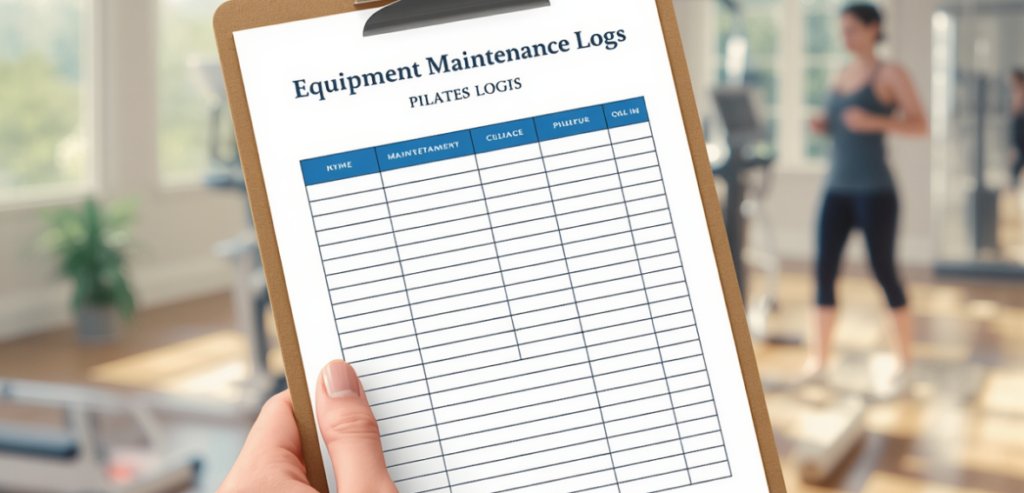
Running a fitness studio involves overwhelming, constant chaos — class schedules, member retention, instructor availability, and revenue goals all pile on top of each other. Through all that commotion, one vital system silently protects your studio’s reputation, your members’ safety, and your legal standing: the equipment maintenance logs. Most studio owners track metrics and log schedules, yet far fewer create a disciplined, documented maintenance record — and that gap can cost them time, money, and, worse yet, personal injuries.
This guide is for fitness studios of all shapes and sizes that want to take equipment care as seriously as any other operational system, and not treat it as an afterthought.
Why Equipment Maintenance Logs Are a Different Category Altogether

Studio operators often don’t understand an important distinction. Equipment scheduling lets you know when pieces of equipment, such as spin bikes, are in use. Equipment utilization tracking lets you know how often equipment is used. Equipment scheduling and utilization tracking provide no information about equipment safety.
The gap is filled by a studio equipment maintenance log. This log is not about tracking who used the bike and how many times this month. This log tracks the equipment’s condition, inspections, findings, repairs, and the next checkup. This is four different things that deserve their own log.
Studio owners without the additional documentation are relying on their assumptions and instincts. You think that nothing has been brought up about the reformer springs, so you think that they are fine. You think the resistance on the spin bike is fine because it has felt fine in the past. Most assumptions are fine—for a time.
What Belongs in a Studio Equipment Maintenance Log
A comprehensive, detailed maintenance log records specific information for each log entry for each piece of equipment. At a minimum, such a log captures the inspection date, the findings, the repairs carried out, and the due date for the subsequent service.
The date of inspection provides necessary context. If a member is injured while using a piece of equipment, the first thing your insurance company will want to know is when the equipment was last inspected. A log that captures inspection dates can provide a factual and timely response. The findings section is where the technicians or staff capture what they observed. Whether that was normal wear, a frayed cable, a loose bolt, or a squeaky pedal, findings should not be documented in a vague manner as would the entry “Equipment checked — OK.” An entry such as “Resistance knob shows 2mm of lateral play; within acceptable range, monitor at next service” meaningfully documents the inspection.
Repairs carried out should capture the nature of the repair, the parts replaced, and who carried it out. If a third-party technician carried out the repair, capture their name, company, and the service report they provided. The due date of the next service helps to provide a complete picture. Without that date, the log serves as a historical document. That date provides the necessary context for an otherwise passive record and helps organize data to actively prompt the service.
Value is added through equipment-specific fields, on top of these four pillars. For Pilates reformers, entering spring tension, carriage alignment, and rope/strap status is necessary. For the cycling studio bikes, pedal and cleat status, handlebar torque, flywheel bearings, and the resistance mechanism must also be considered. For HIIT training, kettlebells, battle ropes, plyo boxes, and functional trainers, the log focuses more on surface condition and the integrity of the frame and load-bearing components.
How Equipment Maintenance Records Reduce Liability When a Member Is Injured
This is the part most studio owners only think about after an incident — which is exactly the wrong time to start thinking about it.
Injury cases involving equipment require an examination of the reasonable care standard. The reasonable care standard does not take into consideration what you think you usually do or what you wanted to do. It is based on what you did. The maintenance log for your studio equipment is the best evidence to support that you acted responsibly.
In documenting logs, the equipment in your studio was routinely checked for defects. Known flaws were actively addressed. Logs help show studio equipment involved in an injury was inspected and cleared, or was suspected to have unresolved issues. During litigation or an insurance dispute, documented logs — whether analog or digital — are highly important and valuable.
Imagine a member claims they hurt their back, and says the reformer malfunctioned. If your maintenance log states the reformer was cleared and was in spec three weeks ago, with a service appointment made, your position is covered. A blank or no log means you are working with no support for your case — a position that courts and insurance companies don’t view favorably.
Some insurance companies now mandate documented routine maintenance as a prerequisite. Not having documented maintenance could mean claims won’t be paid and insurance will be canceled. Because of this, documented routine maintenance is mandatory.
Scheduling Recurring Maintenance So It Doesn’t Get Skipped

The number one reason studios neglect maintenance is because they are busy, not because they do not care. Because Monday is a very booked teaching schedule, other days are booked for back-to-back private sessions. When a teacher calls in sick, it is easy to default to neglect maintenance. The spin bike that was scheduled for a quarterly inspection will remain uninspected for another six weeks. This kind of neglect is predictable, but it can be avoided.
To avoid neglecting maintenance, think of maintenance as a class. Maintenance needs to be scheduled. When maintenance is scheduled, a time is blocked, and a person is assigned. Maintenance can only be rescheduled for documented reasons. Maintenance can be scheduled through an operational calendar. Maintenance can be scheduled daily, weekly, monthly, quarterly, or annually.
Maintenance can be scheduled daily to wipe down equipment and perform visual inspections to identify apparent mechanical issues. Monthly maintenance can include tightening hardware and calibrating resistance systems. Monthly maintenance can include inspecting equipment and updating a log. Maintenance that is due quarterly or biannually can require the services of a third party to perform more in-depth inspections.
The most predictable times of maintenance neglect are during busy membership periods. The best way to combat this is to schedule maintenance during slow periods and include a built-in buffer.
Digital solutions are quite effective. Dedicated maintenance solutions, UpKeep, Mindbody, and Gymdesk, permit studios to link scheduled reminders for specific maintenance tasks to individual assets. The team member assigned to the task receives a notification when the task is due. The entry is recorded digitally and automatically timestamped. It is then stored in an archive that can be searched. It eliminates the friction that causes paper-based systems to break down. Managing multiple assets in a single environment makes UpKeep’s maintenance management platform a favorite for fitness facilities.
For studios that are not yet ready to spend money on dedicated software solutions, a properly structured shared Google Sheet with a Google Calendar reminder set to recur can be a fully functional starting point. Tool sophistication is not very significant. What is important is the completeness and consistency of the logs.
Building a Maintenance Culture in Your Studio
Documentation systems are only as good as the individuals responsible for them. Within your studio team, this means building a culture of maintenance. This starts with employees’ individual responsibility. Each piece of studio equipment is logged by a designated individual. In a small studio, this can be the owner or their instructor staff. In a larger facility, the operations staff can take on this responsibility. Regardless of the individual, the responsibility must be made clear, and the individual must be trained and given periodic staff appraisals.
Individual responsibility also means making things right when an issue is found. When a concern is logged and then nothing is done about it, the documentation system has created a liability, and it did so for no reason. Having documented knowledge of a defect and failing to take corrective action is actually worse than having no documentation. When an issue is logged, there must be an entry stating the concern is closed, and the equipment was either fixed, removed from the studio, or a qualified service was scheduled.
For Pilates studios, the Balanced Body resource library has manufacturer-specific information on the maintenance intervals and inspections for their equipment. Other studios may look to the American College of Sports Medicine for guidance on maintaining fitness equipment in line with their facility standards.
Conclusion
A maintenance log for studio equipment won’t catch the eye of someone looking to join. It won’t spike attendance. It isn’t a tool to drive new memberships or be featured in marketing. But, for a fitness studio, an equipment maintenance log might be the most important system you can establish. It helps avoid injuries to your members. It reduces damage to your equipment, which saves potential revenue loss.
Serious fitness equipment maintenance log users won’t wait until the situation is dire before they act. They implement the system. They schedule the tasks. They allocate the responsibilities. They record everything. They understand the obstacles that come with having a small business; even if it seems small, it requires a lot of discipline to maintain.
Frequently Asked Questions
How often should fitness studio equipment be formally inspected and logged?
At minimum, a visual inspection should be logged weekly for all equipment in active use. A more thorough mechanical check should occur monthly, and a comprehensive third-party service inspection should happen quarterly or semi-annually depending on usage volume and manufacturer specifications.
Does a maintenance log actually protect a studio legally if a member files a lawsuit?
Yes — documented maintenance records are a key component of demonstrating reasonable care, which is the legal standard in most negligence claims. While no record guarantees immunity, well-maintained logs significantly strengthen a studio’s defensible position and often influence how insurers evaluate and settle claims.
What’s the difference between an equipment maintenance log and a general equipment checklist?
A checklist confirms that a task was completed. A maintenance log records what was found during that task, what action was taken, and when the next service is due. The log creates a traceable history; a checklist alone does not. Both have value, but the log provides the evidentiary depth that matters most in liability situations.
Can a small Pilates or cycling studio manage maintenance logs without special software?
Absolutely. A well-structured spreadsheet with consistent column headers — equipment name, inspection date, inspector, findings, repairs, next service date — is a fully functional system. The priority is consistency and completeness of entries, not the technology behind them.