


In today’s highly competitive fitness industry, attracting new members is only half of the battle. The real challenge begins after someone signs up for a free trial or short-term pass. Many gyms and fitness studios invest heavily in advertising campaigns, social media promotions, and referral incentives to bring people through the door, only to struggle to convert trial users into paying members. This is where an effective trial pass conversion studio strategy becomes essential. Instead of aggressively chasing every lead with endless calls and follow-ups, modern fitness businesses are learning how to create systems that naturally guide prospects toward membership decisions.
Modern consumers prefer to be empowered and selective. They demand meaningful interactions and positive environments. They also want to know what value they will get before committing to a long-term membership. Studios that use hard-sell techniques push potential customers even further away from becoming interested in membership. The most effective way to convert trial pass users is to build trust and an emotional connection along with a memorable fitness experience.
Having a conversion system that is socially positive yet high-value is most effective. It is creating a space so great that the prospect feels like a member before the hard sell even begins. When fitness companies prioritize customer experience and personalize the services, the transition to a sale is easier.
Why Trial Pass Conversion Matters More Than Ever
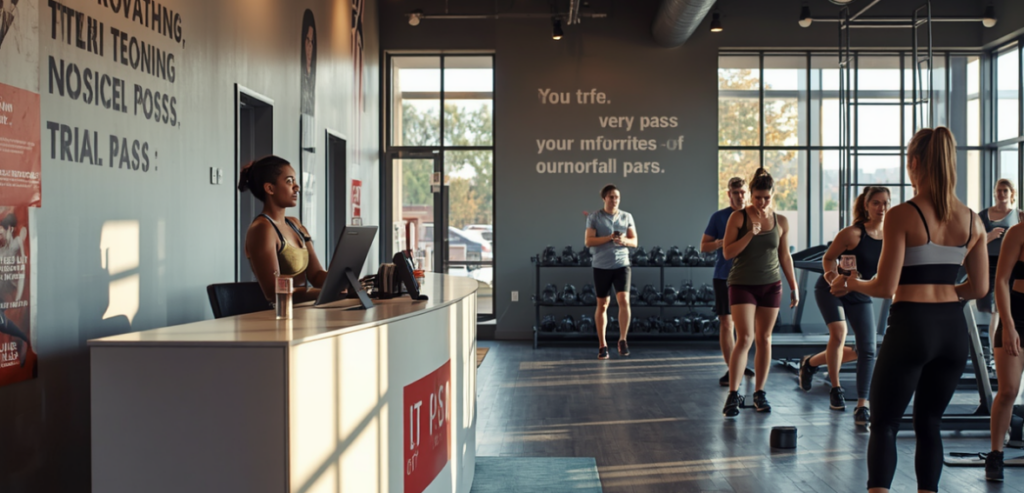
The fitness industry has evolved dramatically over the last decade. Consumers now have countless workout options, from boutique fitness studios and traditional gyms to online training platforms and home fitness apps. Because competition is everywhere, studios cannot afford to waste valuable trial leads. Every person who walks through the door represents a potential recurring revenue stream, and losing those opportunities can significantly affect long-term growth.
An approach for an efficient trial-pass conversion studio lowers customer acquisition costs and improves retention rates. Rather than burning through funds to get high volumes of prospects, businesses optimize efforts on their existing leads. A sustainable business with anticipated and reinforced member commitment is built.
An important finding of HubSpot research is that, with few exceptions, visitors are most likely to purchase if they can infer the value of the offer. In the fitness industry, potential customers who receive a trial and have positive interactions and coaching with visible progress will be converted into members. The most important thing is to help users understand that the trial was a good choice and to reinforce that at every point along the trial.
Understanding the Psychology Behind Trial Memberships
Many fitness companies fail to see trial pass holders as future members and instead view them as temporary users. However, the psychological aspect of trial pass conversion cannot be ignored. Most consumers who initiate a trial pass have a moderate to high interest in improving their health, fitness, or confidence. Additionally, trial users need motivation, accountability, and a sense of belonging. If a studio can meet the emotional needs of a trial user, it can expect a high trial-to-member conversion rate.
People buy membership for reasons beyond the existence of modern equipment and class offerings. They purchase when they feel understood and emotionally supported. The presence of a friendly environment, a personalized touch, and positive social interactions may sway someone’s purchasing decision. Based on an article published in the Harvard Business Review, emotional connection is one of the prime factors in determining a customer’s loyalty across all industries. Fitness and wellness are no different.
This means staff members should focus less on aggressive sales pitches and more on building relationships. A trainer remembering a prospect’s name, checking on their workout goals, or celebrating small achievements can leave a lasting impression. These seemingly small interactions create emotional investment, which naturally improves trial pass conversion rates.
Creating a Seamless First Impression

First visits to a business often determine whether a customer will return. A bad first visit damages trust and can lose a customer forever. An organized, welcoming first visit can ensure a customer returns to make a purchase. The customer should feel ready and informed the moment they walk in the door.
High-converting studios have organized processes for welcoming new customers. Staff should be friendly and welcome new customers. Staff should explain how to navigate the facility and introduce new customers to the trainers and staff. Staff should work to help new customers feel welcome and not confused. New customers should feel welcomed, and their initial perception should be as positive as possible. Staff should work to keep the building as clean as possible and help create an overall welcoming appearance.
Clear communication also matters. Prospects should know exactly what is included in the trial, how classes are scheduled, and what benefits they can expect if they become members. Confusion creates hesitation, while clarity builds confidence. When people understand the value being offered, they are more likely to continue their fitness journey with the studio.
The Importance of Personalized Follow-Up
One of the biggest misconceptions about sales is that follow-ups must feel pushy. Effective follow-up is simply consistent communication that provides value. A successful trial pass conversion studio system uses personalized communication to strengthen relationships without overwhelming prospects.
Meaningful interactions should be a studio’s primary focus versus typical sales messaging. An example of something more authentic is when a studio asks a customer for feedback after their first yoga class, or texts them about their weekly workout goals, rather than simply sending generic goal reminders. This is unique and may increase sales, but it is less important than helping the customer achieve their goals.
Automation can help sell without appearing or feeling like a sale, but only if used to help, not spam, the customer. Platforms like Cloud Studio Manager make it easier to keep in touch with customers in an automated yet personalized way. It helps keep the customer leads active without doing extra sales work.
Building Community to Increase Membership Conversions

In the fitness industry, community is a strong contributor to member retention factors. People are more likely to hold themselves accountable to memberships if they feel connected to both the other members and the instructors. Successful studios take workout programming and relationship-building skills equally.
Trial users who are quick to connect socially with instructors and other members are much more likely to integrate the studio into their fitness lifestyle than to see it as just another gym to attend. Participants’ emotional attachment is fostered through group classes, member events, challenges, and coaching styles. When people feel included, it isn’t about how much a membership costs, but how much it will mean to them.
A lot of trial pass conversions are also attributed to social proof and emotional attachment. In particular, testimonials, success stories, and reviews from other consumers help potential participants feel comfortable and confident about their purchase. According to Forbes, there is a strong correlation between consumer behavior in the service industry and the use of customer reviews.
Studios should actively encourage satisfied members to share experiences online and engage with trial users during classes. Positive member interactions often convert prospects more effectively than any sales pitch ever could.
Using Data to Improve Trial Pass Conversion Studio Performance
Over time, data-driven decision-making is revolutionizing how fitness businesses operate and compete. Studios dedicate time to tracking trial engagement metrics and ultimately learn how prospects lose interest and where in the trial they are most likely to convert. Rather than hypothesizing about trial structures, businesses can adapt based on what prospects choose to do or not do.
Tracking and monitoring key metrics is essential. These metrics include how often potential members attend classes, their trial completion and appointment-booking rates, and how often they open and respond to your emails. If a studio realizes members who attended at least three trial classes ultimately converted to full-paying members, that studio may look to increase those classes.
Analytics of this sort also allow businesses to better segment, or categorize, their leads. For some prospects, just a little motivation may be enough to move them along the purchasing journey. For others, higher-end classes or membership tiers may help. Knowing this information allows for personalized tactics to convert prospective members, and the risk of losing a prospect to high-pressure tactics may be minimized.
Technology platforms now provide sophisticated tools for customer relationship management, allowing fitness businesses to optimize every stage of the member journey. When data and human connection work together, trial pass conversion becomes far more efficient and predictable.
Avoiding Common Trial Conversion Mistakes
Many studios unintentionally sabotage their own conversion efforts through inconsistent communication and overly aggressive sales tactics. One of the most common mistakes is focusing entirely on closing the sale instead of enhancing the customer experience.
Another misstep is not offering new trial users membership options soon enough. Waiting until the last day to have that conversation is often too late. By this point, no connection has been made. A good studio integrates the sales process within the trial by seamlessly embedding the membership perks.
A third mistake is allowing inactive trial users to fall off the radar. Some users may discontinue attendance due to intimidation, scheduling conflicts, and even trial-related uncertainty. In these cases, the absence does not indicate that the user has lost all interest. These users can be effectively recaptured through supportive outreach and the offer of additional support.
Studios should also avoid overwhelming prospects with too many membership choices. Simplicity often converts better than complexity. When pricing structures and membership benefits are easy to understand, prospects feel more confident about making decisions.
Long-Term Retention Starts During the Trial Period
It’s more than just turning a prospect into a paying member. It’s the starting point of retention. The habits and relationships formed during the trial, as well as members’ expectations, will determine how long a member sticks around.
For the studios that deliver value, members become loyal over time. If a prospect feels connected and supported before making a purchase, they are less likely to cancel afterward. This means that the trial pass conversion strategies are essential to the growth of any studio.
The best retention studios understand that every touch point impacts the member experience. It can be as simple as a trainer providing encouragement, front desk staff greeting a member, or a trainer who creates an engaging class. All of these touch points create an emotional bond that builds trust. The member experience is worth more than just a piece of equipment or a class schedule.
Conclusion
Turning trial passes into paid memberships without chasing every lead requires a mindset shift. Instead of relying on pressure-driven sales tactics, modern fitness businesses must focus on creating exceptional experiences that naturally encourage commitment. Effective trial pass conversion studio strategies prioritize relationship-building, personalization, emotional connection, and community engagement.
When prospects feel welcomed, supported, and valued during their trial experience, membership decisions become much easier. Fitness studios that combine strong onboarding systems, thoughtful follow-up communication, social connection, and data-driven insights can dramatically improve conversion rates while building long-term member loyalty.
In an industry where competition continues to grow, the studios that succeed will not necessarily be the ones spending the most on advertising. They will be businesses that understand how to transform trial users into loyal members through trust, experience, and authentic human connection.
Frequently Asked Questions
What is trial pass conversion in the fitness industry?
Trial pass conversion is the process of converting people who use free or short-term gym trials into paying long-term members. It involves creating positive experiences, strong communication, and relationship-building strategies that encourage prospects to commit.
Why do many fitness studios struggle with trial pass conversion?
Many studios struggle because they focus too heavily on aggressive sales tactics rather than on customer experience. Poor onboarding, inconsistent follow-up, and lack of personalization can reduce trust and discourage prospects from joining.
How can a fitness studio improve trial pass conversion rates?
Studios can improve conversions by offering personalized support, creating welcoming environments, building community connections, and maintaining meaningful communication throughout the trial period. Tracking engagement data also helps identify effective strategies.
Is automation helpful for trial pass conversion studio systems?
Yes, automation can improve communication efficiency through email reminders, SMS updates, and appointment scheduling. However, automated systems work best when combined with genuine human interaction and personalized support.