


Studios want to grow revenues without adding more weekly classes to an already full schedule. One-off events can truly make a difference. A well-run workshop or retreat can attract new clients, foster a sense of community, and refresh your brand’s narrative. Workshops can also help studios generate revenue in the off-season, when memberships are stagnant.
Retreat and Workshop revenue should feel predictable. With the right event and an effective pricing and marketing strategy, one-off events can generate substantial revenue. Events can help refine the processes and marketing for workshops and retreats before they are offered on a larger scale, with memberships or recurring programs.
Studios typically make the same mistake when organizing an event. They treat them as an afterthought. Casual event planning leads to poor attendance, underpricing, and depleting last-minute sales. Events should be treated like an offering with a defined target market, specific revenue goal, and structured sales plan.
This guide is designed to help you plan, price, and sell one-off studio events with a focus on profitability and positive client experience. The principles in this guide are applicable whether you run a yoga, Pilates, dance, wellness, art, or creative workshop.
Why Retreat and Workshop Revenue is Important for Growing Your Studio.

Aside from giving your studio an immediate boost in revenue, retreat and workshop revenue can improve your entire business model. A studio workshop can fill gaps in your calendar, raise the average customer value, and promote a specialty service. A retreat can take your revenue to the next level while building stronger emotional loyalty with your top clients.
Aside from a standard class pass or monthly membership, these events give more reasons for people to engage. While some clients may enjoy routine, others want a deeper experience and are willing to pay for exclusivity, a transformed state, and a memorable experience. Because of this, different mindsets drive revenue for studio events compared to standard class revenue.
There is also a significant benefit for your studio’s brand. In a competitive market, a studio with a stand-out workshop or retreat is seen as a destination rather than a studio with classes. People remember experiences. They tell people. They engage with your studio online and invite friends. This builds referral energy and helps generate future revenue.
If you want to grow your studio without being reliant on just memberships, one-off studio events can be a new revenue stream for you. The most important thing here is to be organized and to be disciplined.
Start With The Right Event Concept
To create a profitable event, your audience needs to be interested in what you have to offer. Some event ideas may sound better in your head, but the idea itself may be boring to the clients. Before you pick an idea, ask yourself, “What does my audience want more of?”
Take a look at your studio’s demand signals. Try to pin down which class sells out the fastest and which instructor your clients prefer. Facebook and social media pull a lot of demand. Pay attention to the questions clients ask you. These questions, along with which themes perform best, will guide your event idea. Good studio workshops are best at the intersection of what the client wants, what the instructor is good at, and what the operator can successfully manage.
An event that targets beginners will help you gain new leads, while an advanced, specialized event will help you obtain additional revenue from your loyal clients. Additionally, a local audience may prefer a half-day immersion event to a full-day event that requires more driving. An event does not have to be huge in order to make a good profit, but it does need to have a stated outcome, be solution-oriented, or deliver a good experience.
Consider a tighter concept. Events that are too broad are harder to market, but less vague concepts are simpler to sell. People will enjoy knowing what they are buying, which is what creates focus. More specific concepts will create your highest conversion rate. For example, “Stress Relief Sunday: Breathwork, Gentle Movement, and Deep Rest” is more likely to sell than “Weekend Wellness Experience.”
Plan The Event Around Outcomes, Not Just Activities
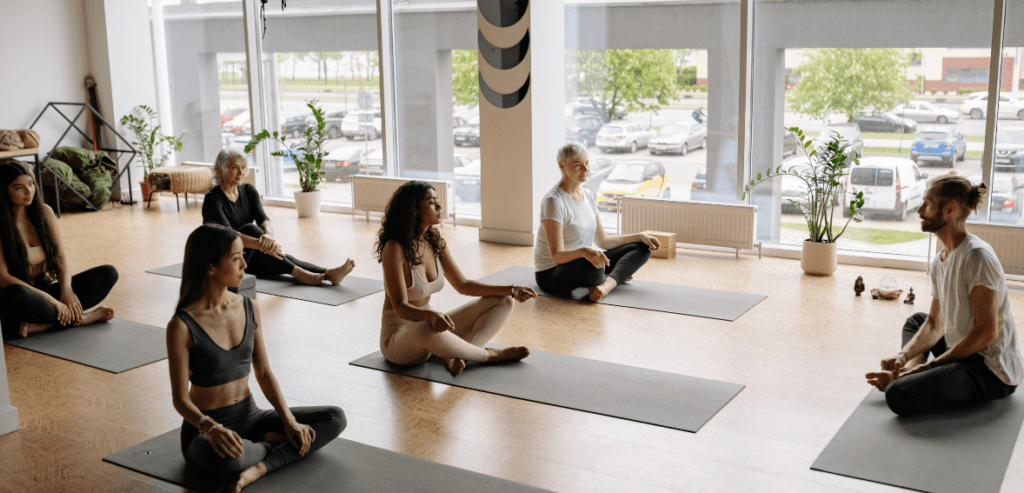
Your events have movement sessions, meals, talks, and creative exercises. Those focus on what you do during the event, but that’s not what buyers are looking at. They care about what they are going to get from the event, and focusing on that shifts your event. Ask yourself these questions. What are your attendees looking to accomplish? What are the skills that attendees are looking to build? What are the things your attendees need to do to feel okay? Will attendees feel restored? People want to feel better after attending your event, and you need to build your selling around that.
Feeling better after attending the event is the result. Then your messaging can focus on the result throughout your marketing. You can make the same promise in your landing page, emails, and social posts. You will connect emotionally with attendees, and your marketing will improve. Attendees will be able to decide whether to join your event, thereby improving the quality of your sales.
Once the result (feeling better) is clear in your operational planning, the rest of the event focuses on it as well. Every detail of the event becomes intentional, thereby improving your client’s experience. You will get better reviews and more repeat bookings as a result.
Your event planning should start with one sentence that completes this statement: “By the end of this workshop or retreat, attendees will…” Your offer probably needs to be reworked if this sentence is weak or generic.
How to Plan Workshop And Retreat Revenue With Real Numbers
The studio owners who rely on hope lack a revenue strategy. Snapshot revenue starts with knowing your numbers. Finishing end-of-revenue targets should help you make pricing, staffing, and marketing decisions with clarity.
First, estimate your costs. This includes everything: venue, instructor salaries, assistant salaries, supplies, food, travel, software, payment processing, photography, marketing, and your time. For retreats, consider room blocks, transportation, insurance, and setting aside extra money in case. Expenses creep up fast and can quickly eat into your event’s profit.
Next, decide on your minimum viable attendance. This is the number of paid spots you need to break even. Then define your target attendance and ideal profit level. This gives you three useful planning thresholds: break-even, good, and great. Once you know these numbers, you can market and price with much more confidence.
Starting with a simple event revenue formula can set you up for success. Projected profit is calculated as (ticket price * projected attendees) – total event costs. If the projected profit is low, don’t just bank on high-volume sales to reach your goal. Most of the time, it is better to adjust the event, such as improving the offer, increasing the ticket price, or cutting costs.
Pricing One-Time Studio Events Based on Demand

Pricing should be a top priority for your studio. If you price events too low, people will buy tickets. However, your studio is likely to experience burnout due to limited profits. If you price too high, people won’t buy tickets. Luckily, there are ways to research price points before setting final numbers. Most of the time, studios use price to guide events rather than value. You can focus on transformative outcomes, customer experience, event costs, market position, and leveling logic when determining the best price.
Your event value should be your pricing focus. Workshops, for example, are not low-causality framed events, and you should price accordingly. Events are a concentrated bundle of time, so the value should account for the time, energy, and effort rather than just the scheduled hours.
Pricing can also be easier when you look to your competing businesses for comparisons. A high-quality fitness event may be relevant and should be considered when pricing your wellness workshop. A retreat should be taught to a low-class bundle, but in personal development rather than to higher-class bundles, and this will help you determine a price. The Small Business Administration (S.B.A.) also has pricing resources that can be very beneficial as you navigate event pricing.
You’ll have to choose if you want to go with tiered pricing. Early-bird pricing creates urgency by incentivizing people to buy quickly. Standard pricing provides a guaranteed margin as you get closer to the event date. Premium/VIP pricing tiers can work, but only if the perks are meaningful. Things like private coaching, preferred housing, an additional session, or higher-quality gifts can justify the price. Premium pricing should add real value, not just an arbitrary higher tier.
One pricing mistake to call out is lowering your price out of fear. Sales fear is not the same as market resistance. Usually, poor communication is the real problem, not the price of the ticket.
Create a Strong Sales Message That Makes The Event Easy to Buy
Clarity is what people buy. If a message is unclear, sales are likely to be slow. Start with a message that is inarguably clear. Within a few moments, a customer should be able to answer these questions: Who is this event for? What problem is it solving? What experience is it delivering? When is the event happening? Why is it priced that way?
The name of your event can make or break you. Practice communication with specific, easy-to-understand, and emotionally enticing titles. The first sentence of a description should highlight the main takeaway of an event. Avoid titles that are too “clever.” Almost every time, a transparent statement is better than a clever statement.
When developing a sales page, it’s best to keep the buyer in mind. How can you make their experience palpable? What will they get? What will help them visualize your answer? Consider their concerns to reduce any uncertainty. Practical questions like timing, location, skill level, what’s included, and refund terms should also be addressed. Social proof can be beneficial. If you have similar events, a testimonial or a brief result story will help.
If a structured approach is what you need, look for examples of clear customer-focused messaging. For guidance on landing pages, conversion strategies, and email marketing, the HubSpot team has what you need. These can be readily applied to event promotions in studio marketing.
How to Sell Workshops And Retreats Without Sounding Pushy
It is more about determining the customer’s needs than selling. Together, the challenge is to help attendees make an informed decision about whether to attend the event. This is mostly driven by your marketing plan, not random posts on social media.
You should first utilize your private marketing channels. Emails to studio event attendees have the highest conversion rates among private channels because they have an established level of trust. A simple save-the-date message can be followed by a launch email. Reminder emails and deadline-driven follow-ups should be included. Your social media channels should supplement your email campaign rather than lead it. Use social media to reinforce the messaging, showcase the event, answer objections, and introduce the facilitator or host.
As the event planner, your biggest concern should be lining up event dates with the right marketing schedule and the right time commitments from your potential consumers. A well-planned marketing schedule includes time for different marketing strategies, including time to set up the marketing and promotional plan. A plan will include a budget, a marketing strategy/campaign, and a plan for how consumers plan to respond to your consumer contact points. A good time commitment on the consumer’s part means a set/attributed time for how consumers plan to respond to your consumer contact points.
Believability takes priority over all other areas in your marketing. Consideration should be given to events that have: short time windows to commit (with their consumer contact points), short windows to respond to your questions, low fees to attend, and clearly defined boundaries for how consumers plan to respond to your consumer contact points. These clearly defined boundaries should not include a contact point for the barrier, time constraints for the consumer, fee limits for the consumer, or any constraint period.
Long-term trust in your marketing plan will be lost if the consumer contact points include anything other than the bare minimum. Minimum contact points should not include excessively long questions, intrusive and unfriendly means of responding, an inflexible registration process, or anything that will be perceived as excessively high or tight. Anything considered higher value or more premium than the nature of the event will undermine the event’s perceived value.
Fill More Spots By Reducing Buyer Friction
As a seller, you want to be proactive to avoid losing a potential sale due to an unanswered question. Potential participants in your event may question whether it is a good fit for them, what they might need to bring, or whether the schedule is too packed. Be sure to address these potential buyer objections in your emails and on the sales page. The less time and mental energy buyers need to spend answering questions or making assumptions, the more time and energy they will use to make a purchase.
Trust signals are equally important. Professional pictures, a polished page, clear policies, and open communication all help alleviate anxiety. Your buyers are evaluating the event, but more importantly, they are evaluating if your studio will execute it successfully.
Increase Event Profit With Smart Upsells And Follow-Up Offers
The sale of the event ticket is not the only opportunity for revenue generation. Sales related to a one-off event can occur before, during, or after the event, which is what makes a studio’s event strategy more advanced than just selling tickets.
Before the event, you can offer add-ons such as merchandise, private sessions, upgraded materials, or premium seating. During the event, you can sell related services, training, memberships, or curated retail products to the attendees. After the event, follow-up offers are usually successful due to the high trust and engagement.
Common upsells usually seem like a natural progression tied to the event’s outcome. For example, a client who attends a mobility workshop may find a private assessment or some follow-up coaching to be an appropriate match. For someone who has attended a creative retreat, a more advanced course or an invitation to a private mastermind may make perfect sense. The aim, however, is not to push extra sales but rather to develop a value ladder based on the clients’ journey.
Retention is a key consideration. A creative retreat workshop can convert some casual one-off visitors into long-term members. A retreat can reactivate lapsed clients or even identify potential ambassadors for your brand. This is why the direct revenue from ticket sales is not the only ROI from the event. For more extensive event planning for small businesses, measurement, and other useful tips, check out the Eventbrite blog. Event Marketing and Event Ticketing are two of the categories I recommend.
Measure What Worked So Each Event Gets Better
A profitable event should teach you something. Once the event concludes, conduct an evaluation that covers both the financial and marketing aspects. Focus on the total revenue, total profit, attendance rate, conversion rate, email performance, refund requests, upsell take rate, and post-event retention. Understanding these metrics will help you identify the event’s strengths and areas that need improvement.
Qualitative feedback is just as important, if not more so. Gather attendee feedback on what almost prevented them from booking, what they appreciated the most, and what would incentivize them to return. This information will help you refine your event planning, pricing, and sales strategies. Often, a single quote from an attendee may become your most effective marketing statement.
Stop treating every event like a one-off project and start thinking about them as a source of repeatable revenue. Over the years, you will find that some themes, formats, and times of year are much more successful than others. That focus will tell you about an event calendar you can build for the year with much more confidence and much less guesswork.
Conclusion
Revenue from workshops and retreats can become a significant contributor to the growth of your studio, but only if you start to think of every event as a real business proposition. Studios that are successful in this area are not just hosting fun events. They are combining the right idea with the right people, pricing based on value and cost, and communicating a value proposition that makes the purchase an easy decision.
The starting point for a successful one-off studio event is not a box on the calendar. Instead, it is the outcome, the financial target, and the buyer-focused plan. When aligned, workshops and retreats can do far more than just generate short-term cash. They can build your reputation, attract new customers, increase loyalty, and pave the way to new offerings.
To generate consistent profit from events, you need to think like an owner as much as a host. Construct the experience with a lot of care, but the first thing you need to do is build your numbers. That is the balance that will turn one-off events into a revenue strategy you can depend on.
Frequently Asked Questions
How profitable are studio workshops?
If studio workshops are aimed at a specific audience and priced to achieve clear margins, they can be extremely profitable. Smaller workshops usually have a lower operating price than retreats, making them easier to run profitably with high attendance!
How do I price a workshop or retreat?
You need to calculate all of your costs before you can price your workshop. That will allow you to determine your breakeven point. From there, you can establish a target number of attendees and a profit goal to help you determine your target price. Pricing should then be based on the value and transformation of the experience, rather than the number of hours involved.
How far in advance should I market a one-off studio event?
Events typically benefit from at least 3-6 weeks of promotion. This is especially true for retreats and other high-ticket experiences, as buyers will need to budget, plan travel, and make a commitment.
What is the best way to sell more event tickets?
The best results typically come from a straightforward promotion, effective email marketing, a genuine sense of urgency, and a quick, easy booking process. Studios are usually best served by focusing on clear, consistent messaging rather than sporadic last-minute promotions.