


The studios operating in modern interactive environments must establish emergency preparedness systems, as this requirement is now mandatory. Emergency action plans, defining all necessary procedures, should be established by all wellness centers, fitness, and creative studios to protect their staff and clients during emergencies. Studio owners who fail to assess potential dangers create operational problems and business liability.
Structured emergency action plans are necessary to help businesses establish operational safety rules that protect their operational compliance and enable them to run their businesses. Studios face specific safety challenges arising from fire hazards, medical emergencies, natural disasters, and security threats. Companies achieve regulatory compliance and reduce their legal risks by adopting OSHA emergency action plan standards.
The guide presents emergency action plan requirements, which determine its essential content, execution responsibilities, and storage locations. This document provides specific guidance on creating safety procedures for boutique fitness studios and developing systems for incident reporting.
Understanding Emergency Action Plans and Their Core Purpose
Emergency action plans operate as organized emergency management systems that help staff members respond to situations that occur without warning. The plans outline specific procedures for handling emergencies as part of an organization’s operational duties.
The emergency action plan studio framework identifies three main objectives that ensure people’s safety and protection of property while achieving fast restoration to normal operations. Staff members without formal procedures will handle situations differently, increasing the organization’s risk and legal liability. The emergency action plans establish binding rules that all team members must follow throughout their work duties.
The OSHA emergency action plan requirements require businesses to establish emergency contact information, together with their evacuation procedures and reporting systems. Most workplaces must comply with general safety requirements, yet smaller studios mistakenly believe these rules do not apply to them. Organizations achieve better emergency preparedness through the implementation of standards, even when those standards do not require strict enforcement.
The emergency action plans provide organizations with protection against operational risks. The predefined instructions create structured workflows that help to handle unexpected events. Studios that implement these plans show their dedication to professional standards and their duty to protect client safety.

Key Components Every Studio Emergency Action Plan Must Include
It is important to develop an effective emergency action plan by carefully including all required components. If any of these components are missing, the emergency response may not be complete or successful when an emergency occurs. To ensure a consistent and efficient emergency response, the emergency action plan should outline procedures, staffing roles, and communication methods.
The components that must be included are the following:
- Procedures for reporting an emergency and steps for communicating internally.
- Designated evacuation routes and assembly areas.
- Procedures for evacuating the studio in the event of a fire and how studio personnel will respond to emergency alarms.
- An updated template for an emergency contact list that provides both internal and external contacts.
- Procedures for handling medical emergencies, including first aid procedures/responsibilities.
- Incident reporting procedures to document and follow up after an emergency.
The language used to convey each of these components needs to be simple and easily understood by staff, without the need for interpretation. Technical words that may be confusing to hear during an emergency should not be used.
Emergency action plans should be clearly formatted so that the information is visually clear. Although this article has been printed in text-only format, your actual emergency action plan may include maps or diagrams. However, the written instruction should provide sufficient clarity to operate independently from the graphic(s) provided.
Aligning with OSHA Emergency Action Plan Requirements
Developing emergency action plans relies heavily on compliance with OSHA, which has established requirements that serve as guidelines for workplace safety. Not all studios will have received inspections; however, complying with OSHA helps ensure that best practices are followed.
OSHA requires businesses to address the following:
- The procedure for reporting fires and emergencies.
- Evacuation procedures and assignment of exit routes.
- All employees are required to remain when certain operations have been suspended.
- Rescue and medical duties for employees assigned to perform them.
- Alarm and communications.
OSHA’s requirements are very closely aligned with what is practically needed for a boutique fitness safety plan. The studio layout presents risks from equipment and interactions with a large number of clients. Therefore, structured safety planning is very important for any studio that provides this type of service.
In addition, OSHA stresses that employees must be trained and that the emergency action plan must be accessible to them. This means that simply creating a document will not be enough. Employees should not doubt their responsibilities and regularly practice all procedures.
Studios that comply with OSHA emergency action plan requirements will be ready to handle emergencies and help lower their owners’ liability. Even in areas without strict enforcement of OSHA emergency action plan requirements, follow industry-standard safety expectations.
Assigning Staff Emergency Roles and Responsibilities Clearly
To develop and maintain an effective emergency action plan. The clear assignment of roles is paramount. Without clearly defined staff emergency roles, it can be confusing during an incident, delaying response and increasing the risk to everyone involved. All team members must know their responsibilities before an emergency occurs.
Typical emergency staff roles include:
- Emergency coordinator responsible for overall leadership of the response.
- Evacuation leaders are guiding members and clients to exits and assembly points.
- First aid responders treating medical emergencies
- The communication lead contacts emergency services and all stakeholders.
- Incident reporting – documenting what happened and resulting actions.
When establishing or assigning roles, consideration needs to be given to staff’s availability, training, and shift patterns. Studios with rotating sport schedules should cover all shifts with staff throughout their operating hours, especially boutique fitness studios that operate early in the morning and late in the evening.
Additionally, staff roles/responsibilities must be written into the emergency action plan framework for studio compliance. Relying solely on staff to execute their emergency response duties through verbal instruction is insufficient; clearly written instructions establish accountability and reinforce the effectiveness of staff training.
Creating an Effective Evacuation Plan Checklist for Small Studios
One of the most important variables in emergency response plans for businesses is the preparation of an evacuation plan. A good evacuation plan checklist, based on small-business principles, will ensure all necessary steps are taken systematically.
An evacuation plan checklist should contain essential items such as:
- Clearly marked exits are accessible from every area of the studio.
- Alternate means of exit if the primary means are unblocked.
- Designated places of assembly that are a safe distance from the building.
- Procedures to assist those with mobility impairments.
- A way to keep count after everyone has evacuated the building.
- Instructions for safely handling personal items and equipment.
Studios should frequently test and review their studio evacuation plans. Drills are a good way to identify gaps in the plan and to give employees confidence that it will work. Many studios do not hold practice sessions, and this can result in a disorganized response during the actual emergency.
In addition, a planned evacuation, fire, or emergent evacuation plan should include specific instructions on using smoke alarms and when to shut off electrical devices. This instruction assists in the safe continuation of the plan and in maintaining control during the evacuation.
Creating a structured evacuation plan checklist based on small-business formats will provide action planning to ensure those agencies are ready.
Designing a Fire Evacuation Plan Studio Owners Can Rely On
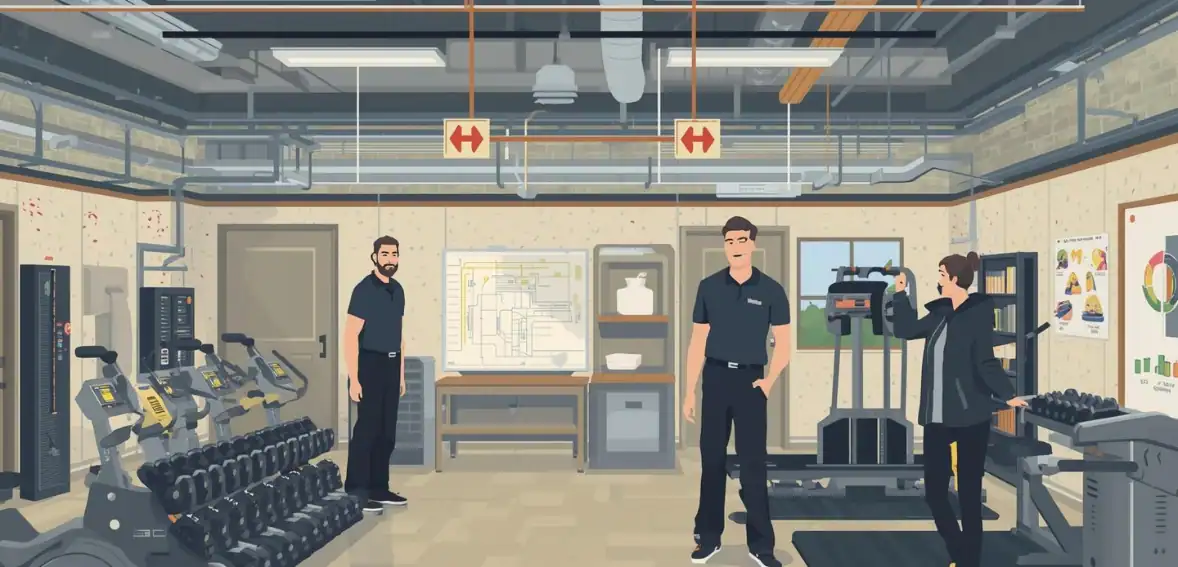
The risk of fire in studio settings is among the leading risks in operating a studio. Fire hazards are generally enhanced by electrical equipment, lighting systems, and heating elements present within the studio environment. Therefore, the fire evacuation plan should be a key part of your emergency action plan.
An effective fire evacuation plan requires the ability to identify and respond rapidly to threats. Therefore, in addition to installing fire alarms/signaling devices, providing appropriate staff training to recognize alarm signals and act immediately (without pause) to evacuate will be important. In studios with limited working space, delays increase the risk of damage.
In addition to providing proper locations for fire extinguishers, staff must also be trained in their use. When an incident occurs, evacuation of the studio should be prioritized over any attempt to fight a fire unless the fire is small or contained; the primary goal must be safety.
All studios should also have a defined communication protocol/chain before, during, and after a fire incident; clients will have no knowledge of the studio without staff direction, and therefore, emergency personnel also depend on the directions given to them by studio staff during an evacuation.
Integrating a fire evacuation plan into a comprehensive emergency action plan can help ensure that one of the highest-risk situations is anticipated and prepared for.
Building and Maintaining an Emergency Contacts List Template
Emergency action plans require communication. To provide essential information during incidents, studios can use a comprehensive emergency contacts list template. An antiquated or outdated list will likely result in delayed response times.
Your emergency contact list template will include:
- Local emergency services, i.e., fire, medical, etc.
- Contractor details for studio management or owner.
- Emergency contacts for all staff members for internal coordination.
- Hospitals or urgent care facilities close to your studio,o and calculated response times from your studio to each hospital.
- Building management or landlord contact numbers.
To keep your emergency contact list template current and usable for staff response times, studios should review and update it at least quarterly due to staff turnover and/or changes to service providers’ contact information.
Your emergency contact list template needs to be both easily accessible (digital and printed) because you may not have access to power or digital systems due to an outage or a computer system failure. To enable an effective, timely response, studios need to maintain an accurate emergency contacts list template at all times.
Incident Reporting Studio Processes for Documentation and Compliance
Over time, incident reporting is an essential component of developing a more effective emergency action plan. An organized incident reporting method will allow for all incidents to be recorded accurately for review and compliance purposes, intended to find and stay (accounting time).
Once an emergency has occurred, the employee should prepare an incident report that provides:
- Date of the incident.
- Time and location of the incident
- Written statement of the circumstances leading up to the incident.
- Statement of the response to the incident.
- A written statement of injuries sustained or property damaged as a result of the incident.
- Recommendations for preventing future incidents.
This documentation will support ongoing improvements to workplace violence prevention program policies and procedures. Also, studio managers may use incident reports to help demonstrate compliance with OSHA’s emergency action plan requirements when applicable.
In addition, incident reports may reveal trends in operational risk. Trends may indicate that similar issues have occurred repeatedly, providing management with the opportunity to proactively modify their emergency plans.
To enhance the effectiveness of incident documentation, the studio should implement similar methods for compiling this data to facilitate more effective incident analysis. In addition, there will be improved efficiency in documenting and maintaining incident records.
By developing an effective incident reporting system, organizations can improve both safety and liability.
Where to Store Emergency Action Plans for Maximum Accessibility
How accessible an emergency action plan is will determine how effective it is during an actual emergency. Even if a plan has a lot of detail, if the staff cannot quickly find it, the plan becomes useless to the staff. Therefore, a storage strategy must also be carefully considered.
Studios should consider storing copies of their emergency action plan in several locations, such as:
- Hard copies at reception and staff areas.
- Digital copies are stored in the studio’s internal systems and/or mobile devices.
- Backup copies stored off-site or in the cloud.
All staff members should know where to find their emergency action plan document, and the training sessions should reinforce this knowledge if they are to be used.
Another way to help staff become ready is to post key procedures, such as the location of the emergency exits and emergency contacts, in common areas of the studio. These quick-reference materials will supplement the full documentation for the staff.
By ensuring that both storage and access to the emergency action plan are properly managed, studios can turn it into an effective tool rather than leaving it as a static document.
Training Staff and Conducting Regular Emergency Drills

Emergency response training turns emergency action plans into real-world operational effectiveness. The execution of a plan fails when the training requirements for its implementation do not exist. Staff members need to complete training on procedures to understand all details and perform their duties through continuous practice.
Studios need to train their staff on all elements of their emergency action plan studio framework. The training program needs to include evacuation procedures and communication protocols, and staff emergency roles. All employees must complete training requirements that apply to all staff members without exception.
Emergency action plans are reinforced through regular drills, which reveal their weaknesses. The drills create actual situations that allow staff members to develop their skills through procedure practice. Studios must conduct their drills at least twice each calendar year.
The emergency action plans need to use drill feedback in their documentation to improve their effectiveness. The procedures undergo ongoing modification to maintain their operational performance and current relevance.
The safety plan improvements through training investments lead to better results for the boutique fitness strategy.
Adapting Safety Plans for Boutique Fitness and Specialized Studios
Different studio types require tailored emergency action plans. A safety plan for a boutique fitness environment differs significantly from traditional office settings. High physical activity levels and specialized equipment create distinct safety hazards.
Fitness studios need to establish emergency medical protocols for injuries and cardiac emergencies. This requires trained staff and readily accessible first-aid equipment. Emergency action plans should clearly reflect these specific needs.
Class-based operations create challenges that make it difficult to manage crowds during evacuation emergencies. Instructors must guide groups efficiently while maintaining order. This makes staff emergency roles even more critical in fitness environments.
Creative studios need to protect themselves from equipment hazards and chemical exposure risks. Emergency action plans need to develop solutions to address these specific dangers.
Emergency action plans, developed through a studio-specific adaptation process, show businesses how to maintain operational relevance and effectiveness in all situations.
Common Mistakes to Avoid When Creating Emergency Action Plans
Despite good intentions, many studios make critical mistakes when developing emergency action plans. These errors can reduce effectiveness and create false confidence in fitness.
Common mistakes include:
- Failing to update the emergency contacts list template regularly.
- Assigning staff emergency roles without proper training.
- Overcomplicating procedures with unclear instructions.
- Neglecting the evacuation plan checklist.
- Saving plans in inaccessible locations during emergencies.
Avoiding these mistakes requires proactive management and regular review. Emergency action plans should be treated as living documents that evolve with the business. Continuous improvement ensures that emergency action plans remain effective over time. Hence, by addressing these common pitfalls, studios can significantly enhance their preparedness and response capabilities.
Conclusion
Emergency action plans serve as critical tools that help studios meet safety standards and retain the ability to operate during emergencies. Establishing structured operational procedures enables fitness centers and creative studios to handle unexpected situations through organized systems.
The emergency plans need detailed focus, effective communication, and compliance with OSHA emergency action plan standards. This emergency contacts list template requires accurate maintenance to define staff emergency roles throughout the entire preparedness process.
Developing an emergency action program needs to conduct training sessions, practice drills, and implement updates to achieve its operational goals. The guide above provides businesses with a framework to develop emergency action plans that deliver effective results during actual emergencies.
FAQs
- What are emergency action plans, and why are they important for studios?
Emergency action plans provide structured procedures that guide staff during emergencies. They help companies operate efficiently by reducing uncertainty, improving emergency response times, and safeguarding their staff and customers during critical situations.
- What does an emergency action plan studio document include?
The emergency action plan studio document contains evacuation procedures, emergency contact information, staff emergency responsibilities, fire response procedures, and incident reporting protocols to achieve complete emergency preparedness.
- Are OSHA emergency action plans mandatory for small studios?
The OSHA emergency action plans apply to all workplaces, including small studios. The enforcement of these guidelines is not mandatory. However, their implementation helps organizations create safer workplaces while minimizing their legal exposure.
- How often should studios update their emergency contacts list template?
The emergency contacts list template requires studios to conduct their first review within 3 months of their previous update and then continue subsequently. The organization requires its staff members to update their emergency contact lists frequently, as it helps maintain accurate information and prevent contact difficulties in critical situations.
- Where should emergency action plans be stored for easy access?
Emergency action plans need to be maintained in both physical and electronic formats. Staff members can access reception areas, staff rooms, and secure cloud systems to achieve maximum storage accessibility.