


Running a boutique fitness studio is already a tight-margin business. Rent, instructors, class scheduling software, cleaning, equipment upkeep all of it adds up. But one cost that owners often overlook, or simply accept as “the way it is,” is payment processing. And that’s where much of the unnecessary spending lurks.
If you’ve ever compared your merchant statements from month to month and wondered why your profit dips even when attendance is steady, there’s a good chance your payment processor is taking more than it should. Many studio owners don’t realize they can address this directly and that there are clear, legal, industry-proven strategies to reduce credit card processing fees in a fitness studio without disrupting member experience or billing cycles.
This guide breaks down the financial blind spots, the real cost differences between payment methods, and the negotiation strategies that can significantly lower your monthly fees. You don’t need special software or a finance degree. You just need to understand how the system works and what options fitness studios actually have.
If some of the terms below are new to you — interchange, assessment, effective rate — Host Merchant Services, the processor behind CloudStudioManager, maintains a broader set of fitness studio processing cost resources that defines each one and shows how they fit together. This guide picks up from there with the studio-specific tactics.
Understanding the Hidden Costs in Fitness Payment Processing
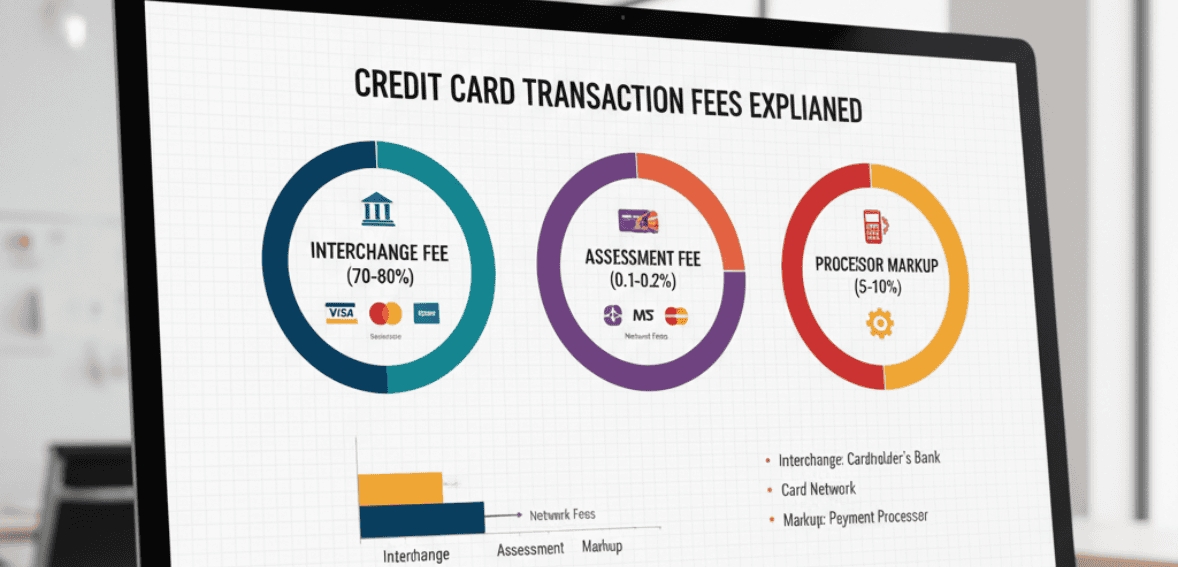
Most boutique fitness owners know they pay “around 3%” on credit card payments but that’s only the surface. The real cost structure is layered, confusing, and often designed to make small businesses pay more than they should.
To reduce credit card processing fees for a fitness studio, the first step is to understand what those fees actually cover.
Interchange Fees (Set by Banks)
These fees go to the card-issuing banks Chase, Capital One, Bank of America, etc.
They depend on:
- Card type (debit, credit, rewards, premium)
- How the card is entered (tap, chip, manual entry)
- Membership patterns (recurring vs one-time purchase)
- Risk profile
Studios can’t negotiate interchange fees, but they can reduce them indirectly through better billing methods, which we’ll get into later.
Assessment Fees (Set by Visa/Mastercard/AmEx)
These are small fixed fees per transaction. Again, not negotiable, every business pays them.
Processor Markups (The Part You Can Control)
This is where studios lose the most money. The payment processor adds markups, and they vary widely. Many boutique studios pay:
- Extra batch fees
- Monthly minimums
- PCI compliance penalties
- Statement fees
- Account maintenance fees
- “Non-qualified transaction” fees
These add up quickly and unlike interchange or assessment fees, you can negotiate or eliminate processor markups if you know what to look for.
A Simple Example of Why It Matters
Let’s say your studio processes $65,000 a month. If your effective rate is 3.5%, you’re losing $2,275/month to processing fees. If you reduce it to 2.6%, you’re paying $1,690/month. That’s a difference of $585 every month, or $7,020 a year money that could pay for instructors, marketing, or equipment upgrades.
This is the foundation. You can’t figure out how to reduce credit card processing fees in a fitness studio until you understand where the money is going.
ACH vs Credit Card Processing: Cost Analysis for Studios
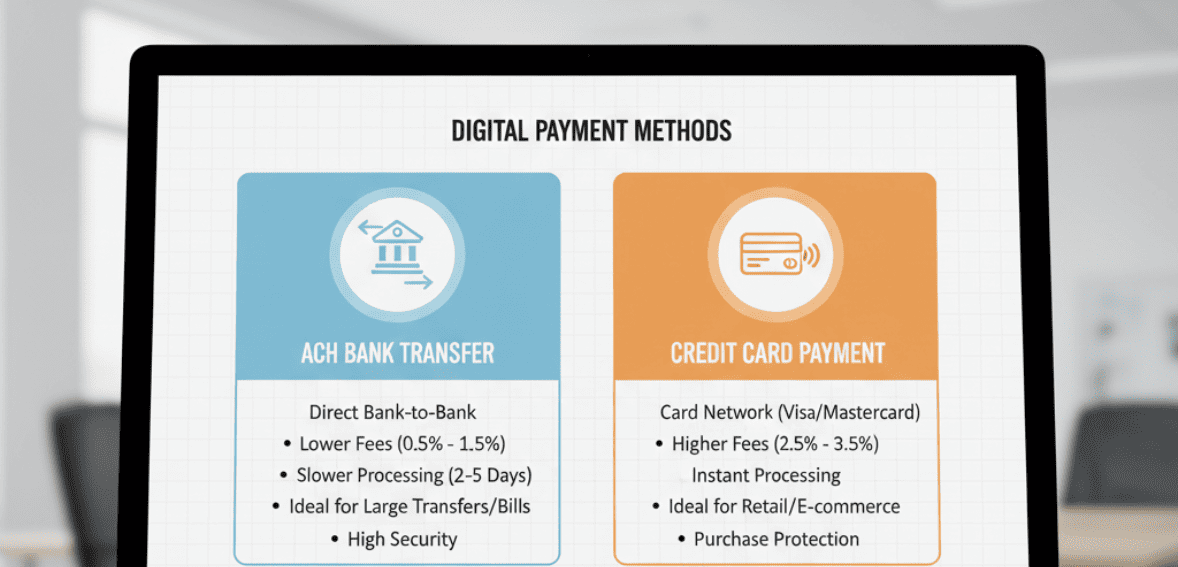
One of the most direct ways to lower processing fees is to encourage more members to pay by ACH rather than credit cards. Most boutique fitness studios never explore this option because they believe members won’t switch but data shows the opposite. When framed properly, many will.
ACH (bank-to-bank transfers) has existed for decades, but fitness studios often overlook it because credit cards are more familiar. However, when you compare the costs side by side, ACH almost always comes out dramatically cheaper.
Here is a simple table that shows the difference in a way that’s easy for any studio owner to understand:
Cost Comparison for a 150-Member Studio
|
Payment Type |
Average Fee |
Transaction Example | Monthly Cost for 150 Members |
|
Credit Card |
2.7%–3.3% |
$120 membership → $3.60 fee |
$540–$594/month |
| ACH | $0.25–$0.75 | $120 membership → $0.25–$0.75 |
$38–$112/month |
Even at the highest ACH cost, a studio can save over $4,800 per year simply by shifting 30–40% of payments away from credit cards.
Why ACH Is Cheaper
- It carries far less risk for processors
- No rewards or points programs to subsidize
- No interchange fees
- No “downgrade” fees for recurring billing
- Very little overhead
Many studios have no idea ACH is even an option and even fewer realize it’s the single most effective way to reduce credit card processing fees quickly.
Will Members Switch?
With the right message, yes:
- Frame it as security: “Bank payments reduce card failures.”
- Frame it as convenience: “No need to update expiring cards.”
- Frame it as studio-friendly: “This helps us keep membership prices stable.”
Fitness clients usually want to support the studio they love. If ACH helps keep your pricing fair, most will agree.
Why Boutique Studios Pay More Than Necessary

Not every studio pays the same rate. In fact, boutique studios often pay more than big-box gyms because:
- Their volume is smaller
- Their memberships are recurring
- Many transactions are card-not-present
- Rewards cards dominate urban markets
- Card processors add extra markups to “small merchants”
This is why so many owners actively look for ways to reduce credit card processing fees in a fitness studio because they’re being penalized for operating a small, specialized business.
Two Common Overcharges Owners Don’t Notice
“Non-Qualified” Transactions
When a card doesn’t meet the processor’s preferred criteria, processors apply a penalty markup. This can happen for:
- Manually entered cards
- Corporate cards
- Premium rewards cards
- Recurring billing
Recurring billing, which nearly every fitness studio uses, often triggers the penalty.
Monthly Minimums
Many processors require a minimum monthly transaction amount, and if you don’t meet it, they charge extra. This disproportionately hits small studios.
Understanding these patterns makes it clearer why boutique labels + small volume = higher fees and why optimizing payment methods is crucial.
Negotiation Strategies & Zero-Fee Models

This is where true savings begin. Once you understand the fee structure, you can negotiate smarter and restructure your systems to reduce charges.
Here are the most reliable strategies boutique studios use when figuring out how to reduce credit card processing fees for fitness studios:
Request Interchange-Plus, Not Tiered Pricing
Tiered pricing (qualified / mid-qualified / non-qualified) is the industry’s biggest trap.
Interchange-plus exposes:
- Exactly what the bank charges
- Exactly what the card brand charges
- Precisely what the processor is adding
This transparency is the key to negotiation.
Ask for Removal of These Junk Fees
You can (and should) ask your processor to remove:
- Statement fees
- PCI compliance fees
- Batch fees
- Monthly minimums
- Non-qualified penalties
- Annual account fees
- “Maintenance” charges
Most boutique studio owners don’t realize these are negotiable.
Zero-Fee or Surcharge Models
This model passes credit card fees to the customer but ONLY where legally allowed.
Some states prohibit surcharges (like Connecticut and Massachusetts), so you MUST check local rules.
When legal, studios implement:
- Surcharge programs
- Cash discount programs
- “Dual pricing” systems
This can almost eliminate credit card fees.
For a fitness studio looking aggressively to reduce credit card processing fees, this option can deliver 3–4% savings immediately.
Negotiation Leverage: What to Say
Processors expect owners to be confused. When you aren’t, you gain leverage.
Here are phrases professionals use in negotiation:
- “I want interchange-plus pricing with no tiered models.”
- “What is my effective rate over the last three months?”
- “Show me every fee you’re adding on top of the interchange.”
- “Remove all monthly minimums and batch fees.”
- “I need a detailed statement without blended pricing.”
When you speak their language, they stop padding your bill.
As boutique studios grow, their transaction volume grows with them. More memberships, more class packages, more drop-ins all processed through the same payment system. And that’s precisely when payment inefficiencies start costing even more than owners realize. Lowering processing fees isn’t about finding a cheaper processor; it’s about understanding where the leaks are and making minor operational adjustments that produce significant long-term savings.
Now that the basics are straightforward, the next step is learning how to apply these strategies consistently in your day-to-day studio operations.
Reading Merchant Statements Without Feeling Lost
One of the biggest challenges for studio owners trying to understand how to reduce credit card processing fees is simply reading their own monthly statements. The documents are long, full of abbreviations, and intentionally complicated. But once you know what to look for, the picture becomes much clearer.
Here are the most critical areas to check every month:
Effective Rate
Your effective rate is the actual percentage you’re paying after all fees are applied.
A simple formula:
(Total fees ÷ Total processed volume) × 100
If your studio processed $60,000 and paid $1,950 in fees:
(1,950 ÷ 60,000) × 100 = 3.25%
This number is more important than anything your processor says you’re paying.
To measure how to reduce credit card processing fees for a fitness studio, track your effective rate over time. That tells you if your changes are actually working.
Non-Qualified Charges
Anything labeled “non-qualified” or “mid-qualified” is costing you extra.
These usually appear when:
- A card is entered manually
- A rewards or corporate card is used
- A recurring membership triggers a downgrade
- A transaction is keyed instead of tapped/inserted
If these appear often, your pricing model is outdated.
PCI Fees
Some processors charge $5–$20 monthly for PCI compliance. Many don’t.
This fee is negotiable.
Monthly Minimums
If your studio doesn’t process a certain amount each month, the processor charges extra to “reach” the minimum. This is one of the easiest fees to eliminate.
The more precise you are about your statements, the faster you can identify where your studio is overspending. And the more data you have, the more leverage you have in negotiations.
Operational Adjustments That Lower Fees Without Changing Processors

Sometimes, you don’t even have to switch processors to see savings. Many studios simply need to adjust how they collect payments.
Here are practical operational habits that directly affect how to reduce credit card processing fees in a fitness studio:
Encourage On-File Payment Methods
When payments are stored on file:
- Fewer manual entries
- Fewer downgrades
- Fewer non-qualified penalties
- Lower risk signals
Recurring billing at the same time every month tends to qualify for lower rates than sporadic manual payments.
Reduce Manual Entry Transactions
Every keyed-in card costs more.
Studios should avoid:
- Typing in card numbers over the phone
- Keying in numbers when a chip/tap option exists
- Allowing late walk-ins to provide card details verbally
Just cutting manual entries by 50% can lower your effective rate by 0.1–0.3%.
For a high-volume studio, that is meaningful money.
Optimize the Timing of Recurring Billing
Many studios choose the 1st of the month for billing because it feels neat, but it also has the highest decline rate.
Why?
- Cards reset
- Rent/mortgage payments process
- Banks flag high-activity days
- Credit limits fluctuate
Declines can trigger reattempt fees and additional transactions, making it more difficult for a fitness student to incur credit card fees in a single month. Billing tends to have fewer failures, which means fewer repeated charges, fewer fees, and less administrative cleanup.
Reduce High-Risk Transactions
Fitness studios often allow “pay later,” “tab accounts,” or on-the-spot upgrades.
This leads to rushed manual entries and higher failure rates.
Clearer billing policies reduce unnecessary fees:
- Require cards on file for bookings
- Automate membership renewals
- Require payment before class package activation
- Avoid manual card input during busy check-ins
These operational tweaks reduce risk flags, which reduces processing costs.
Surcharge and Zero-Fee Models: What Studios Need to Know
Many owners researching how to reduce credit card processing fees eventually explore surcharge models that pass those fees to customers. This can work, but it requires understanding legal boundaries and customer expectations.
Surcharging: Legal in Most States, Banned in Some
Studios must check state regulations. As of now, surcharging credit cards is not allowed in:
- Connecticut
- Massachusetts
- Puerto Rico
Everywhere else, it is legal with proper disclosure.
Cash Discount Programs
Another option is offering a lower price when customers pay by ACH or debit.
Instead of adding a fee, you subtract one.
Dual Pricing
Charging two listed prices:
- Credit
- Cash/ACH
This model is growing among
boutique studios because it is transparent and straightforward.
Customer Expectations
Be clear and upfront:
- Add signage
- Include disclosures on your website
- Adjust your membership agreements
When studios communicate clearly, members usually accept the change especially if it helps keep membership prices stable.
KPIs Owners Should Monitor to Measure Savings

The effectiveness of how to reduce credit card processing fees for a fitness studio shouldn’t rely on guesswork. You should measure it.
Here are the most useful KPIs:
Effective Rate (already explained above)
This tells you the real cost of processing.
Percentage of ACH Payments
If you increase ACH usage from 10% to 40%, your processing costs will fall significantly.
Decline Rate
High decline rates lead to more transactions, which in turn lead to more fees.
Refund Rate
Refunds often cost extra depending on the processor.
Reward Card Percentage
The more reward-heavy your customer base, the higher the interchange.
Studios in affluent areas often see 70%+ reward card usage.
Tracking these KPIs monthly gives you a clearer picture of your savings over time.
Examples of Real Studio Savings
The 90-Member Pilates Studio
They shifted 25 members from credit cards to ACH.
Savings: $260/month in processing fees.
CrossFit Box With High Manual Entry
They implemented on-file billing.
Manual entries dropped 70%.
Savings: 0.25% reduction in effective rate.
Small Barre Studio Using Tiered Pricing
They switched to interchange-plus.
Savings: $450/month.
These examples are typical outcomes, nothing exaggerated.
Conclusion
Lowering payment processing fees isn’t about chasing the cheapest provider; it’s about structuring your studio’s billing more innovatively. Once you understand your pricing model, optimize payment collection, and introduce more cost-effective methods like ACH, your processing costs start to shrink.
When boutique studio owners take control of these systems, they keep more of what they earn allowing them to reinvest in instructors, space upgrades, community events, and long-term growth. The studios that thrive financially aren’t the ones with the lowest prices or the trendiest classes. They’re the ones who manage their money with intention.
Understanding how to reduce credit card processing fees for a fitness studio gives you a decisive advantage. It protects your margins, stabilizes your revenue, and supports a healthier business in the long term without sacrificing member experience.
FAQ
What is the average credit card processing fee for fitness studios?
Most studios pay between 2.5% and 3.5% depending on card type, risk classification, and billing method. Fees include interchange, assessment, and processor markups. Recurring membership billing often falls into higher-cost tiers unless appropriately managed.
Can I legally pass credit card fees to my gym members?
Yes, in most states. This is called surcharging. However, states like Connecticut and Massachusetts prohibit it. Studios must follow disclosure rules, differentiate surcharges from “cash discounts,” and clearly communicate changes to members. Compliance protects the studio and maintains trust.
Is ACH payment processing cheaper than credit cards for monthly memberships?
Yes. ACH is usually $0.25–$0.75 per transaction, while card fees are percentage-based. For a $120 membership, ACH may cost under $1, while credit cards cost $3–$4. ACH lowers fees but may have slightly higher failed-payment rates.
How do I know if my current payment processor is overcharging my studio?
Red flags include:
- Batch fees
- PCI compliance penalties
- Tiered pricing models
- Non-qualified downgrade fees
- Monthly minimums
Compare your effective rate to typical industry benchmarks (2.3%–2.8% for well-negotiated rates). If you’re above 3%, you’re likely overpaying.
What payment processing features are essential for a boutique fitness studio?
The core features include:
- Recurring billing automations
- Failed payment recovery
- Class package and membership support
- Mobile-friendly checkout
- Secure card-on-file storage
These features reduce workload and minimize payment failures.