

Beyond Workouts – Monetizing Recovery & Wellness Service
As gym add-on services revenue has moved from a “bonus” to a “core growth strategy” for modern studios, members of your facility are requesting much more than just another hard workout, they want to see improved recovery, reduced stress levels, smarter nutrition guidelines, and real results. Studios that only offer traditional classes may leave impact and income on the table. Studios that prioritize revenue from gym add-on services are finding that diversified wellness offerings create more predictable growth and stronger member loyalty.
Studios that thrive in 2026 will build a complete wellness experience, offering multiple services under one roof. You need to start thinking beyond workouts to provide your members with new, value-added experiences. These evolving strategies reflect broader boutique fitness wellness trends that emphasize complete lifestyle support rather than isolated training sessions.
The Wellness Ecosystem Is on the Rise in Fitness Studio Wellness Services

Fitness isn’t just about burning calories anymore; it’s part of the overall wellness journey. People are now aware of how much recovery, sleep, nutrition, and stress management contribute to their results. Progress slows if you’re not getting enough recovery. If you’re not getting enough fuel, your performance suffers. If you don’t have mental balance, you’ll experience burnout. This growing awareness is pushing more operators toward adding nutrition and recovery to gym environments that were once focused strictly on workouts.
There’s a shift in expectations happening because of this. Members want convenience and one place to support their whole health journey. If they can participate in a class, do some stretching with a specialist, use a sauna, and have a conversation with a nutrition coach all in the same building, they will consider that to be their primary option.
This is why fitness studio wellness services are booming nationwide. Boutique studios are adding stretch therapy, recovery products, meditation, and even health product retail to their offerings. Large gyms have begun creating recovery lounges and hiring registered dietitians. The message is loud and clear: you can’t solely rely on workouts anymore. Studios expanding fitness studio wellness services are redefining traditional gym ancillary revenue ideas by integrating recovery, nutrition, and performance support under one brand.
As a studio owner, this creates an opportunity for you. By providing more options to meet your members’ needs, you’ll increase retention. Members who use multiple services stay longer. They feel supported, see better results, and spend more because they see the value.
Selecting Services to Support Your Studio and Increase Gym Add-On Services Revenue
Services must align with your members’ goals and training methodology, as not every offering fits every brand. Services should be selected to enhance and support the way you train and members achieve their goals. When aligned properly, these additions strengthen gym add-on services revenue while enhancing the member experience rather than distracting from it.
Assisted Stretch Therapy and Bodywork for Monetizing Recovery Services
Massage therapy and assisted stretching are natural extensions of your current services. After a hard workout, muscles need attention to recover properly. Stretch specialists can help alleviate soreness and reduce injury risk through assisted stretching or massage therapy. A part-time, licensed professional in either of these fields can generate significant attention and be well-received by your members in a very short time.
HIIT studios can introduce recovery sessions periodically or partner with a massage therapist to offer sessions on weekends. Both will help improve performance and demonstrate your commitment to your members’ long-term well-being. This structured approach makes monetizing recovery services feel like a performance upgrade rather than a sales tactic.
Nutrition Coaching: Adding Nutrition and Recovery to Gym Programs
One of the most effective service additions you can make to your business is nutrition and recovery coaching at your facility. Nutrition and exercise are linked, and members who are unsure how to approach nutrition and recovery often struggle to lose weight or build strength.
You can provide certified nutrition coaching for one to two sessions a week, one-on-one, or through group workshops focused on meal planning and performance fueling. There is little to no equipment required to offer this service, and the return on investment is extremely high. For studios focused on adding nutrition and recovery to gym programming, nutrition coaching often becomes the foundation of long-term client success.
Meditation and Breathwork Within Boutique Fitness Wellness Trends
Stress can influence physical outcomes as well. Meditation and breathwork classes help members mentally recover from daily stress. They are great supplemental classes in any type of body-oriented environment, whether that’s in yoga or Pilates, as well as high-intensity classes where clients are being pushed to their limits.
A weekly evening mindfulness session could attract both your existing members and new people who are looking for balance in their lives. Mental recovery components like this continue to shape boutique fitness wellness trends across competitive markets.
Physical Therapy Pop-Ups as Smart Gym Ancillary Revenue Ideas
Many members work out with minor pain or discomfort. Bringing in a licensed physical therapist for once-a-week screenings or consultations will create trust and safety for your members. When members have access to a physical therapist, they can also minimize the risk of negative long-term effects from an injury.
This is also a successful partnership model. The physical therapist obtains new clients, and your members get to experience the benefits of professional care. By forming partnerships with other local wellness professionals, you can reduce your risk; for example, you may invite some of them to use your space during off-peak hours. The wellness professionals would pay rent or share revenue with your practice. This reduces the amount of fixed costs that you must incur in your practice. Partnership-based models like this remain some of the most effective gym ancillary revenue ideas for growing studios.
Recovery Tools and Equipment to Boost Gym Add-On Services Revenue
If you have room, consider introducing items such as infrared saunas, compression boots, and/or recovery chairs. Members can book time slots through your existing scheduling system. These tools create a high-end experience that aligns with the growing boutique wellness trend.
They also support monetizing recovery services in a way that increases perceived value and average revenue per member. You can even use portable items to recover from working out effectively in smaller areas. You can begin with portable recovery tools and grow your inventory over time.
Retail Wellness Products as Profitable Gym Ancillary Revenue Ideas
Retail is one of the most straightforward ways to generate additional revenue for a fitness facility. Retail items such as protein powders, vitamins, hydration drinks, and branded wellness items require minimal setup to implement. When adding inventory to create an additional stream of income through retail, being smart and using good inventory control will provide you with reliable revenue growth.
It is essential to choose reputable brands and train your staff to explain how to use the products. Retail remains one of the simplest gym ancillary revenue ideas when aligned with your training philosophy and member goals.
Operational Methods for Including Wellness Services
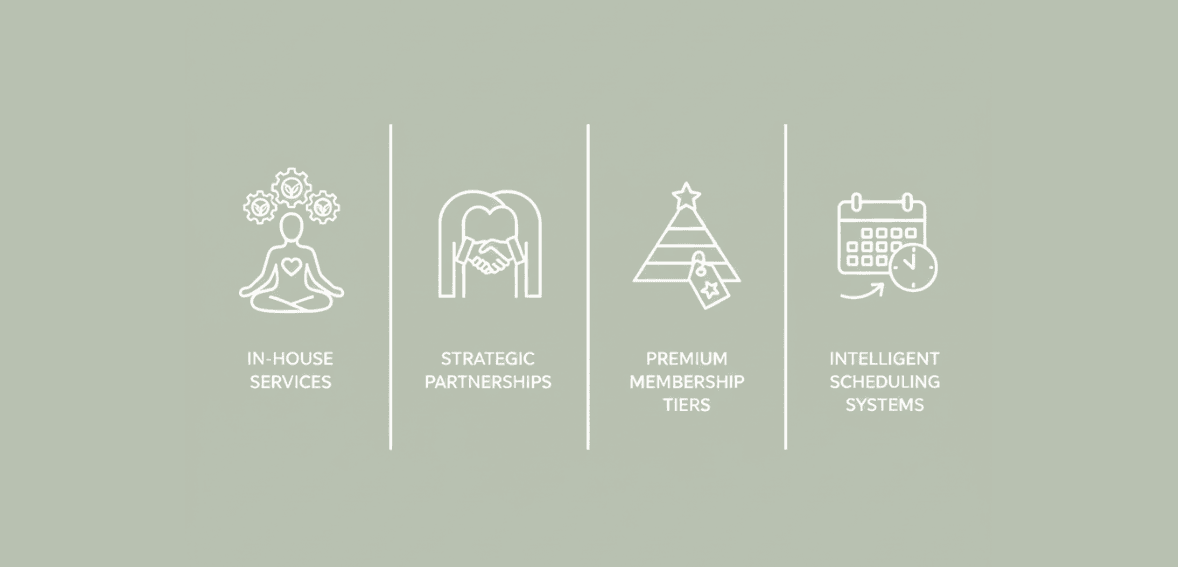
Adding wellness services does not have to increase your overhead. There are simple ways to start without raising costs significantly.
Hire or Contract for In-House Services
You can choose to use part-time specialists or allow professionals to come in by session; for example, by hiring a licensed massage therapist to come in two nights a week or a nutrition coach to conduct consultations every Saturday.
By using this method of hiring professionals, you can also have more control over scheduling and branding those specialists; you could possibly pay by the session or share in the revenue generated from those sessions.
Build Strategic Partnerships
By forming partnerships with other local wellness professionals, you can reduce your risk; for example, you may invite some of them to use your space during off-peak hours. The wellness professionals would pay rent or share revenue with your practice. This reduces the fixed costs you must incur in your practice.
For example, a meditation instructor may use your facility to offer a class once a week on a revenue-share basis, or a physical therapist may offer a monthly clinic on how to avoid sports injuries. Each of these partnerships creates an additional opportunity to expand your offerings without having to incur large fixed payroll costs.
Create Premium Membership Tiers
Packaging is key; create a premium membership tier that includes at least 2 recovery sessions per month and unlimited participation in your classes. This approach increases add-on revenue while delivering more value to your members.
You may also wish to create special pricing for recovery sessions based on membership status; members may pay a much lower price than non-members. This may help you increase your membership base.
Utilizing Intelligent Scheduling Systems
Because most appointment-based services require advanced scheduling/booking tools, check with your management platform to see if it supports service-based appointment bookings; otherwise, you may have to rely on third-party booking systems.
The use of precise scheduling systems will eliminate the potential for confusion and help create a polished and professional business image.
Promoting the Value of Education
Education is the essential foundation for all members. You must first help members understand why recovery and wellness matter.
An example of an event or demonstration is to hold a free muscle recovery workshop. During the first week of launch, provide complimentary 10-minute massage demos. Another option is to include your nutrition coach in a Q&A session after class to build trust and exposure.
Utilizing real-life examples from other members is an effective way to provide social proof. For example, if a member experiences an increase in energy after utilizing nutrition coaching, request a testimonial. Conversely, if a member experiences a decrease in pain after utilizing stretch therapy, that should also be highlighted. Social proof on top of social media strategies reduces resistance and increases trust in your services.
Bundle services when someone signs up for their membership. When someone joins your studio, offer a complimentary recovery session. This increases perceived value without aggressive sales tactics.
Make sure your instructors are discussing services as a natural part of class. For instance, after completing a tough workout, the instructor may say, “If you are tight tomorrow, we have a stretch session available over the weekend.” This creates an approach of support rather than a sales environment.
Externally, you should position your studio as a wellness destination. This will help draw in clientele who are seeking more than just exercise. Additionally, it makes it easier to sell to corporations if you offer whole wellness support.
Maintaining Quality While Monetizing Recovery Services

Never add services solely for revenue. Always maintain the highest level of quality possible. Be thorough when vetting all professionals. Verify their credentials and insurance. Ensure their character aligns with your organization.
Start with only one or two core service offerings. Determine the demand before committing to longer-term commitments. Run a test-pilot month and use the collected information to make adjustments as necessary.
Coordination among team members is essential in achieving a cohesive team environment. Both your trainers and your nutrition coaches must be working towards the same member outcome. Your recovery specialists need to understand your training methodology. Working together creates a seamless member experience.
Monetizing recovery services should be a long-term strategy that strengthens your brand and deepens member loyalty. Members who utilize multiple services have a higher level of engagement with your business based on the support and outcome they have received thus far.
The current marketplace is highly competitive. Convenience is a driving factor for members’ retention. When members can work out, recover, and learn in one place, they stay longer. This strengthens your brand and increases revenue per member over time. Over time, a well-executed expansion into fitness studio wellness services creates sustainable gym add-on services revenue that compounds year after year.
Conclusion
Revenue from gym add-on services is the future of long-term, sustainable growth for studios. Exercise will always be at the core of what studios do, but recovery and wellness will round out the total experience. By adding services to the studio that align with your brand, you grow revenue, deliver better outcomes, and enhance member loyalty.
Studios that proactively embrace boutique fitness wellness trends and incorporate nutrition and recovery into their gym operations will be best positioned for long-term success. Take small steps, ensure quality, and educate members on the benefits. Over time, your business will grow into a reputable and trusted source of wellness for your community.
Frequently Asked Questions
Can I provide wellness services in a small space?
Yes! There are ways you can utilize off-peak hours and establish partnerships with other professionals outside of your business. Virtual services such as nutrition coaching will be just as effective without the need for additional rooms.
Where can I find qualified wellness professionals?
It’s a good idea to start by networking with other health and wellness professionals in your community and making sure that you check their credentials carefully, since many of them would like to create a part-time relationship for mutual benefit.
Will I be liable for nutrition or therapy services provided?
Make sure that you use licensed professionals and appropriate waivers, verify their insurance, and stay within their areas of expertise.
How can I find out whether my members are interested in these services?
The best way to find out whether your members would be interested in any of these services is to ask them directly. The results of your survey, in addition to your trial events, will give you immediate feedback on which services are of interest.
What would be the best way to promote these services without sounding like a salesperson?
If you provide education about the services and how they will help achieve the goals of your member base, you will be able to promote them as tools that will assist the member rather than selling them.